
Your rating
Your collection and ratings are saved in this browser and shown in My Dream Theater.
- Released (Europe)
- 29 Jul 2013
- Released (North America)
- 6 Aug 2013
- Label
- InsideOut Music
- Formats
- CD, 12" Vinyl, Digital Media
- Producers
- James LaBrie, Matt Guillory
- Art direction
- Gustavo Sazes
Solo albums · James LaBrie · 2013
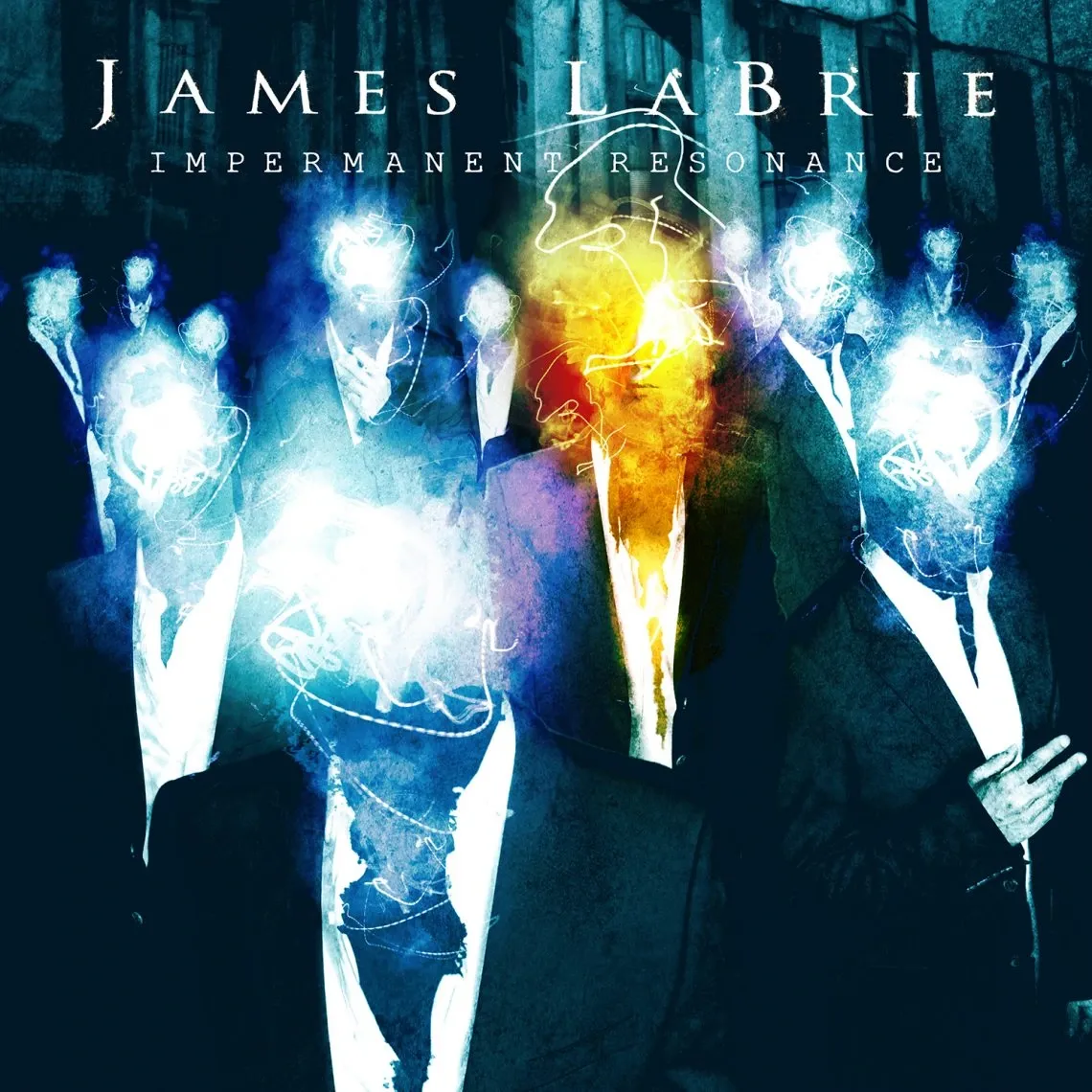
Impermanent Resonance
✎ Edit this releaseOfficial clips
Tracklist
- Agony04:21
- Undertow04:02
- Slight of Hand05:21
- Back On the Ground04:05
- I Got You03:46
- Holding On04:53
- Lost In the Fire03:52
- Letting Go04:17
- Destined to Burn04:00
- Say You're Still Mine03:32
- Amnesia03:43
- I Will Not Break03:52
Personnel
Personnel
- James LaBrie – Lead Vocals
- Marco Sfogli – Guitar
- Matt Guillory – Keys & Vocals
- Ray Riendeau – Bass
- Peter Wildoer – Drums & Screamo Vocals
Production
- James LaBrie – Produced by
- Matt Guillory – Produced by
- Jens Bogren – Mixed by
- Tony Lindgren – Mastered by
- Peter Wichers – Guitar recording, editing, composing
- Johan Örnborg – Drum recording
- Shane McCurdy – Vocal recording
- Gustavo Sazes – Artwork
Static Impulse had given James LaBrie’s solo work a very definite musical identity. Impermanent Resonance kept the same musicians and set about developing it. The clean voice, the harsh voice, the heavy guitars and the immediate melodies were all still there. The question was how much more could be done within that combination before it became a formula.1
Released by InsideOut Music on July 29, 2013 in Europe and August 6 in North America, this was LaBrie’s third studio album under his own name, or his fifth with the MullMuzzler albums included. Matt Guillory remained the main composing partner, with Marco Sfogli, Ray Riendeau and Peter Wildoer returning on guitar, bass and drums. The continuity was deliberate, and gave the record a different starting point from introducing a new band.2
Working around two albums
The writing and production took roughly a year and a half, overlapping with Dream Theater’s work on its self-titled album. Guillory prepared detailed demos so the players had a clear account of the arrangements before recording separately. LaBrie fitted his vocals into breaks in the Dream Theater schedule. In their Ghost Cult interview, the two described most of the material as already written by the time the main band’s sessions began.1
Guillory oversaw the arrangements while LaBrie was occupied with Dream Theater. LaBrie identified him as the principal composer, an important distinction on an album issued under a singer’s name. This was a continuing partnership, rather than one person claiming responsibility for every note.3
Peter Wichers added another writing connection. Having heard Static Impulse, the former Soilwork guitarist approached Wildoer about working with the group. Guillory and LaBrie agreed after hearing the possibilities. His contribution became part of the material’s development.3
Melody at the centre
Guillory described Impermanent Resonance as an extension of the foundation established on Static Impulse, with more time devoted to vocal melodies and dynamics. That is a useful distinction from simply making the music heavier. The harsh parts were already available. What needed attention was the relationship between those parts and something the listener would remember when the song was over.1
“Agony” opens the standard sequence, followed by “Undertow” and “Slight of Hand”. The latter is the official title’s spelling, even though the familiar expression is usually written differently. Twelve tracks make up the main album, with most songs around four minutes and none stretching into Dream Theater epic territory.4
“Back on the Ground” required more work than its straightforward melody suggested. LaBrie and Guillory recalled the effort needed to make the vocal performance sound right. Music can be easy to follow without being easy to deliver.3
The lyrical perspective also extends beyond relationships. LaBrie linked “Destined to Burn” to Lawrence Hill’s The Book of Negroes and its account of slavery, bringing a wider social concern into the sequence.3
The title grew from that changing emotional territory. Guillory explained it through the idea that circumstances, however difficult, do not remain fixed. It is a shared concern across the material rather than evidence of one continuous plot. The songs have their own situations and voices.1
Recording and release
The official album credits name LaBrie and Guillory as producers, Jens Bogren as mixer, Tony Lindgren as mastering engineer and Gustavo Sazes as the artwork designer. Expanded credits identify Johan Örnborg’s drum recording, Shane McCurdy’s vocal recording and Wichers’s guitar recording and editing. Those responsibilities belong to this release, rather than a generic production team copied from the previous record.45
The European limited digipak added “Unraveling” and “Why”. There were also black and white 180-gram vinyl editions accompanied by a CD. Those variations are worth separating from the standard twelve-track program. Bonus material later circulated with the I Will Not Break EP, but that does not make the EP a further studio album in the sequence.4
Contemporary reception included praise for the group having an identity distinct from Dream Theater. That is a more useful question than whether LaBrie’s solo musicians could imitate his main band convincingly. They had already made a record together, and were refining the balance between aggression and melody within that established sound.4
The compact writing does bring a risk: once the listener understands the contrast between harsh verses and melodic release, another similar turn can lose some of its force. The record’s interest lies in how the melodies, phrasing and arrangements vary that expectation. Impermanent Resonance was the point at which this version of the LaBrie group had both an established approach and the experience to decide what needed more attention.
Footnotes
-
Ghost Cult, James LaBrie and Matt Guillory interview, July 31, 2013. ↩ ↩2 ↩3 ↩4
-
InsideOut album announcement and regional release dates, reproduced by Screamer Magazine, June 5, 2013. ↩
-
Chris Karadimitris, James LaBrie and Matt Guillory interview, Rocking.gr, August 2, 2013. ↩ ↩2 ↩3 ↩4
-
Impermanent Resonance, standard and limited editions, expanded production credits and reception references. ↩ ↩2 ↩3 ↩4