
Your rating
Your collection and ratings are saved in this browser and shown in My Dream Theater.
- Released (International)
- 27 Sept 2010
- Released (North America)
- 28 Sept 2010
- Label
- InsideOut Music
- Formats
- CD, Digital Media
- Producers
- James LaBrie, Matt Guillory
- Art direction
- Thomas Ewerhard
Solo albums · James LaBrie · 2010
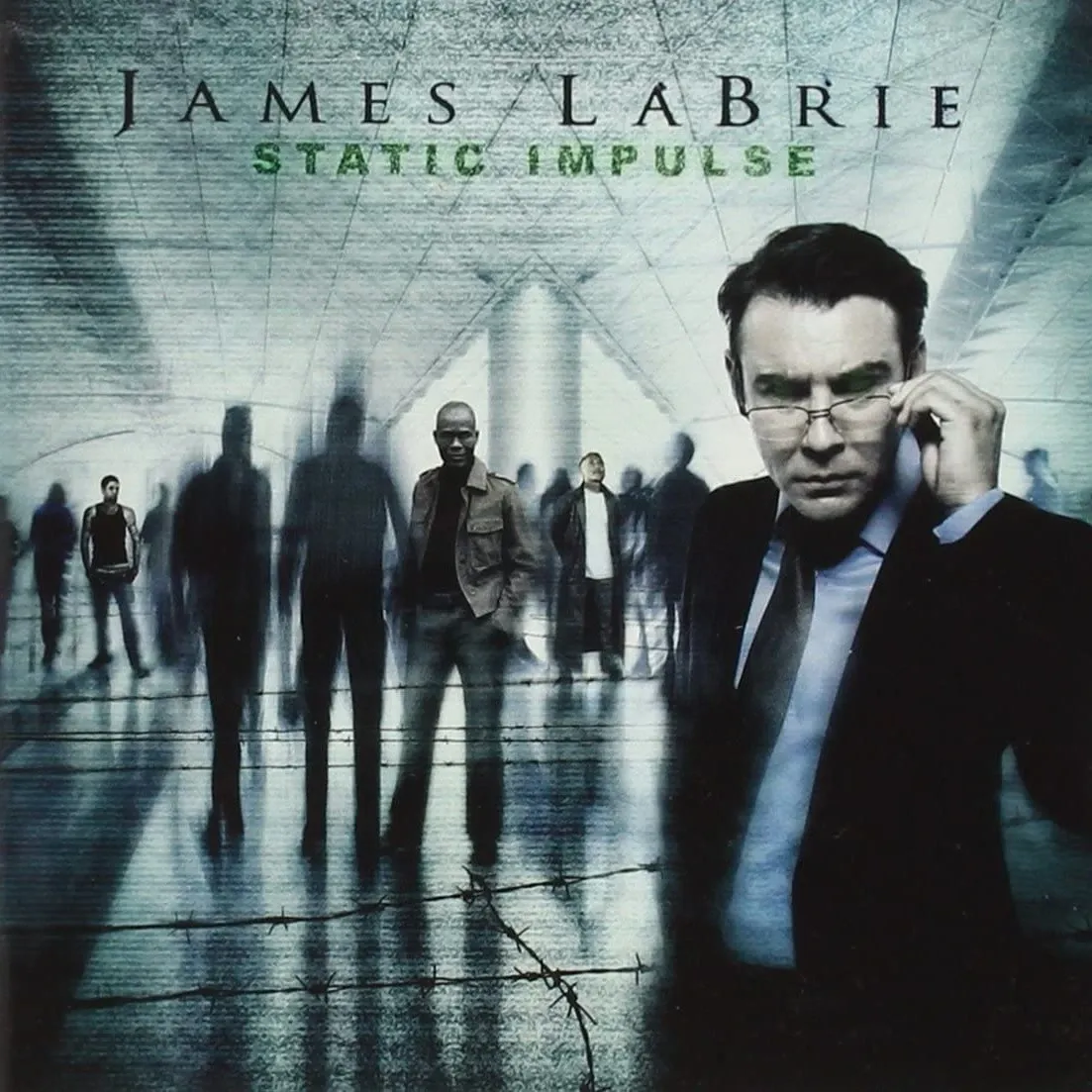
Static Impulse
✎ Edit this releaseTracklist
- One More Time04:16
- Jekyll or Hyde03:46
- Mislead04:18
- Euphoric05:09
- Over the Edge04:20
- I Need You04:11
- Who You Think I Am03:57
- I Tried03:58
- Just Watch Me04:18
- This Is War04:30
- Superstar03:32
- Coming Home04:29
Personnel
Personnel
- James LaBrie – Lead Vocals
- Marco Sfogli – Guitar
- Matt Guillory – Keys & Vocals
- Ray Riendeau – Bass
- Peter Wildoer – Drums & Screamo Vocals
Production
- James LaBrie – Arranged and produced by
- Matt Guillory – Arranged and produced by; Engineering; Pre-production
- Johan Örnborg – Engineering
- Ray Riendeau – Engineering
- Marco Sfogli – Engineering; Pre-production; Mixing
- Alex Durand – Vocal editing
- Jens Bogren – Mixed & Mastered by
- Thomas Ewerhard – Artwork
Anyone who put on Static Impulse expecting another record built entirely around James LaBrie’s clean voice had an immediate adjustment to make. The harsh vocals belonged to drummer Peter Wildoer, and the contrast was central to the new material. LaBrie had not suddenly become a death-metal singer. He and Matt Guillory had decided that another voice could make the songs work differently.1
Released through InsideOut Music on September 27, 2010 internationally and the following day in North America, Static Impulse was the second album under LaBrie’s own name and the fourth when the MullMuzzler records are counted. Five years after Elements of Persuasion, the core partnership remained, but the rhythm section and the musical balance had changed.2
A different kind of heavy
LaBrie and Guillory began developing the material in 2009, working remotely through exchanged recordings, phone calls and Skype. In his contemporary Prog interview, LaBrie described wanting to push the heavy but melodic approach of the previous record further. The vocal hooks were given particular attention. The aggression was meant to make those melodies more effective, rather than provide an excuse to leave them out.1
Marco Sfogli remained on guitar. Ray Riendeau joined on bass, and Wildoer, known for his work with Darkane, took the drum seat. Jens Bogren had recommended Wildoer when they were looking for a drummer suited to the metal direction. The discovery that he could also provide the harsh vocals changed another part of the record.3
LaBrie explained that he had initially considered singing the aggressive parts himself in a raspier voice. They chose Wildoer because they wanted the sound to be convincing on its own terms. Guillory supplied backing vocals as well as keyboards, giving the arrangements another melodic layer. Keeping those contributions straight matters: there is more going on vocally than a simple switch between LaBrie’s soft and loud settings.13
Building the contrasts
“One More Time” is a particularly clear explanation of the approach. Guillory described it as a combination of progressive writing and modern melodic death metal, with a strong contrast between verse and chorus. Towards the end, his voice and LaBrie’s are layered in different ways. Its lyric deals with losing somebody close. The changes in delivery are part of how the song handles that subject, rather than just a reliable method of making the chorus sound larger.4
The sequence also includes “Jekyll or Hyde”, “Mislead”, “Euphoric”, “Over the Edge” and “I Need You”. Most of the twelve tracks sit around four minutes, and even the longest remains little over five. That leaves much less space for an arrangement to take an unrelated instrumental detour. The song has to make its point and move on.2
That concision is one of the more interesting differences from LaBrie’s main band. The players are perfectly capable of complex music, but a compact song does not become less demanding because it has fewer minutes. A melody has to establish itself quickly, the rhythm changes have to support its movement, and the heavy sections need somewhere to go. Merely alternating clean and harsh voices would soon become predictable.
“Who You Think I Am”, “I Tried”, “Just Watch Me”, “This Is War” and “Superstar” take the record towards its closing “Coming Home”. The standard twelve-track sequence is the basis for the list above. The limited digipak added a “Jekyll or Hyde” demo and an alternate mix of “Coming Home”, giving those extra tracks a different purpose from newly written album songs.2
The sound and the sleeve
LaBrie and Guillory produced, with Bogren handling the principal mix and mastering. The expanded production credits also identify Sfogli’s mixing contribution, along with engineering by Guillory, Johan Örnborg, Riendeau and Sfogli. Thomas Ewerhard supplied the artwork. The recording was built from distinct contributions, not simply a band playing everything together in one room.56
The sleeve and title were connected to LaBrie’s interest in human behaviour. In his HeadBanger interview, he discussed people living within comfortable social or ideological groups and the misunderstandings that can result. The relatively restrained cover was therefore deliberate. A heavier record did not require the artwork to become another competition in looking threatening.3
A tour that did not happen
The proposed North American solo tour was cancelled over difficulties securing work visas for members of the band. That was a practical failure to get the show on the road, not evidence that the music had been disowned. The cancellation also left a gap between the record’s identity as a functioning group and the opportunities to present that group live.7
The lineup would return for Impermanent Resonance in 2013. That continuity is useful when approaching Static Impulse: it established a direction LaBrie and Guillory wanted to develop further. Whether the harsh vocals are an attraction or a barrier will depend on the listener, but they are not an accidental layer that can be removed without changing how the record is constructed.
Footnotes
-
Prog’s 2010 James LaBrie interview, republished by Louder, on the writing and vocal contrasts. ↩ ↩2 ↩3
-
Contemporary Static Impulse release announcement, standard track timings and digipak bonuses, August 23, 2010. ↩ ↩2 ↩3
-
HeadBanger, James LaBrie interview, published January 3, 2011, on Wildoer, the title and artwork. ↩ ↩2 ↩3
-
Matt Guillory’s explanation of One More Time, reproduced with the WMMR interview announcement. ↩
-
Static Impulse, expanded personnel and production credits. ↩
-
LaBrie’s solo-tour cancellation announcement, Blabbermouth. ↩