
Your rating
Your collection and ratings are saved in this browser and shown in My Dream Theater.
- Released
- 1 Mar 2005
- Length
- 01:01:30
- Label
- Sound Mind Music
- Formats
- CD, Digital Media
- Producers
- John Petrucci
- Recording studios
- Little Bear Studios, Suffern, New YorkSound on Sound Studios, New York City (drums)
- Mixing studios
- The Hit Factory, New York City
- Mastering studios
- Masterdisk, New York City
- Art direction
- Mattias Norén
Solo albums · John Petrucci · 2005
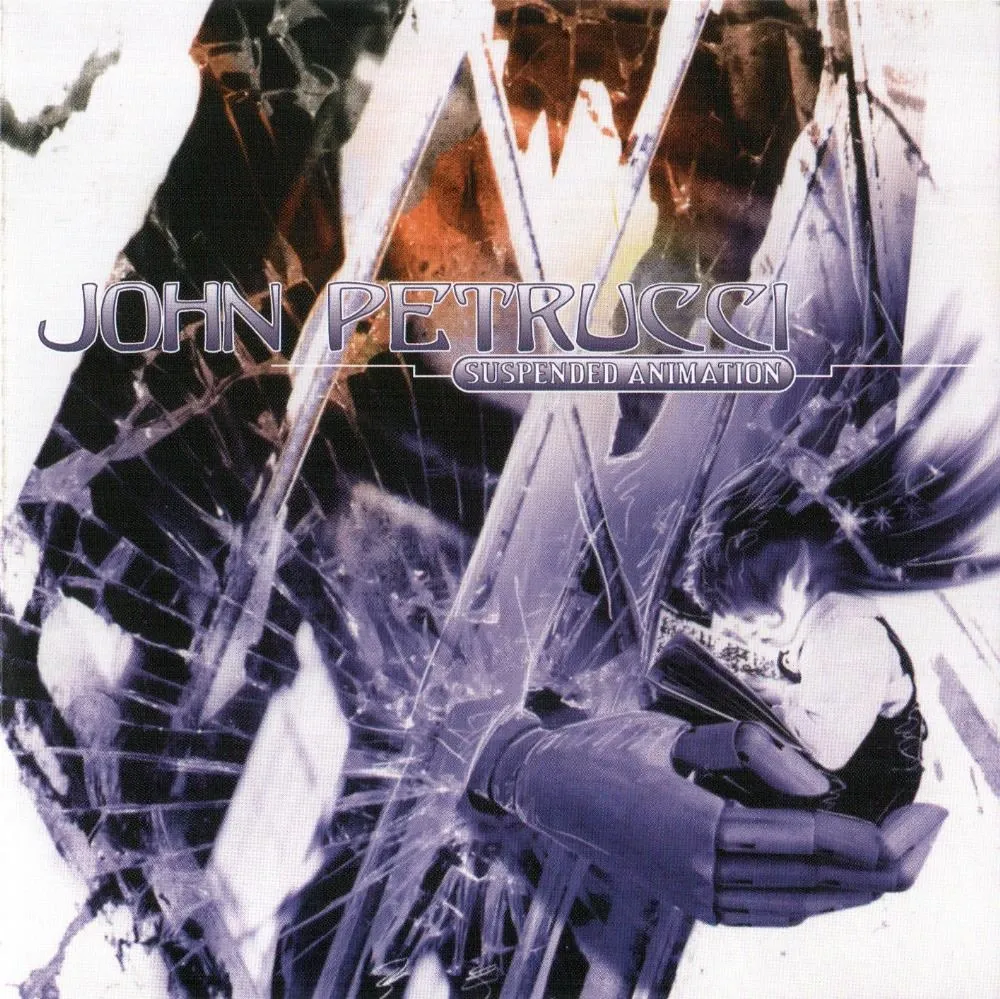
Suspended Animation
✎ Edit this releaseTracklist
- Jaws of Life07:29
- Glasgow Kiss07:48
- Tunnel Vision06:35
- Wishful Thinking07:28
- Damage Control09:15
- Curve · Some CD editions index the closing section separately as Interlude.06:22
- Lost Without You04:56
- Animate-Inanimate11:37
Personnel
Personnel
- John Petrucci – Guitars, Songwriting
- Dave LaRue – Bass (except Tunnel Vision)
- Dave DiCenso – Drums (except Tunnel Vision)
- Tony Verderosa – Drums (Tunnel Vision)
- Tim Lefebvre – Bass (Tunnel Vision)
Production
- John Petrucci – Producer
- Doug Oberkircher – Engineering
- Steve Hardy – Engineering (drums on Tunnel Vision)
- Kevin Shirley – Mixing
- Howie Weinberg – Mastering
- Tony Verderosa – Remixing (Tunnel Vision)
- Mattias Norén – Artwork
- John Popplewell – Photography
By the time John Petrucci released Suspended Animation, nobody needed another demonstration that he could play the guitar. There were enough of those on the Dream Theater albums already. The more interesting question was what he would do with an entire record where the guitar had to carry the melodies as well as the riffs and solos. No singer to take over, no keyboard player to exchange leads with. That changes the job considerably, even when the guitarist is immediately recognisable.1
Released on March 1, 2005 through Sound Mind Music, Suspended Animation was Petrucci’s first solo studio album. It was not his first release outside Dream Theater, or even the first on that label. Sound Mind Music, created and run by his wife Rena, had previously issued An Evening with John Petrucci and Jordan Rudess. That was a collaboration built around guitar and piano. This time, Petrucci was responsible for the whole musical direction.23
A set of his own
The practical reason for writing this music was G3. Invited to perform alongside Joe Satriani and Steve Vai, Petrucci needed a set that could stand on its own. In a 2005 interview, he explained that “Jaws of Life” had come from preparing for his first G3 outing. He wanted an approach rooted in progressive rock and metal, something that would distinguish his music within that company. There was little point in trying to become another Satriani when the real one was already on the bill.4
Petrucci later explained that the solo album grew from having music to perform on G3. A separate career had never been the ambition; Dream Theater remained the priority. The long wait for a follow-up makes rather more sense in that light.5
In his December 2006 New Voice interview, he was equally clear that going solo had not involved abandoning his established style. He could hear Dream Theater in the riffs of “Glasgow Kiss” and “Jaws of Life”. The difference was in the arrangement: without vocals or keyboards, the guitar had to do the work those instruments would normally share. Steve Morse was a useful reference for that kind of instrumental writing. The challenge was keeping the music interesting when one instrument occupied so much of the foreground.1
Familiar people, different responsibilities
Petrucci produced the record himself. Dave LaRue played bass and Dave DiCenso played drums on most of it, with a different rhythm section on “Tunnel Vision”: Tim Lefebvre on bass and Tony Verderosa on drums. Verderosa also received a remixing credit for that track. Those are release-specific contributions worth keeping straight. This was not a Dream Theater session with the singer given the day off.6
The recording credits place the sessions at Little Bear Studios in Suffern, New York, with drums recorded at Sound on Sound in New York City. Doug Oberkircher engineered the album, while Steve Hardy recorded the drums for “Tunnel Vision”. Kevin Shirley mixed it at The Hit Factory, and Howie Weinberg mastered it at Masterdisk. Mattias Norén supplied the artwork, with photography credited to John Popplewell.67
There is a useful balance in that team. Petrucci retained control of the compositions and production, but the finished album still involved players and engineers with distinct responsibilities. A solo credit on the cover does not mean the record was made alone. LaRue in particular would remain part of this musical setting, returning for the second solo album and the later headlining tour.89
Riffs, melodies and room to play
“Jaws of Life” establishes the heavier side of the record, while “Glasgow Kiss” makes the relationship between a prominent theme and the surrounding instrumental work especially clear. The familiar riffs are there, but the melody has to remain strong enough to bring the listener back after the playing gets busy. Otherwise an instrumental can become a succession of impressive passages with very little holding them together.1
“Tunnel Vision” is an important change within the running order, and the different personnel are part of its identity. It should not be credited by simply copying LaRue and DiCenso across all eight songs. Asked in 2005 which tracks he particularly valued, Petrucci picked “Tunnel Vision” and “Damage Control” as different experiences for him, while stressing that his answer depended on the day. There was no suggestion that the album had one definitive showpiece and seven supporting tracks.46
“Wishful Thinking” makes room for the more melodic side of his playing. In the same contemporary interview, Petrucci described performing it in terms of immediacy and enjoyment rather than technical difficulty. That is an important distinction for this music. Fast playing can be part of the expression, but the speed itself does not explain why a passage belongs in a song.4
At more than nine minutes, “Damage Control” has considerably more room to develop than the shorter pieces. “Curve” then leads into “Lost Without You”, the briefest complete composition in the standard eight-song sequence, before “Animate-Inanimate” closes the record at over eleven minutes. The album is hardly an exercise in keeping everything short. The arrangements have to justify that space, and the contrast between a compact piece and an extended closer is part of how the sequence works.3
There is also a small trap for collectors. Some CD listings contain nine tracks because the end of “Curve” is indexed separately as “Interlude”. That does not establish an extra composition unique to those copies. The eight-track digital sequence keeps “Curve” together, and is the basis for the track list and timings above. Even the eight-track CD and digital listings differ slightly in their displayed seconds, so a different runtime is not by itself proof of a different performance.367
A long life between albums
The G3 connection continued beyond the writing of the material. “Glasgow Kiss” and “Damage Control” appeared on G3: Live in Tokyo, bringing the solo repertoire to listeners who encountered Petrucci alongside Satriani and Vai. The studio record and the live setting consequently became closely associated, although they are separate releases.10
On July 31, 2020, Petrucci announced that Suspended Animation was available on digital and streaming platforms. The timing brought the debut back into circulation ahead of Terminal Velocity. Fifteen years between solo albums was a considerable wait, but it did not mean this material had simply been put away. When Petrucci announced his first solo headlining tour in 2022, the repertoire would draw on both records, with LaRue and Mike Portnoy joining him onstage.8911
That continued usefulness is a more concrete measure of the album’s place in Petrucci’s catalogue than another argument about how fast he can play. These were pieces written to work as his own set. They were still doing that job when there was finally a second album to put beside them.
Footnotes
-
Jon Van Daal, John Petrucci interview, New Voice fanzine 07, December 2006, archived by DTNorway. ↩ ↩2 ↩3
-
Dream Theater, John Petrucci biography, including the history of Sound Mind Music. ↩
-
Qobuz, Suspended Animation, eight-track digital edition, release date, credits and timings. ↩ ↩2 ↩3
-
Guitarhoo!, John Petrucci interview, August 1, 2005. ↩ ↩2 ↩3
-
Music Waves, John Petrucci interview conducted August 5, 2020, published September 1, 2020. ↩
-
Encyclopaedia Metallum, Suspended Animation, personnel, production credits and nine-track CD indexing. ↩ ↩2 ↩3 ↩4
-
Musik-Sammler, Sound Mind Music 20052 CD, recording, mixing and mastering locations. ↩ ↩2
-
John Petrucci, Terminal Velocity, official album announcement and credits. ↩ ↩2
-
The Prog Report, first solo headlining tour announcement, July 13, 2022. ↩ ↩2
-
John Petrucci, Suspended Animation digital and streaming release announcement, July 31, 2020. ↩