

Your rating
Your collection and ratings are saved in this browser and shown in My Dream Theater.
- Released
- 15 Nov 2015
- Formats
- CD, Digital Media
- Recorded
- August 2015
- Recording studios
- Jordan Rudess home studio
Solo albums · Jordan Rudess · 2015
The Unforgotten Path
✎ Edit this releaseTracklist
- Entangled (Genesis cover)04:24
- Your Song (Elton John cover)03:34
- For Japan03:36
- Karma Police (Radiohead cover)03:39
- Soon (Yes cover)03:34
- The Sound of Silence (Simon & Garfunkel cover)03:57
- Here, There and Everywhere (The Beatles cover)02:48
- Grantchester Meadows (Pink Floyd cover) · Listed as Grandchester Meadows on this edition.05:18
- Old Man in the House03:28
- Scarborough Fair (Traditional cover)02:50
- As Tears Go By (The Rolling Stones cover)03:14
- Imagine (John Lennon cover)03:49
- Moonchild (King Crimson cover)03:25
- The First Time Ever I Saw Your Face (Roberta Flack cover)03:38
- Send in the Clowns (Stephen Sondheim cover)02:49
- Tribute to Jobs02:03
- Opus 5801:50
Personnel
Personnel
- Jordan Rudess – Steinway D concert grand piano
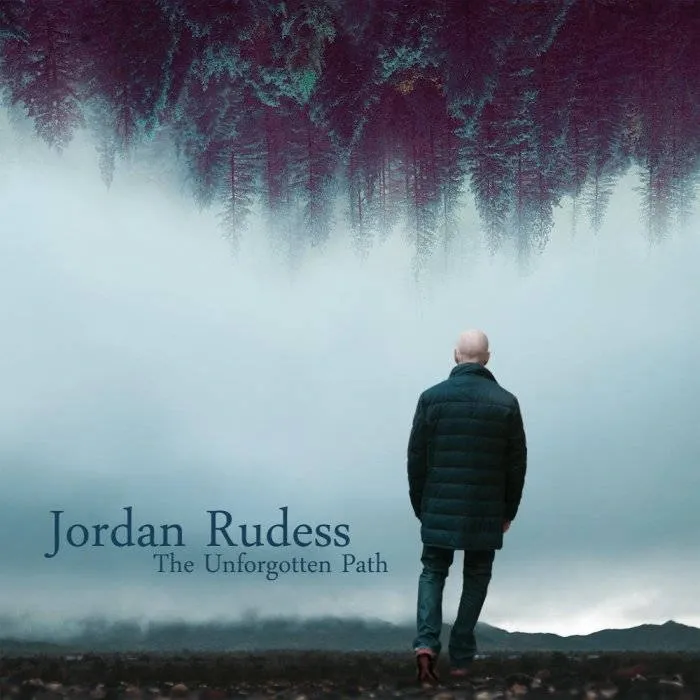
The Unforgotten Path returns Jordan Rudess to melodies he had been playing for much of his life. Genesis, Elton John, Radiohead, Yes and other familiar writers supply the material, with four originals included among the arrangements. The common setting is his Steinway, rather than a band assembled to reproduce the original recordings.12
Rudess recorded the album at home in August 2015 on his nine-foot Steinway D. The artist’s release is dated November 15. His own account connects the choices with childhood improvisations from lead sheets his mother brought home, ranging from film and musical theatre to rock. These were tunes he had lived with, rather than a set chosen simply to demonstrate stylistic variety.1
A repertoire that crosses the usual divisions
“Entangled” opens the album, followed by Elton John’s “Your Song” and the original “For Japan”. “Karma Police”, “Soon” and “The Sound of Silence” lead towards “Here, There and Everywhere” and Pink Floyd’s “Grantchester Meadows”. The latter is misspelled “Grandchester Meadows” on the digital listing, but the composition is the Pink Floyd piece.12
The rest of the program moves through “Old Man in the House”, “Scarborough Fair”, “As Tears Go By”, “Imagine”, “Moonchild”, “The First Time Ever I Saw Your Face” and “Send in the Clowns”, before “Tribute to Jobs” and “Opus 58”. “For Japan”, “Old Man in the House”, “Tribute to Jobs” and “Opus 58” are the four Rudess originals. The other selections should retain their own compositional identities in the song catalogue.2
The mixture makes sense on piano. A song’s original production can place it firmly within a particular decade or genre, while the melody and harmony remain available for a different treatment. Moving from Genesis to Elton John need not require a change of costume between tracks when the same instrument is responsible for the whole arrangement.
Recognition and variation
Familiar material gives the player both an advantage and a restriction. The listener can recognise a theme quickly, but also notices when additional playing begins to obscure it. A piano arrangement has to do more than quote the chorus and then abandon the song. The interesting work lies in what can be changed while the tune still has its own character.
That also distinguishes this record from Notes on a Dream. The earlier album concentrated on Dream Theater material; this one draws from a wider personal repertoire. Neither needs to be presented as Rudess discovering the piano again. It is an instrument he had continued to record throughout the more conspicuous synthesizer work.
The Unforgotten Path is most useful as a view of that continuing relationship. The selections connect songs from different settings through the way one musician hears them, with the four originals sitting beside the borrowed melodies rather than being advertised as an entirely separate exercise.