
Your rating
Your collection and ratings are saved in this browser and shown in My Dream Theater.
- Released
- 1 Jul 2022
- Label
- Inside Out Music
- Formats
- CD, Digital Media
- Producers
- Derek Sherinian, Simon Phillips
Solo albums · Derek Sherinian · 2022
Vortex
✎ Edit this releaseOfficial clips
Tracklist
- The Vortex04:25
- Fire Horse04:26
- Scorpion03:38
- Seven Seas06:16
- Key Lime Blues04:42
- Die Kobra06:44
- Nomad's Land05:20
- Aurora Australis11:11
Personnel
Personnel
- Derek Sherinian – Keyboards; production
- Simon Phillips – Drums; production
- Steve Stevens – Guitar (tracks 1, 4)
- Nuno Bettencourt – Guitar (track 2)
- Joe Bonamassa – Guitar (track 5)
- Steve Lukather – Guitar (track 5)
- Michael Schenker – Guitar (track 6)
- Zakk Wylde – Guitar (track 6)
- Mike Stern – Guitar (track 7)
- Ron Bumblefoot Thal – Guitar (track 8)
- Tony Franklin – Bass (tracks 1, 6)
- Ernest Tibbs – Bass (tracks 2, 5, 7)
- Ric Fierabracci – Bass (track 3)
- Jeff Berlin – Bass (track 4)
- Jimmy Johnson – Bass (track 8)
- Armen Ra – Theremin
- Anna Camporini – Cello (track 6)
- Carlo Calegari – Double bass (track 6)
- Ashwin Batish – Sitar (track 6)
- Pirro Gjiondi – Violin and viola (track 6)
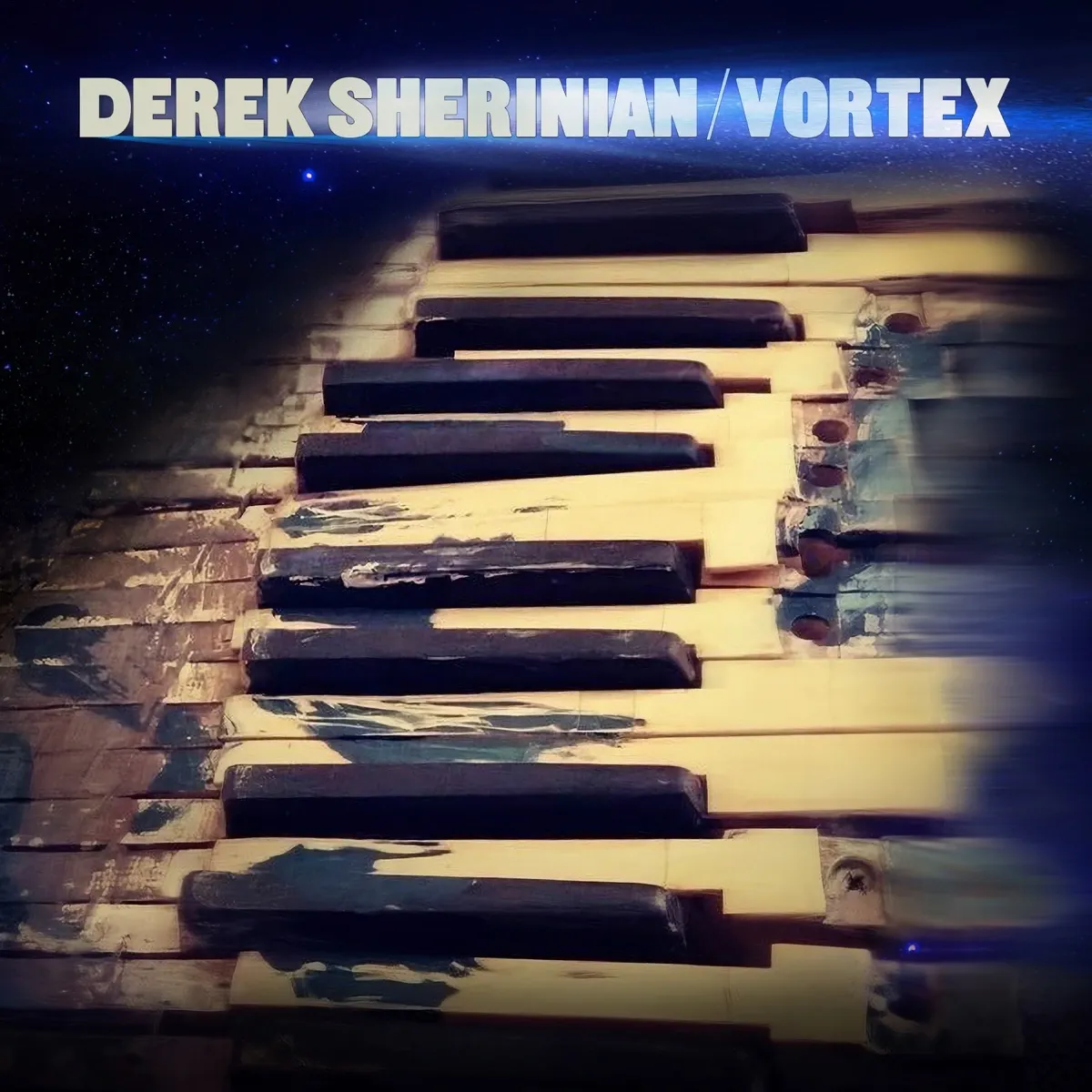
Vortex arrived less than two years after The Phoenix, which was a considerably shorter wait than the nine years before that record. Derek Sherinian and Simon Phillips had found a productive rhythm again. The ninth solo album, released on July 1, 2022, extends their writing partnership through eight pieces with a different combination of guests on almost every track.123
The two remain the constant centre: Sherinian on keyboards and Phillips on drums, with production shared. The range of guitars and basses is wide, but the record is organised around their arrangements rather than a succession of unrelated guest spots.2
Exchanges between musicians
“Die Kobra” grew from Sherinian’s appearance on Michael Schenker’s Immortal. Schenker agreed to return the favour, and Sherinian wrote a piece for him. Pairing him with Phillips also reunited two musicians Sherinian had first heard together on Schenker’s debut solo album. Wylde supplies another guitar voice on the track.1
“Key Lime Blues” brings Joe Bonamassa and Steve Lukather together. Sherinian recalled both visiting the studio and responding to each other’s playing. These are arrangements with specified lines, but he also leaves solo sections open enough for the visitors to sound like themselves.1
That is more interesting than simply counting the names. Schenker and Wylde do not phrase alike, and Bonamassa and Lukather have different ways of leaning into a melody. The pleasure is in the exchange, provided the arrangement gives those distinctions somewhere to go.
From Scorpion to Aurora Australis
Steve Stevens plays the opening “The Vortex” and “Seven Seas”. Nuno Bettencourt takes “Fire Horse”, while Mike Stern appears on “Nomad’s Land”, a Phillips composition. The bass credits change too: Tony Franklin, Ernest Tibbs, Ric Fierabracci, Jeff Berlin and Jimmy Johnson each occupy specific parts of the program.2
“Scorpion” puts piano, bass and drums in the foreground without a featured guitarist. The more expansive “Aurora Australis” closes the album with Bumblefoot and Johnson, running beyond eleven minutes. Those two tracks give the sequence very different proportions: a concentrated trio statement and a long-form finale.2
“Die Kobra” also includes strings, double bass, sitar and theremin. Their presence widens the arrangement beyond the obvious metal guitar pairing. Sherinian’s keyboard palette, meanwhile, remained rooted in piano, Hammond, Mellotron, Rhodes and Moog sounds, with other instruments added for particular colours.12
An established partnership, still moving
The short turnaround from The Phoenix makes the continuity easy to hear. There is no sudden stylistic reinvention to explain, and no need to pretend that another gathering of excellent musicians is surprising in itself. What matters is whether the pieces make use of their differences.
The changes in scale and instrumentation give Vortex a useful shape. It can accommodate a brisk piano-led track, a bluesier guitar exchange and a lengthy closing composition without asking all three to behave like the same song. That flexibility is one of the better reasons for Sherinian to keep making solo albums alongside his bands.