
Your rating
Your collection and ratings are saved in this browser and shown in My Dream Theater.
- Released
- 19 Apr 2019
- Label
- Music Theories Recordings
- Formats
- CD, 12" Vinyl, Digital Media
- Producers
- Jordan Rudess
- Recording studios
- Jordan Rudess home studio (keyboards)JGP (Rudess vocals; Rod Morgenstein and Elijah Wood drums)
- Art direction
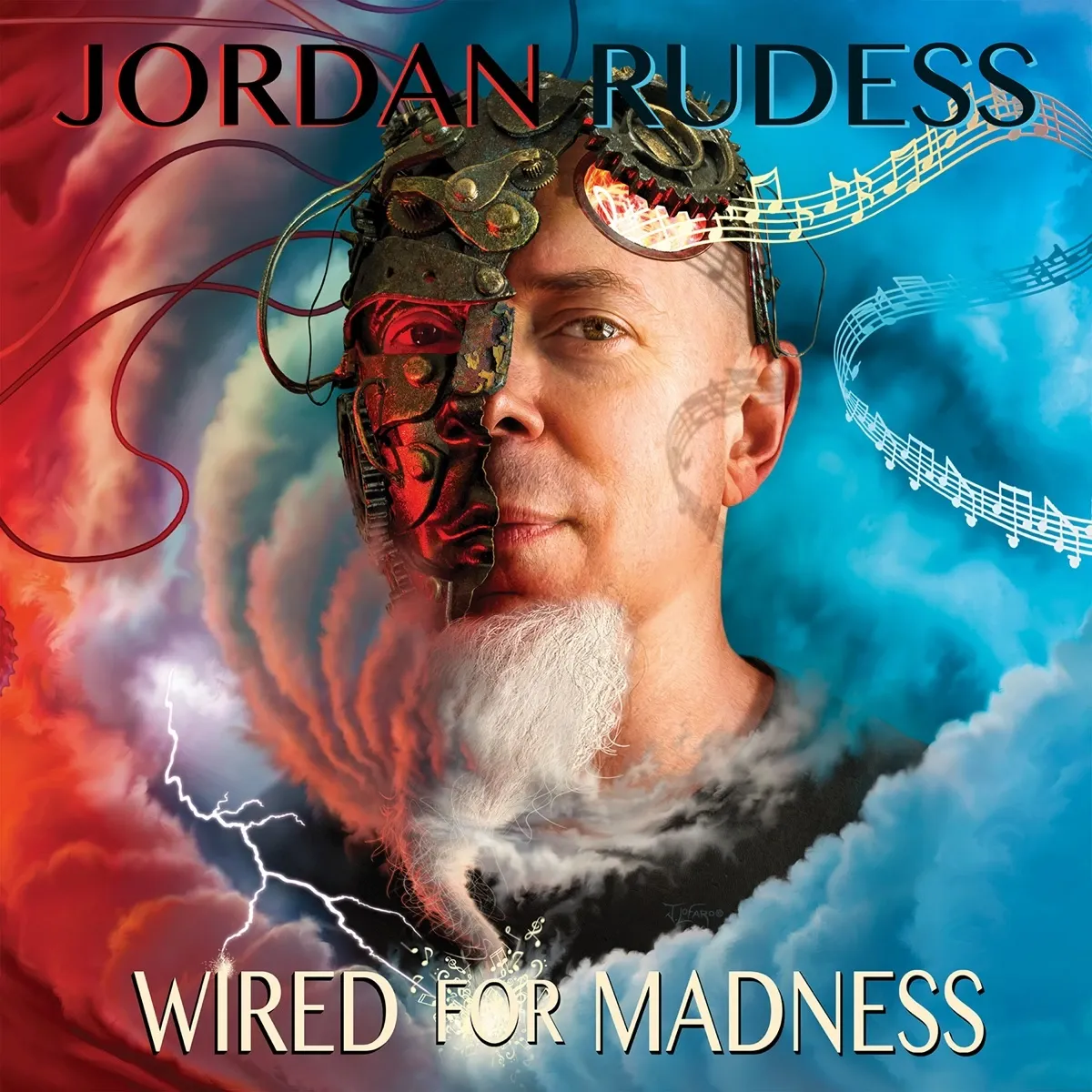
- Jerry LoFaro
Solo albums · Jordan Rudess · 2019
Wired for Madness
✎ Edit this releaseOfficial clips
Tracklist
- Wired for Madness, Part 1 · Subsection titles follow the later digital edition; the track runtime follows the CD edition.11:49
- 1.Bring It On
- 2.Out of Body
- 3.Lost Control
- Wired for Madness, Part 2 · Subsection titles follow the later digital edition; the track runtime follows the CD edition.22:43
- 1.Entering Delirium
- 2.The Other Side
- 3.Cosmic Chaos
- 4.Angels in the Sky
- 5.I'll Be Waiting
- 6.Human Kaleidoscope
- 7.Infinite Overdose
- Off the Ground04:51
- Drop Twist04:10
- Perpetual Shine04:30
- Just Can’t Win04:34
- Just for Today05:27
- Why I Dream06:01
Personnel
Personnel
- Jordan Rudess – Keyboards, Vocals, Guitars
Guest musicians
- Rod Morgenstein – Drums (Wired for Madness Part 1, Off the Ground, Just for Today, Why I Dream)
- Marco Minnemann – Drums (Wired for Madness Part 2)
- Elijah Wood – Drums (Drop Twist, Perpetual Shine)
- Marjana Semkina – Vocals (Wired for Madness Part 2)
- James LaBrie – Vocals (Wired for Madness Part 2)
- Shem Cohen – Whispers (Wired for Madness Part 2)
- Josh Page – Backing vocals (tracks 2, 3, 7, 8)
- Zach Page – Backing vocals (tracks 2, 3, 7, 8)
- John Petrucci – Guitar solos (Wired for Madness)
- Guthrie Govan – Guitar solo (Off the Ground)
- Vinnie Moore – Guitar solo (Why I Dream)
- Joe Bonamassa – Guitar solo (Just Can't Win)
- Alek Darson – Bass, Guitars
- Jonas Reingold – Bass (Perpetual Shine)
- Rémy Labbé, Stuart Mack, Kai Sandoval, Kalí Rodríguez-Peña – Trumpets (Just Can't Win)
- Jack Kotze, Peter Wikle, Armando Vergara – Trombones (Just Can't Win)
- Kushal Talele – Tenor saxophone (Just Can't Win)
- Josh Plotner – Baritone saxophone (Just Can't Win)
Production
- Jordan Rudess – Producer
- John Guth – Recording (Rudess vocals, Morgenstein drums, Wood drums); Mixing; Mastering
- Alek Darson – Additional engineering; Co-producer (Just Can't Win)
- Marlon Gibbons – James LaBrie vocal engineering
- Angelo Caputo – Joe Bonamassa solo engineering
- Brandon Moore – Assistant engineering (Joe Bonamassa solo)
- Gretchen Schadebrodt – Horn section engineering
- Rémy Labbé – Horn section arrangements
- Jerry LoFaro – Artwork
- Roy Koch – Layout
Wired for Madness gives Jordan Rudess a suitably large setting for an idea about technology interfering with the human mind. The title composition follows a person undergoing an experimental transformation into a partly robotic being. Unsurprisingly, the procedure does not provide a convenient excuse to keep the music simple.1
Released on April 19, 2019 by Music Theories Recordings, the album places that extended two-part work before six shorter pieces. It includes Rudess’s vocals as well as his keyboards, with guests entering different sections rather than forming one fixed band for the whole record. The official physical program contains eight main tracks; some digital editions split the title work into ten indexed sections.23
Technology inside the story
Rudess explained the title work through the character’s physical and mental decline, the promise of a technological solution and its unknown consequences. The concept gives him room for processed voices, electronic rhythms, piano and much heavier instrumental passages. Those sounds have an actual dramatic setting, rather than needing to be explained as unrelated studio experiments.1
The first part features Rod Morgenstein on drums and John Petrucci among the guitar contributions. Elsewhere, the guest cast includes Marco Minnemann, Elijah Wood, Alek Darson, James LaBrie, Marjana Semkina, Guthrie Govan, Joe Bonamassa and Vinnie Moore. The credits are attached to particular performances, so their presence should not be taken to mean everybody plays throughout.14
After the long composition
“Off the Ground”, “Drop Twist”, “Perpetual Shine”, “Just Can’t Win”, “Just for Today” and “Why I Dream” follow the title work. The change in proportions is useful: the album does not require every idea to become another twenty-minute construction. Different pieces can have different jobs within the sequence.2
The original CD joins the subsections of “Wired for Madness” into two tracks, while the later digital edition gives titles such as “Bring It On”, “Out of Body” and “Lost Control” their own indices. Those are parts of the larger work. Keeping the hierarchy visible avoids turning a difference in indexing into an imaginary set of extra songs.23
Rudess’s own commentary identifies “Just for Today” with the strain touring can place on personal relationships, while stressing that it was not a direct autobiography. “Why I Dream” takes a lighter approach to a tarot reader exploiting a client. The record therefore has subjects beyond the technological story of its opening work.1
A production assembled across rooms
Rudess tracked keyboards at home and recorded his vocals with John Guth at JGP. Guth also recorded Morgenstein and Wood’s drums, with other contributions sent in from the guests’ studios. He handled mixing and mastering as well. That is a more precise account of the recording than imagining the full cast playing together in a room.14
The original release came on CD, double vinyl and digital formats, with a limited coloured-vinyl version offered through the official store. The physical sequence is the basis for this entry, with the digital subdivision preserved in the title work’s parts.2
Plenty of room, and a reason to use it
The appeal is also the obvious risk. An album with this much instrumental ability can keep finding another direction long after a listener has understood the point. The smaller songs help give the record a different pace, and the central story supplies a connection between the more extravagant changes in the opening work.
What distinguishes Wired for Madness is not simply the presence of complicated playing. It gives Rudess a story, a set of vocal roles and several musical settings outside Dream Theater’s arrangements. The technique provides the means. The composition still has to decide when another turn is worth taking.