
Your rating
Your collection and ratings are saved in this browser and shown in My Dream Theater.
- Released
- 17 Apr 2001
- Label
- Inside Out Music
- Formats
- CD, Digital Media
- Producers
- Derek Sherinian, Simon Phillips
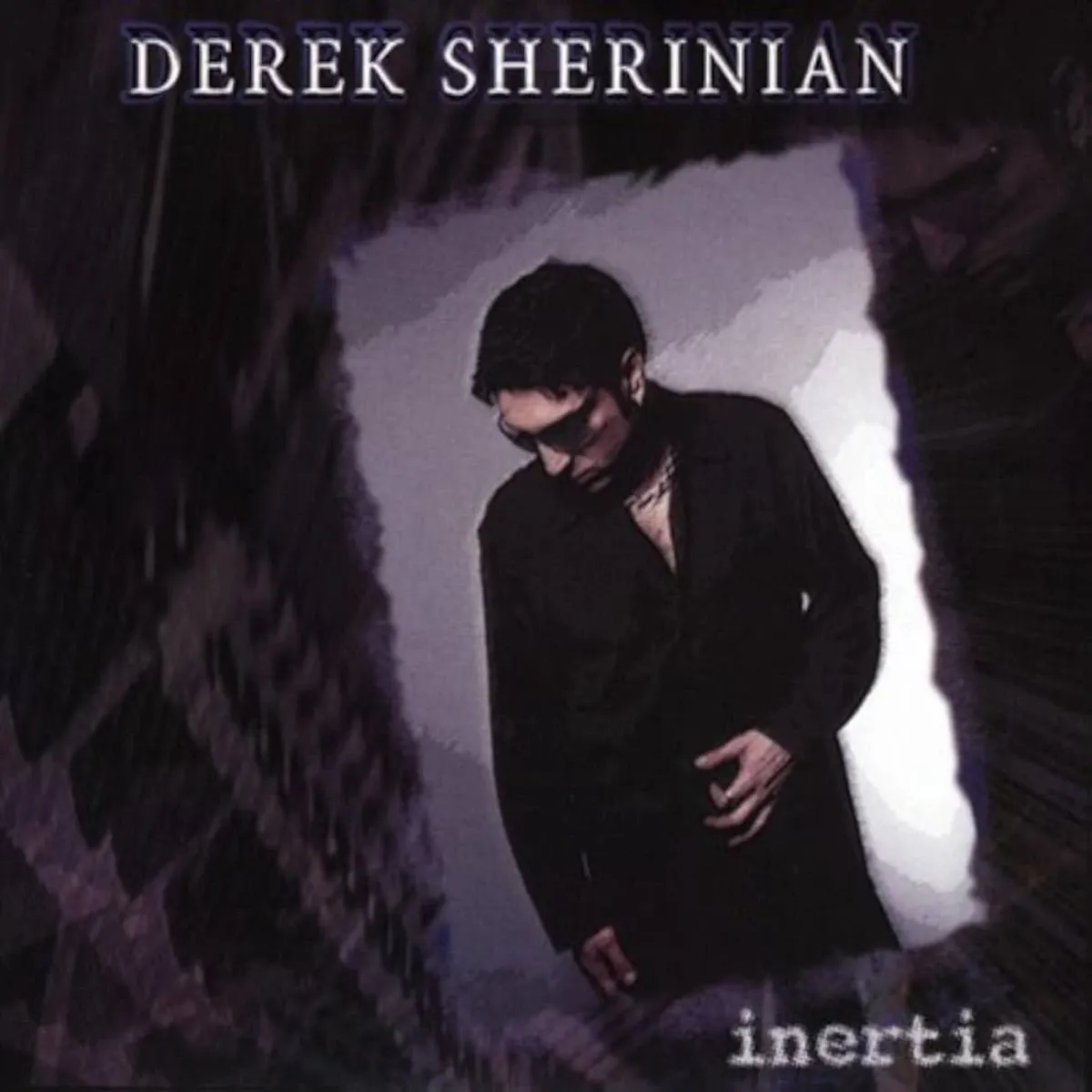
Solo albums · Derek Sherinian · 2001
Inertia
✎ Edit this releaseTracklist
- Inertia04:20
- Frankenstein (The Edgar Winter Group cover)03:31
- Mata Hari06:21
- Evel Knievel03:17
- La Pera Loca05:06
- Goodbye Pork Pie Hat (Charles Mingus cover)06:23
- Astroglide04:35
- What a Shame05:01
- Rhapsody Intro01:41
- Rhapsody in Black06:40
Personnel
Personnel
- Derek Sherinian – Keyboards
- Simon Phillips – Drums; production; mixing
- Steve Lukather – Guitar; electric sitar
- Zakk Wylde – Guitar
- Jerry Goodman – Electric violin
- Tom Kennedy – Bass
- Tony Franklin – Bass
- Jimmy Johnson – Bass
Inertia established the partnership that would become the most dependable thread in Derek Sherinian’s solo career. Simon Phillips was the drummer, but that description leaves out much of the job. He also wrote, produced, engineered and mixed. The record sounds like a collaboration because it was one.12
Released in 2001, it followed the solo Planet X album and the formation of the band of that name. Sherinian now had room for another approach: still instrumental, still technically demanding, but with more space for blues phrasing, melodic guitar and the particular character of different rhythm sections.
A record grown from playing together
Sherinian told Metalitalia that he and Phillips had met about six months earlier and started jamming in their spare time. Those sessions became writing sessions. Phillips brought Steve Lukather into the picture; Sherinian called Zakk Wylde and returning bassist Tony Franklin. Tom Kennedy and Jimmy Johnson also supplied bass on different tracks.12
The title track was the first composition, combining the rock and progressive sides of the project. “Evel Knievel” was conceived specifically with Wylde in mind. “What a Shame” went considerably further back, to a piece Sherinian had written with Al Pitrelli more than a decade earlier.1
These are useful distinctions. A solo album does not have to represent one uninterrupted burst of writing, and an older composition need not sound like an unwanted leftover. Here it joins material that grew from a new musical relationship.
Two guitarists, several ways through
Lukather and Wylde are not interchangeable visitors. Lukather’s sustained, vocal-like lines and Wylde’s more abrasive attack pull the arrangements in different directions. “Mata Hari” and “La Pera Loca” leave room for that contrast without requiring the album to turn into a sequence of guitar demonstrations. “Astroglide”, the one piece Sherinian singled out as having no guitar, changes the balance again.1
The covers make the influences explicit. Edgar Winter’s “Frankenstein” places the music in an organ-and-synthesizer rock tradition, while Charles Mingus’s “Goodbye Pork Pie Hat” draws on the route through Jeff Beck’s arrangement. They are different compositions by different writers, rather than two examples of Sherinian’s original material.2
“Rhapsody Intro” leads into “Rhapsody in Black”, the two closing tracks credited to Sherinian and Virgil Donati. That connection to his earlier work sits alongside the newer Phillips partnership. The album does not require one to cancel out the other.2
Melody doing the work
There is plenty of difficult playing here, but the distinction between the tracks comes from the feel of the arrangements as much as the difficulty. The bass players, guitar tones and changes in pace give the listener something to follow beyond the next solo. For an instrumental record, that is a fairly important consideration.
Phillips would return repeatedly, including on Black Utopia, Oceana, The Phoenix and Vortex. Inertia is where that long-running working relationship first became a record in its own right.