
Your rating
Your collection and ratings are saved in this browser and shown in My Dream Theater.
- Released
- 24 Aug 1999
- Label
- Magna Carta
- Formats
- CD, Digital Media
- Producers
- James LaBrie
- Recording studios
- Musicians Institute, Los Angeles (rhythm-section sessions)
- Art direction
- Dave McKean
Solo albums · MullMuzzler · 1999
Keep It to Yourself
✎ Edit this releaseTracklist
- His Voice (James LaBrie cover)03:44
- Statued (James LaBrie cover)03:25
- Shores of Avalon (James LaBrie cover)07:53
- Beelzebubba (James LaBrie cover)05:23
- Guardian Angel (James LaBrie cover)07:30
- Sacrifice (James LaBrie cover)05:17
- Lace (James LaBrie cover)04:17
- Slow Burn (James LaBrie cover)06:21
- As a Man Thinks (James LaBrie cover)08:11
Personnel
Personnel
- James LaBrie – Vocals
- Matt Guillory – Keys, Piano, Sampling
- Trent Gardner – Keys, Trombone
- Mike Keneally – Guitar
- Bryan Beller – Bass (except As a Man Thinks)
- Mike Mangini – Drums (except As a Man Thinks)
Guest musicians
- Greg Critchley – Drums (As a Man Thinks)
- Mark Shannon – Bass, Fretless (As a Man Thinks)
- Dave Townsend – Additional Guitar (Shores of Avalon)
- Michael Stewart – Alto Sax, Trumpet (Beelzebubba)
- Wayne Gardner – Horn (Beelzebubba)
Production
- James LaBrie – Produced by
- Terry Brown – Engineered & Mixed by
- Ken Lee – Mastered by
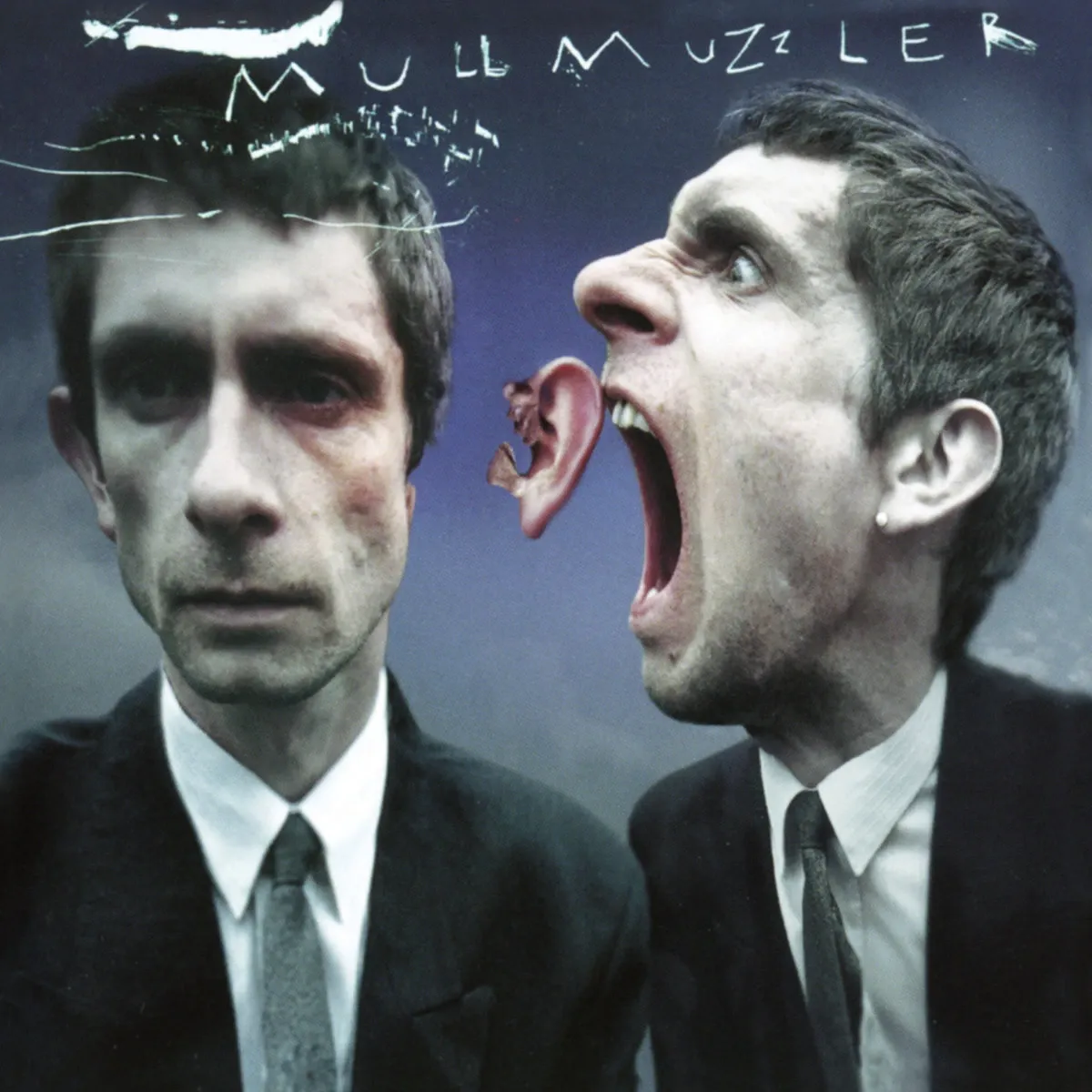
- Dave McKean – Design, illustration and photography
James LaBrie’s first solo album arrived under a name that made the whole business rather less obvious than it needed to be. MullMuzzler was his project, with his voice in front and his decisions behind it, but Dream Theater’s label had objected to him releasing a record for another company under his own name. So Keep It to Yourself became a MullMuzzler album. The contractual distinction was real. The musical distinction was rather more interesting.1
Released through Magna Carta on August 24, 1999, it gave LaBrie a different setting before Dream Theater released Scenes from a Memory that autumn. It belongs at the beginning of his solo catalogue, even though the cover does not make the connection particularly easy for the uninitiated.2
A singer with his own ideas
LaBrie had initially imagined a solo record with a stronger pop element, citing Sting and George Michael as possible directions. Magna Carta’s approach and the musicians involved helped take it towards hard rock and progressive music instead. He also wanted the players to function as a band. Being the person whose project it was did not mean everybody else should become anonymous accompaniment.1
In his contemporary Rocknotes interview, LaBrie described the music as groove-oriented hard rock with progressive elements. That ordering matters. The complicated playing was available, but it was supposed to give the songs character, rather than become the reason for every song to exist. His lyrics repeatedly returned to people struggling to express themselves, or failing to give somebody else the chance to speak. The invented name combined thinking something over with being prevented from expressing it.3
There is a useful tension in that approach. A singer taking control of his own record might be expected to make the voice the only thing that matters. LaBrie instead assembled players with enough personality to make the arrangements interesting around him. It gave him something different to respond to, while keeping the vocal melodies central.
Putting the record together
Matt Guillory, Trent Gardner, Mike Keneally, Bryan Beller and Mike Mangini formed the core of the collaboration. LaBrie produced, Terry Brown engineered and mixed, Ken Lee mastered, and Dave McKean supplied the artwork. Brown was a deliberate choice: LaBrie remembered working with him when he contributed to Fates Warning’s Parallels and wanted that experience on his own project.34
Writing and recording happened across considerable distances. Ideas went back and forth on tapes before LaBrie travelled to Los Angeles for rhythm-section sessions at the Musicians Institute. Guillory and Gardner recorded their keyboard contributions separately, and LaBrie completed his vocals in Toronto. That required him to oversee the connections between recordings made in different rooms, rather than simply turn up to sing once everything else was finished.3
The personnel also vary within the album. Greg Critchley and Mark Shannon play drums and bass on “As a Man Thinks”. Dave Townsend contributes guitar to “Shores of Avalon”, while Michael Stewart and Wayne Gardner supply the additional horn colours on “Beelzebubba”. Copying the main five musicians across every track would lose some of what makes the record distinctive.24
Hard rock with room around it
“His Voice” is a compact introduction to the heavier side. In his October 1999 review for All About Jazz, Glenn Astarita heard echoes of Deep Purple and Black Sabbath in its opening chords, with the rhythm section adding movement underneath. He also drew attention to the melodic choruses and Guillory’s keyboard arrangements. That gives a more useful picture of the album than simply describing it as something by the singer from Dream Theater.5
Astarita had a reservation too: Keneally could have been given more solo space, particularly when keyboard sounds were occupying territory an actual guitarist might have handled. It is a fair question for a record with this many capable players. A strong arrangement depends on what a part contributes, not on how many instruments can plausibly be made to play it.5
The sequence moves from the shorter “His Voice” and “Statued” into the longer “Shores of Avalon”. “Guardian Angel” and the closing “As a Man Thinks” also have considerably more space than the opening pair. There is no obligation to make every track the same sort of statement. The important link is the singer and the attention to the song, rather than a fixed template for its length.2
“Beelzebubba” broadens the instrumentation with the horns, while “Sacrifice”, “Lace” and “Slow Burn” sit between the more extended pieces. Even a glance at the credits makes clear that this was a record assembled to allow different combinations of musicians. It was not just another familiar lineup operating under a stranger name.2
The first chapter
The unusual billing would change on the next album, when LaBrie’s name was added to MullMuzzler. By Elements of Persuasion, the moniker had gone altogether. None of that makes Keep It to Yourself a separate band’s history that should be detached from his solo work. The collaborators, writing relationships and practical reasons behind the name are part of the same story.1
The debut’s value is in hearing LaBrie take responsibility for that story himself: choosing the musicians, developing the material and shaping a record around the kinds of songs he wanted to sing. The voice was familiar. The setting gave it other possibilities.
Footnotes
-
The Pure Rock Shop, James LaBrie interview, April 1, 2002, on the project’s origins and original billing. ↩ ↩2 ↩3
-
Magna Carta’s James LaBrie Bandcamp, Keep It to Yourself, release date, track list and track-specific personnel. ↩ ↩2 ↩3 ↩4
-
Steph Perry, James LaBrie interview, August 12, 1999, Rocknotes. ↩ ↩2 ↩3
-
Glenn Astarita, contemporary Keep It to Yourself review, All About Jazz, October 1, 1999. ↩ ↩2