
Your rating
Your collection and ratings are saved in this browser and shown in My Dream Theater.
- Released
- 11 Sept 2001
- Label
- Magna Carta
- Formats
- CD, Digital Media
- Producers
- James LaBrie
- Art direction
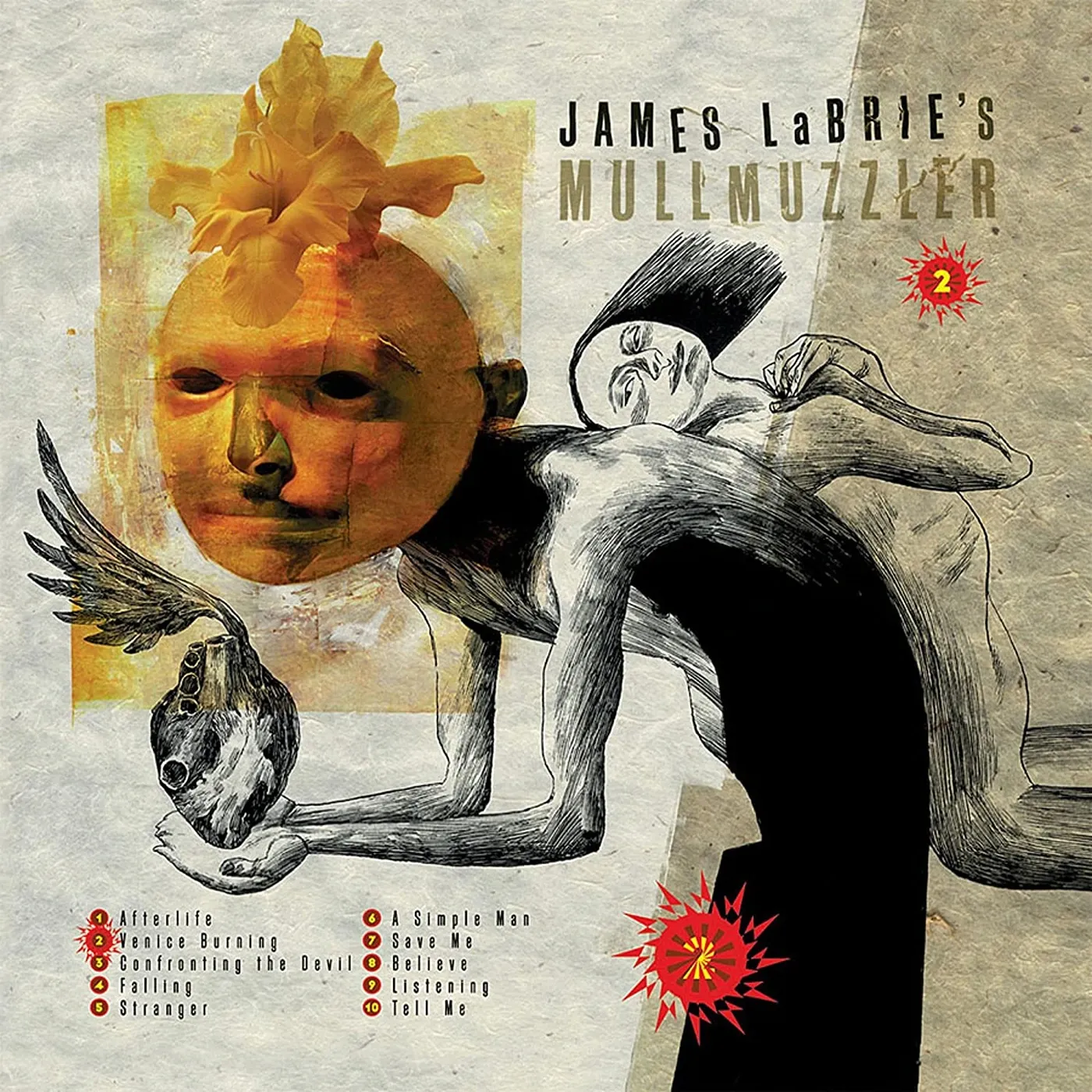
- Dave McKean
Solo albums · MullMuzzler · 2001
MullMuzzler 2
✎ Edit this releaseTracklist
- Afterlife (James LaBrie cover)05:21
- Venice Burning (James LaBrie cover)06:26
- Confronting the Devil (James LaBrie cover)06:20
- Falling (James LaBrie cover)03:52
- Stranger (James LaBrie cover)06:32
- A Simple Man (James LaBrie cover)05:20
- Save Me (James LaBrie cover)04:11
- Believe (James LaBrie cover)05:00
- Listening (James LaBrie cover)04:14
- Tell Me (James LaBrie cover)05:14
Personnel
Personnel
- James LaBrie – Vocals
- Trent Gardner – Keys, Spoken Word
- Matt Guillory – Keys, Piano, Sampling
- Mike Keneally – Guitar
- Mike Borkosky – Additional Guitar
- Bryan Beller – Bass
- Mike Mangini – Drums
Production
- James LaBrie – Produced by
- Vic Florencia – Mixed by
- Jim Brick – Mastered by
- Dave McKean – Design & Illustration
The second MullMuzzler album made one useful improvement before the music even started: James LaBrie’s name was now on the front. The first record had required an explanation of who MullMuzzler actually was. For the follow-up, he had secured permission to make the connection explicit. Released by Magna Carta on September 11, 2001, MullMuzzler 2 continued his solo work with much of the same musical company, but a more direct working relationship behind the songs.12
This is the second LaBrie solo album, regardless of the name above the title. The musicians were important to its identity, but MullMuzzler was the vehicle through which he was making his own records. It did not represent a departure from Dream Theater, and it was not meant to provide an interchangeable version of the same music.
Less distance between the writers
For Keep It to Yourself, much of the writing had involved sending recordings and ideas over long distances. This time, LaBrie and Matt Guillory spent more time together. LaBrie explained that being in the room meant they could respond to each other immediately, try different ideas and then let the songs settle before deciding whether a part was finished. The advantage was musical as much as practical: they could hear a thought develop instead of waiting for another tape to arrive.1
In a statement circulated in August 2001, LaBrie described Guillory as the main partner in getting those ideas moving. A riff or initial song would become something they could shape together, adjusting the sections and vocal melody until it felt complete. That is a more useful account of the collaboration than assuming a solo vocalist simply chose some finished backing tracks.3
There were other writing relationships too. Trent Gardner contributed to “Afterlife”, while the Shadow Gallery connection brought Carl Cadden-James and Gary Wehrkamp into “Venice Burning” and “Confronting the Devil”. The two latter songs form a connected story. The connected writing gives those tracks their own place within the record.4
A band with its own character
Mike Keneally, Bryan Beller and Mike Mangini returned on guitar, bass and drums, with Guillory and Gardner on keyboards and Mike Borkosky contributing additional guitar. LaBrie produced the album, Vic Florencia mixed it and Jim Brick mastered it. Dave McKean again supplied the artwork, giving the two MullMuzzler records a visual connection as well as a musical one.5
Mangini’s role was particularly important to what LaBrie wanted from the arrangements. In the label’s album notes, he described asking for groove and a natural drum sound rather than an oversized, artificial production. These were capable musicians being asked to make the songs move, rather than demonstrate everything they could fit between two choruses.4
That is worth remembering when looking back from Mangini’s later years in Dream Theater. His association with LaBrie was already established here. The drummer was not recruited retrospectively into this history because of the job he would eventually get.
Different kinds of intensity
“Afterlife” supplies the heavier progressive opening. It is a separate composition from Dream Theater’s “Afterlife”, not LaBrie revisiting a song from When Dream and Day Unite. The shared title has no bearing on the performance.5
“Venice Burning” and “Confronting the Devil” take the emotional subject matter somewhere considerably darker. LaBrie’s account describes a father discovering that a trusted friend has abused his son, killing that friend, and then confronting the consequences of leaving his child without him. The connection between the two tracks matters more than treating each title as an isolated piece of angry rock music.4
“Falling”, “Believe” and “Listening” occupy other places in the sequence. There is a useful distinction between emotional weight and musical heaviness. A song does not need the most aggressive arrangement on the record to carry the most difficult feelings. A vocalist’s phrasing and the space around it can do as much as another heavy riff.2
The track list also includes “Stranger”, “A Simple Man” and “Save Me” before arriving at “Tell Me”. Most of the songs remain within roughly four to six and a half minutes. There is enough room for the players, but no long closing epic imposing the proportions of a Dream Theater album on the sequence.2
Finishing the MullMuzzler chapter
The release plans changed along the way. In May 2001, LaBrie was discussing an August 7 target and explaining how his name would sit alongside MullMuzzler on the cover. The finished album’s September 11 release should therefore be kept separate from that earlier proposed date. Both belong in the chronology, but they are not equivalent evidence of when the record appeared.26
MullMuzzler 2 would be the last studio album issued under the moniker. Elements of Persuasion followed under James LaBrie’s own name in 2005. The change in billing can make the discography look as though it starts again, but the continuing partnership with Guillory is a clearer guide to what actually happened. The solo catalogue had already begun, and this was an important step in giving it a recognisable identity.
Footnotes
-
The Pure Rock Shop, James LaBrie interview, April 1, 2002, on naming and writing MullMuzzler 2. ↩ ↩2
-
Apple Music, MullMuzzler 2, ten-track edition and timings. ↩ ↩2 ↩3 ↩4
-
James LaBrie’s contemporary account of working with Matt Guillory, archived by Blabbermouth, August 23, 2001. ↩
-
Magna Carta’s James LaBrie Bandcamp, MullMuzzler 2, artist commentary, release date and credits. ↩ ↩2 ↩3
-
James LaBrie, official MullMuzzler 2 personnel and production credits. ↩ ↩2
-
James LaBrie’s May 2001 progress update and proposed release date, archived by Blabbermouth. ↩