
Your rating
Your collection and ratings are saved in this browser and shown in My Dream Theater.
- Released (Germany)
- 23 Feb 2007
- Released (US)
- 13 Mar 2007
- Label
- Inside Out Music
- Formats
- CD, Digital Media
- Recorded
- October 2006
Solo albums · Dominici · 2007
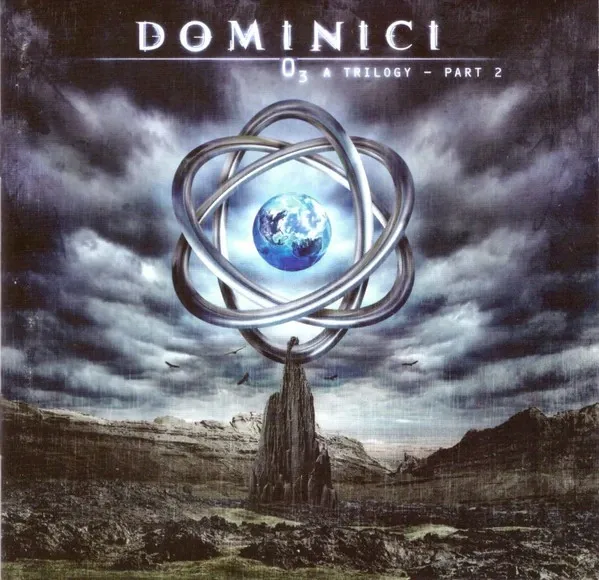
O₃: A Trilogy, Part 2
✎ Edit this releaseTracklist
- The Monster08:28
- Nowhere to Hide05:06
- Captured04:16
- Greed, the Evil Seed07:26
- School of Pain07:23
- The Calling06:39
- The Real Life03:28
- The Cop04:48
- A New Hope06:52
Personnel
Personnel
- Charlie Dominici – Vocals
- Brian Maillard – Guitar; production; recording; editing
- Americo Rigoldi – Keyboards
- Riccardo Atzeni – Bass
- Yan Maillard – Drums
The eight-minute instrumental opening of O₃: A Trilogy, Part 2 makes the change from its predecessor fairly difficult to miss. Charlie Dominici had started the story alone with an acoustic guitar. Now he had a band capable of playing the progressive metal arrangements he had wanted to write, and he gave them the beginning of the album to establish it.1
Released in 2007 through InsideOut, Part 2 continues the story introduced on the independent 2005 record. It was issued under the group name Dominici. Charlie was quite explicit about that change: he wanted the other musicians recognised as members of a band, rather than as his backing players.2
Finding a group that already worked
Mike Portnoy suggested advertising through the Italian Dreamers fan club. Among the responses, Solid Vision offered something particularly useful: musicians who already played together, rather than individuals scattered across several countries. Dominici flew to Sardinia to meet them and make a demo.1
The lineup paired him with guitarist Brian Maillard, drummer Yan Maillard, keyboardist Americo Rigoldi and bassist Riccardo Atzeni. The Maillard brothers came from Switzerland and were based in Italy. Brian’s biography dates the album sessions to October 2006.3
It was a practical solution to a problem that can easily become expensive. Excellent individual players do not automatically make a functioning group, particularly when they have to travel across the world before discovering whether they can work together.
The Monster and the story
The opening “The Monster” functions as an overture. Dominici chose the title in reference to a character in the story, rather than using the more conventional label. “Nowhere to Hide” then brings the voice into an arrangement with considerably more force behind it than the first record could provide.1
“Captured”, “Greed, the Evil Seed”, “School of Pain” and “The Calling” move through the character’s predicament. “The Real Life” offers a shorter change of scale before “The Cop” and the closing “A New Hope”. The contrast between the long instrumental entrance and these vocal scenes is one of the record’s organising features.4
Charlie supplied the lyrics and brought musical ideas to the group, which then developed the arrangements collectively. That gave the narrative a consistent author while leaving the instrumentalists room to shape how it was told. The harder riffs and extended passages are part of that new working relationship.2
The middle chapter
Part 2 makes more immediate sense to a progressive metal audience than the acoustic opening record, but that creates its own risk. It is easy to hear the Dream Theater connection and stop there. The more revealing comparison is between Charlie’s two records: the same story and voice now have a band-sized dramatic range.
Dominici subsequently supported Dream Theater on selected dates during the 2007-2008 touring period. The third album was recorded in November 2007, bringing the trilogy to its conclusion the following year.3
Footnotes
-
Riccardo Angelini, Charlie Dominici interview, March 2007, recruitment and The Monster. ↩ ↩2 ↩3
-
Josh Turner, Charlie Dominici interview, Music Street Journal, band identity and writing process. ↩ ↩2
-
Brian Maillard, official biography, lineup’s origins, October 2006 sessions and later activity. ↩ ↩2
-
MusicBrainz, original German CD, February 23, 2007, and nine-track sequence. ↩