
Your rating
Your collection and ratings are saved in this browser and shown in My Dream Theater.
- Released
- 18 Apr 2008
- Label
- Inside Out Music
- Formats
- CD, Digital Media
- Recorded
- November 2007
Solo albums · Dominici · 2008
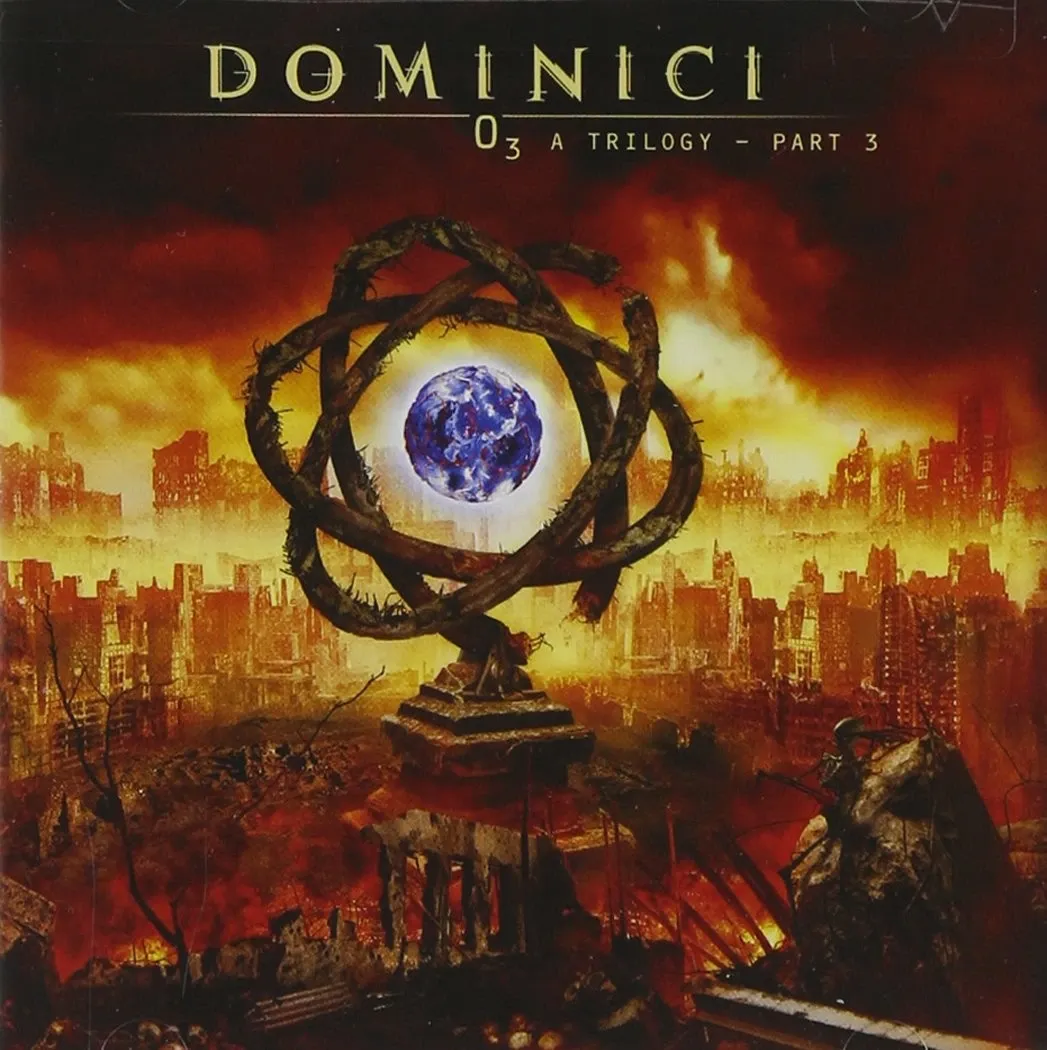
O₃: A Trilogy, Part 3
✎ Edit this releaseTracklist
- King of Terror07:51
- March Into Hell05:58
- So Help Me God04:23
- Liquid Lightning05:23
- Enemies of God10:06
- Revelation06:56
- Hell on Earth05:11
- Genesis10:49
Personnel
Personnel
- Charlie Dominici – Vocals
- Brian Maillard – Guitar
- Americo Rigoldi – Keyboards
- Riccardo Atzeni – Bass
- Yan Maillard – Drums
By O₃: A Trilogy, Part 3, Charlie Dominici’s return had become more than an interesting footnote to Dream Theater’s early history. The acoustic solo opening had developed into a full progressive metal band, and the final chapter arrived with the same musicians who had made Part 2. There was a working group behind the voice now.12
The album was recorded in November 2007 and released through InsideOut in April 2008. Brian Maillard played guitar, Yan Maillard drums, Americo Rigoldi keyboards and Riccardo Atzeni bass, with Charlie continuing as singer and the author of the trilogy’s central story.13
Making the last chapter
The recording was made in Sardinia, with Dominici travelling from his homes abroad to work with the musicians. In a 2008 interview later revisited by David Randall, he described an unglamorous computer-based process, a good deal of espresso and a demanding schedule. The scale of the finished arrangements did not depend on a similarly extravagant studio setup.2
That is a useful detail for a record with so much going on. The elaborate parts come from the players and the construction of the music. They do not require the listener to imagine a huge recording complex behind every change of time or keyboard layer.
Eight tracks, a substantial ending
“King of Terror” opens the eight-track sequence, followed by “March into Hell” and “So Help Me God”. “Liquid Lightning” occupies a shorter central position before the much longer “Enemies of God”. The final stretch moves through “Revelation” and “Hell on Earth” to “Genesis”, which runs beyond ten minutes.3
The title “Genesis” is an appropriate complication for the end of a trilogy. The record has to supply a conclusion while leaving room for the story’s larger implications. Musically, the long closing piece gives the band space to resolve material at a different pace from the more immediate opening songs.
Charlie’s voice has to carry character and narrative through much denser surroundings than Part 1 offered. The band can supply aggression, tension and instrumental movement, but the words still need to remain intelligible as drama. That is the central balancing act of these two electric chapters.
Reception and an ending in more than one sense
The contemporary Get Ready to ROCK! response praised the performances and the way the tracks worked as a complete sequence. Randall returned to the album in 2020 as a record he felt had been overlooked. His retrospective also recalled Dominici describing the concept format as creatively exhausting, rather than something he was eager to repeat immediately.2
The three releases remain quite different listening experiences. Part 1 gives the story an intimate acoustic opening, Part 2 establishes the band and Part 3 asks that band to bring a large narrative to a close. Treating them as one project makes sense, provided the change from solo recording to group is kept in view.
The attraction of the final album is that Charlie’s later career finally has enough recorded substance to be discussed on its own terms. When Dream and Day Unite explains why many listeners found him. It does not explain everything he wanted to sing.