
Your rating
Your collection and ratings are saved in this browser and shown in My Dream Theater.
- Released
- 2 Sept 1997
- Label
- Domo Records
- Catalog number
- 71020-2 (US); DJCY-7004 (Japan)
- Formats
- CD
- Producers
- Jordan Rudess, Rod Morgenstein
Side projects · Rudess/Morgenstein Project · 1997
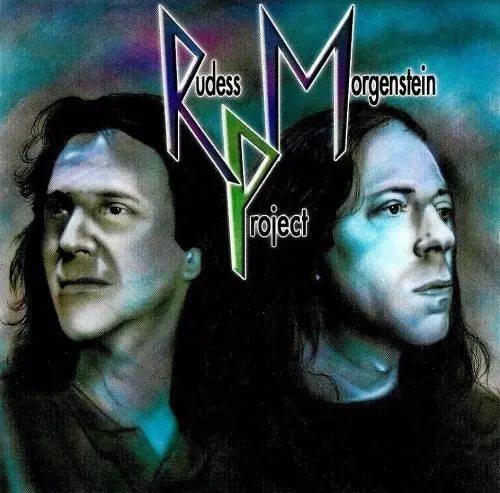
Rudess/Morgenstein Project
✎ Edit this releaseTracklist
- Don’t Look Down7:23
- Sloth3:34
- Drop the Puck3:50
- Crossing Over7:35
- Never Again (For Nan)3:46
- Tailspin3:06
- Odd Man Out3:43
- Masada7:11
- Cartoon Parade4:12
- Over the Edge6:20
Personnel
Rudess/Morgenstein Project
- Jordan Rudess – Keyboards; vocal effects; guitars
- Rod Morgenstein – Drums
Production
- Kip Winger – Recording; engineering
- Kosaku Nakamura – Mixing
- John Guth – Mixing; mastering
Rudess/Morgenstein Project grew out of the sort of equipment failure that usually sends a band looking for its road crew. During a Dixie Dregs performance in Fort Lauderdale, the guitar, bass and violin rigs lost power while Rudess’s keyboards remained available. He and drummer Rod Morgenstein kept playing, discovering that the two of them could fill rather more of the room than they might have expected. The studio album followed on Domo in 1997.123
Rudess had already admired Morgenstein from the audience before they worked together in the Dregs. In his 2000 interview preserved in Through My Words, he remembered thinking that this was the drummer he wanted playing his music. The duo gave them a place to act on that idea, with both musicians writing, arranging and producing the material.24
The keyboard-and-drums format makes the sounds part of the composition. Rudess has to cover harmony, melodic lines and much of the weight usually supplied by other instruments, while Morgenstein can move between supporting a theme and pushing it into something more complicated. There is a particularly concrete example in “Masada”: its opening sound began as a rainstick sample. Rudess filtered it until it carried a discernible pitch, then assigned controls that let him change its frequency and width as he played. The rather unlikely source became an instrument.5
Kip Winger recorded and engineered the album. The credited production is shared by Rudess and Morgenstein, with Kosaku Nakamura and John Guth handling mixing and Guth mastering the record. Across the ten tracks, longer pieces such as “Don’t Look Down,” “Crossing Over” and “Masada” sit alongside the more compact “Sloth,” “Tailspin” and “Odd Man Out.” The format gives the duo room to change scale without introducing another player every time the arrangement gets busy.23
The partnership also put Rudess on the road with Dream Theater before he joined the band. Looking back in Theater of Dreams, he described opening those European shows as a chance to see the audiences, venues and touring routine firsthand. The connection therefore ran through working together and travelling together, well before his first Dream Theater studio album.6
Footnotes
-
Rudess recalls the Fort Lauderdale power failure, Through My Words. ↩
-
Contemporary duo feature, writing and production account. ↩ ↩2 ↩3
-
Original CD date, programme and personnel; Japanese Domo catalogue listing. ↩ ↩2
-
Rudess on seeing Morgenstein play and subsequently working with him, Through My Words. ↩
-
Rudess explains the Masada rainstick patch, Through My Words. ↩