
Your rating
Your collection and ratings are saved in this browser and shown in My Dream Theater.
- Released
- 1996
- Label
- Key Wiz Music
- Formats
- CD
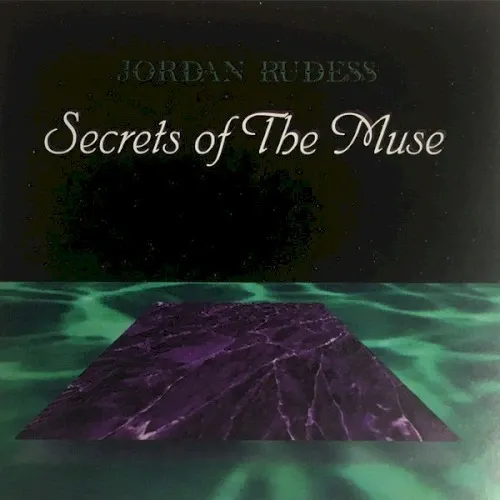
Solo albums · Jordan Rudess · 1996
Secrets of the Muse
✎ Edit this releaseTracklist
- Stillness03:09
- Deepest Love04:20
- Autumn Fire03:39
- Gentle Ways03:45
- Footpath03:43
- Virgin Snow02:54
- Darkness03:53
- Drifting East04:07
- A Call for Beauty03:31
- Cradle Song04:04
- New Life04:15
- So It Is02:51
- Sunset Swingset03:03
Personnel
Personnel
- Jordan Rudess – Piano, Synthesizers
Production
- Jordan Rudess – Producer
Secrets of the Muse occupies a quieter place in Jordan Rudess’s early catalogue than Listen. The piano is central, with synthesizer colours around it, and the material grew from improvisation. This was already part of his musical identity before the association with Dream Theater made the more explosive playing particularly familiar.12
The release history needs a little care. Catalogued Key Wiz Music editions exist for both 1996 and 1997, with the same thirteen-song sequence. The later year is common in discographies, but the earlier edition should not be discarded simply to make every list agree. The entry here uses the earliest documented edition and keeps the subsequent issue within the same album history.1
Letting a performance develop
In his 1999 fanzine interview, Rudess grouped Secrets of the Muse with Resonance as records based on improvised piano performances. He distinguished their generally mellower approach from the progressive rock of Listen. That contemporary description is more useful than assuming every instrumental solo record was conceived as a keyboard showcase in the same style.2
The sequence opens with “Stillness”, followed by “Deepest Love”, “Autumn Fire”, “Gentle Ways” and “Footpath”. “Virgin Snow”, “Darkness” and “Drifting East” lead towards “A Call for Beauty”, “Cradle Song”, “New Life”, “So It Is” and “Sunset Swingset”. The pieces are relatively compact, with none taking over an entire side in the manner of Arrival’s “Soft Landing”.1
That format places the emphasis on individual changes of mood and touch. An improvised piano piece has to establish an idea and make its development audible without relying on the arrival of another player. Adding synthesizers changes the setting, but the performance still needs a clear thread. The absence of drums does not remove the need for a sense of movement.
Part of the same musician
There is a temptation to treat this side of Rudess’s work as a break from what he normally does. In the chronology, it is the other way around: the piano records were already there. Later solo albums would return to the instrument repeatedly, sometimes through original improvisations and sometimes through arrangements of existing songs.
Secrets of the Muse is useful for hearing that continuity. Its place in the catalogue is not dependent on guest stars or a connection to a Dream Theater session. It documents Rudess working with the piano as a complete musical setting in itself.