
Tony MacAlpine
Tony MacAlpine had already made his name as a solo guitarist when Derek Sherinian and Virgil Donati brought him into Planet X. He also brought a pianist’s understanding of harmony and ensemble playing. Against Sherinian’s keyboards and Donati’s rhythmic arrangements, there was plenty of use for both. His later work with Mike Portnoy in PSMS extended a Dream Theater connection that had begun long before that quartet’s first tour.12
Piano before guitar
Growing up in Springfield
Born in Springfield, Massachusetts, on August 29, 1960, MacAlpine began piano at five and guitar at twelve. He studied with Marion Jensen at the Springfield Conservatory, then with Raymond Hanson at the University of Hartford’s Hartt school.34
The piano remained part of his recorded work. In his 2011 Guitar-Muse interview, MacAlpine explained that chamber music and accompanying other instrumentalists had taught him how to work within somebody else’s musical intentions. Playing his own pieces and joining another musician’s band were both familiar jobs. The instrument and the billing could change without requiring him to abandon that background.5
Shrapnel and the first records
Mike Varney featured MacAlpine in his Guitar Player Spotlight column in 1984. Edge of Insanity followed through Shrapnel Records in 1986, with Billy Sheehan on bass and Steve Smith on drums. Maximum Security arrived in 1987, continuing the combination of classical phrasing and demanding guitar technique.3
There was also room for the piano itself, including Chopin interpretations among the guitar compositions. MacAlpine’s classical interests were audible in the actual repertoire, as well as in the speed and articulation of the lead playing. The two instruments belonged to the same musician, even when the guitar received more attention.4
His work on Vinnie Moore’s Mind’s Eye in 1986 was a keyboard assignment. He later returned for Moore’s The Maze in 1999. MacAlpine recalled those sessions when discussing why he enjoyed helping another player realise a musical idea. A fellow Shrapnel guitarist could employ him without needing another guitarist.5
Bands, singers and a solo catalogue
M.A.R.S. and MacAlpine
The 1986 M.A.R.S. album Project: Driver put him alongside singer Rob Rock, bassist Rudy Sarzo and drummer Tommy Aldridge. He subsequently led the band MacAlpine, whose Eyes of the World appeared in 1990. These were vocal hard rock records, giving his playing a different role from the instrumental albums bearing his full name.4
The solo catalogue continued through Freedom to Fly (1992), Madness (1993), Premonition (1994) and Evolution (1995), followed by Violent Machine (1996), Master of Paradise (1999) and Chromaticity (2001). The titles describe a sustained recording career across a decade in which instrumental guitar had become a less fashionable proposition. MacAlpine continued writing and working with different rhythm sections.4
Planet X
Joining Sherinian and Donati
Sherinian’s Planet X, released in 1999, was a solo album made with Donati, Tony Franklin and guitarist Brett Garsed. MacAlpine joined the group that subsequently took its name from that record. Metal Edge’s 1999 report, preserved in Through My Words, places him at the Baked Potato with Sherinian, Donati and bassist Philip Bynoe by June of that year.61
That distinction separates two different guitarists and two stages of the project. MacAlpine played on the band’s Universe in 2000, with Tom Kennedy on bass. The recording established a trio of named members, with bass players joining them for particular albums and tours.7
Live from Oz documents their June 2001 Melbourne performance with Dave LaRue. It includes the “Atlantis” suite from Sherinian’s solo record as well as material from Universe. MacAlpine was playing the earlier music onstage without having been its original studio guitarist.7
MoonBabies and the changing lineup
On MoonBabies in 2002, Simon Phillips produced the trio, with Kennedy, Jimmy Johnson and Sheehan contributing bass. In his 2002 Ytsejam interview in Through My Words, Sherinian described Donati’s increasingly dominant writing role and the harmonic and rhythmic challenges it presented. MacAlpine’s guitar was one of the voices carrying those compositions.78
He didn’t play on Quantum in 2007, which featured Garsed and Allan Holdsworth. A return was announced in 2009, but plans and completed recordings are different things. In his 2012 Music Waves interview, MacAlpine remained interested in Planet X while saying that no concrete new work with Sherinian was in place. He was still collaborating with Donati in CAB.910
CAB and Steve Vai
Another kind of ensemble
Bassist Bunny Brunel recruited MacAlpine for CAB in 1999, alongside Dennis Chambers and Brian Auger. The debut followed in 2000, with CAB 2 in 2001 receiving a Grammy nomination. Donati would also work within this parallel fusion career.310
MacAlpine and Donati’s collaborations further included Ring of Fire, Seven the Hardway and Devil’s Slingshot. The latter paired them with Sheehan for Clinophobia in 2007. These weren’t successive names for Planet X. The players could reunite around a singer or in another instrumental trio while maintaining separate writing and recording identities.4
Guitar and keyboards with Vai
With Steve Vai, MacAlpine played both guitar and keyboards, documented on Live at the Astoria London and the G3 recordings from Denver and Tokyo. He was helping present another guitarist’s music on both instruments.3
In Guitar World in 2011, he spoke warmly of Vai’s friendship and inspiration while resisting the suggestion that the job had changed his own writing style. He enjoyed both working with a singer and making a guitar-focused record. His career didn’t require a permanent choice between leading and accompanying.11
The Dream Theater connections
PSMS
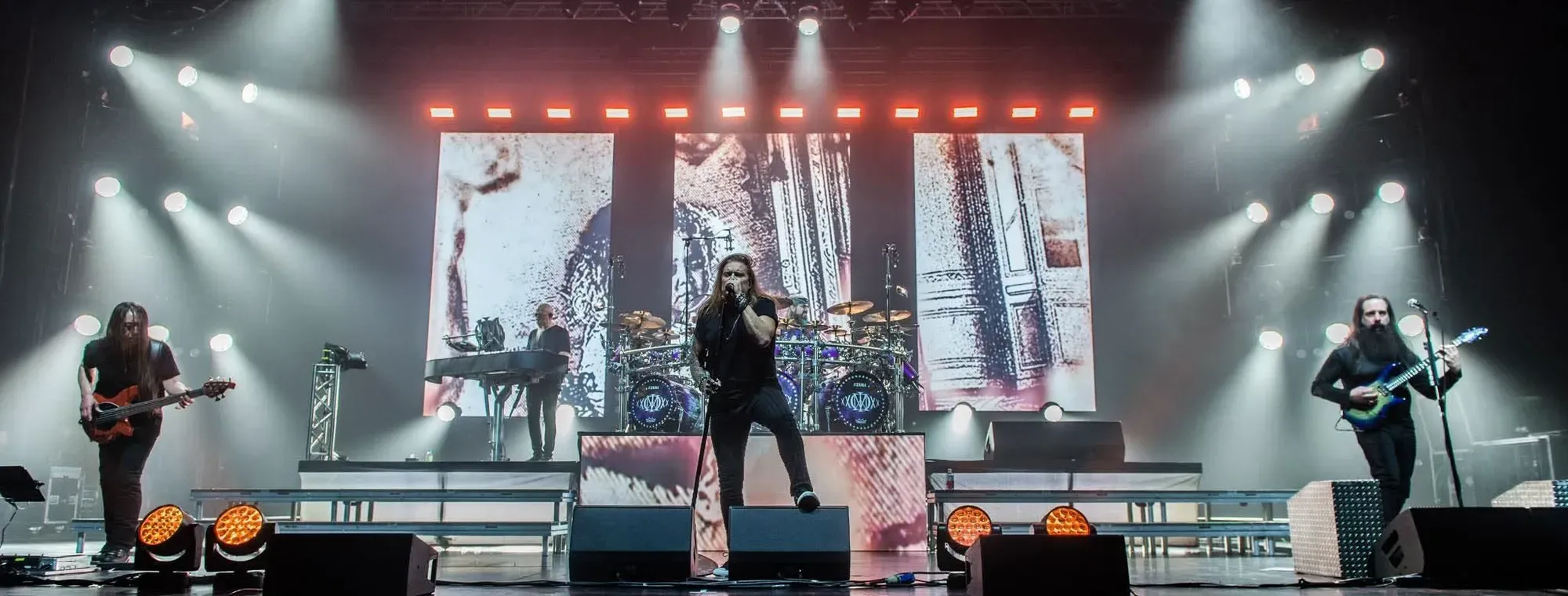
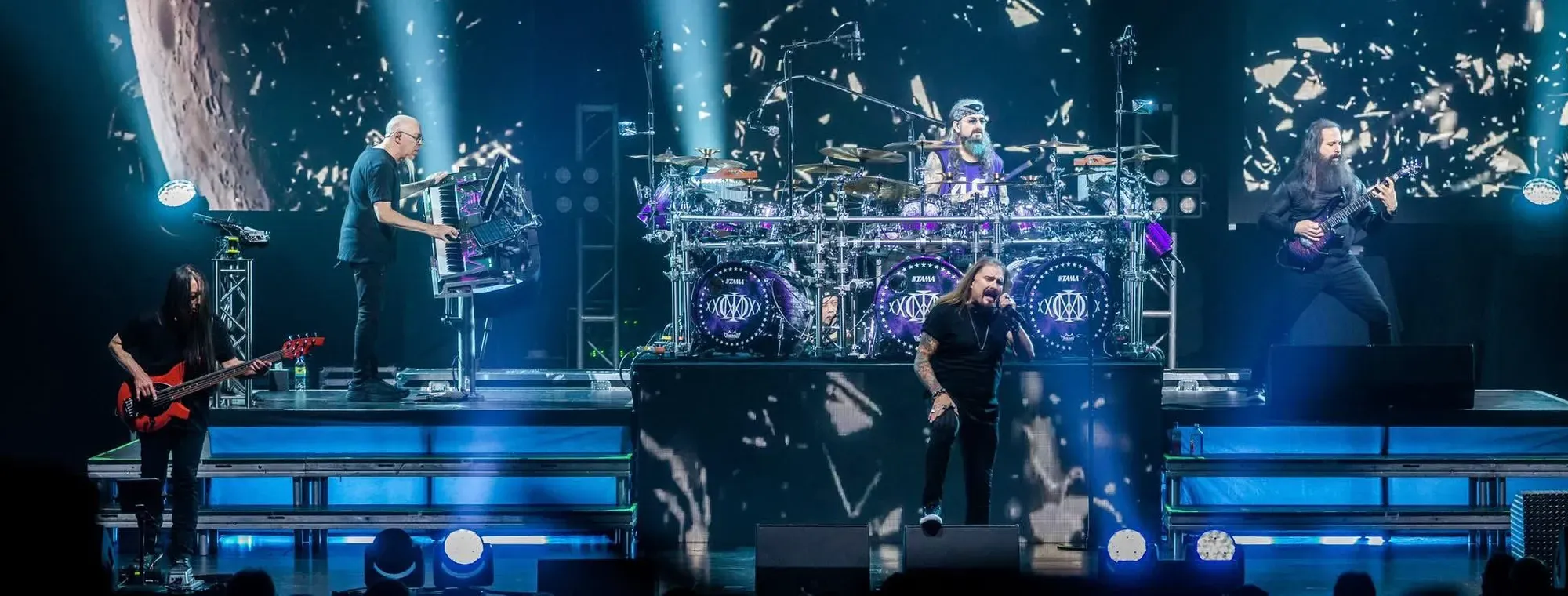
Portnoy, Sheehan, MacAlpine and Sherinian came together as PSMS, taking music from their separate careers onto the same stage. The 2012 tour led to Live in Tokyo, recorded at Zepp Tokyo on November 14 and released in 2013. The set included Dream Theater’s “A Change of Seasons: I. The Crimson Sunrise,” “Hell’s Kitchen” and “Lines in the Sand,” alongside Liquid Tension Experiment’s “Acid Rain.”2
MacAlpine’s “The Stranger” and Sherinian’s “Apocalypse 1470 B.C.” also appeared. This gave the quartet material that each member had helped establish elsewhere, rather than a programme drawn exclusively from its Dream Theater alumni. MacAlpine could play Petrucci’s guitar parts, then have the same band support his own writing.2
Portnoy’s 2012 Rhythm interview in Through My Words describes the pre-existing relationships that made the combination work. Sherinian and MacAlpine already shared Planet X, MacAlpine and Sheehan had their own history, and Portnoy had played with Sherinian in Dream Theater. At that stage, Portnoy discussed the chemistry without promising an original studio album. The concert recording is the substantial document of the quartet.12
Petrucci’s recommendation
There was another practical connection through the 2010 Dream Theater drummer auditions. In his 2012 Accordo interview, excerpted in Through My Words, Aquiles Priester explained that he was rehearsing with MacAlpine for a European tour after taking part in the auditions. According to Priester, John Petrucci had recommended him for the job.13
Priester was preparing material originally recorded by several drummers, including Smith, Donati and Marco Minnemann. The audition hadn’t resulted in Dream Theater membership, but it had helped bring another working opportunity. MacAlpine’s connection to the band extended beyond playing beside its former members.13
Returning to his own records
Tony MacAlpine appeared in 2011, his first solo album since Chromaticity a decade earlier. He told Guitar World that he had waited until he had something he wanted to write, having spent the intervening years with Planet X, CAB and Vai. The new record also brought seven- and eight-string guitars into his sound.11
Donati and Minnemann contributed drums. In his Guitar-Muse interview, MacAlpine discussed choosing musicians for what they could bring to the compositions, while retaining programmed drums where those parts suited the track. The expanded guitar range gave him a lower register to combine with bass and keyboards. His travel experiences also supplied titles, including “Ölüdeniz” and “Salar de Uyuni.”5
Concrete Gardens followed in 2015. Later that year, MacAlpine publicly faced colon cancer, prompting a December 12 benefit at the Wiltern in Los Angeles. Portnoy, Sherinian, Sheehan and Vai were among the musicians supporting him. In 2016, MacAlpine issued an encouraging update and announced his return to touring. Those statements belong to that period of treatment and recovery.41415
Further solo releases included Death of Roses in 2017 and Equilibrium in 2021. They continued the catalogue under his own name after years in which ensemble work had occupied much of his schedule.1617
Photograph by dmpexr, taken in Athens in March 2012, cropped for this profile.18
Sources
Footnotes
-
Annamaria DiSanto, Metal Edge report and Sherinian interview, 1999, Through My Words. ↩ ↩2
-
Original Live in Tokyo announcement, recording date and programme, 2013. ↩ ↩2 ↩3
-
Tony MacAlpine, biographical overview and discography. ↩ ↩2 ↩3 ↩4 ↩5 ↩6
-
Tony MacAlpine interview on ensemble playing, keyboards, composition and his 2011 album, Guitar-Muse. ↩ ↩2 ↩3
-
Derek Sherinian’s recording recollections, 2003, Through My Words. ↩
-
Planet X’s Universe credits, Live from Oz recording details and MoonBabies credits. ↩ ↩2 ↩3
-
Sherinian interview on Donati’s writing, Ytsejam, 2002, Through My Words. ↩
-
Planet X, chronology and return announcement; Quantum recording credits. ↩
-
Tony MacAlpine interview on the self-titled album, Guitar World, 2011. ↩ ↩2
-
Aquiles Priester interview, Accordo, 2012, Through My Words. ↩ ↩2
-
Original Tony MacAlpine benefit announcement, Music Connection, 2015. ↩
-
MacAlpine’s 2016 statement and return to touring, Loudwire. ↩
-
Original photograph and attribution, Wikimedia Commons, dmpexr, CC BY-SA 3.0. The profile image is a square crop of the original photograph, shared under the same licence. ↩

Releases
- UniverseSide projects · 2000 · Guitars
- Live from OzSide projects · 2002 · Guitars
- MoonBabiesSide projects · 2002 · Guitars
- Live in TokyoSide projects · 2005 · Guitar; keyboards with Steve Vai
- Live in Tokyo (DVD)Side projects · 2005 · Guitar; keyboards with Steve Vai
- OceanaSolo albums · 2011 · Guitar (tracks 1, 2)
- InstruMENTAL InspirationsSide projects · 2012 · Guitar
- Live in TokyoSide projects · 2013 · Guitar
- Live in Tokyo (Concert Film)Side projects · 2013 · Guitar
- AnthologySide projects · 2023 · Guitars