
Your rating
Your collection and ratings are saved in this browser and shown in My Dream Theater.
- Released
- 7 Dec 1999
- Formats
- CD
Solo albums · Jordan Rudess · 1999
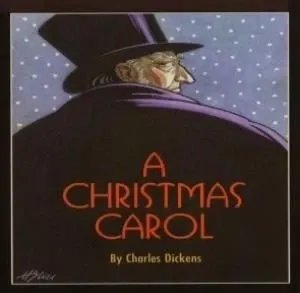
A Christmas Carol
✎ Edit this releaseTracklist
- Overture01:05
- Church Bell00:11
- Melancholy01:08
- Eerie Music03:29
- Urgent Music01:51
- Lamentation and Regret01:19
- Bell Deep Hollow00:11
- Hit00:09
- Spirit Music01:03
- Traveling Music00:48
- Merry Music01:46
- Fade to Melancholy01:13
- Melancholy02:12
- Old England00:54
- Dance Music01:21
- Fiddle03:43
- Love Song01:51
- Tortured Struggle01:07
- Overture to Second Act01:05
- Jolly Ghost01:12
- Swoosh00:26
- Tiny Tim Song02:03
- Ghost Moving01:09
- Tea Song00:47
- Scary Sound00:26
- Phantom01:03
- City00:46
- Poverty00:45
- Vertigo01:18
- Sopranos01:05
- Walk to Grave01:19
- Thunder and Lightning00:54
- Rebirth01:49
- Christmas Carol01:40
- Curtain Call01:42
- Thunder00:17
Personnel
Personnel
- Jordan Rudess – Keyboards, Piano
Jordan Rudess’s A Christmas Carol is a soundtrack, and its track list makes considerably more sense when approached that way. There are overtures, short transitional passages, atmosphere cues and effects alongside longer musical sections. Thirty-six tracks do not mean thirty-six conventional songs waiting for a chorus.1
The recording appeared in 1999 and is also catalogued as A Christmas Carol by Charles Dickens. Its association is with a theatrical treatment of the story, rather than the seasonal standards on Rudess’s later Christmas Sky. The two records serve different purposes and should not be confused because Christmas happens to appear in both titles.12
Music with a dramatic job to do
The opening “Overture” leads into “Church Bell”, “Melancholy”, “Eerie Music” and “Urgent Music”. Those titles describe functions within a production. A cue may need to establish a place, support an entrance or change the emotional temperature for only a few seconds. Judging it by the proportions of an album composition would miss the job it was written to do.1
The sequence includes an “Overture to Second Act”, a “Tiny Tim Song”, “Walk to Grave”, “Rebirth” and “Curtain Call”. That progression follows the dramatic needs of the adaptation. Several tracks are shorter than a minute, while the longer “Eerie Music” and “Fiddle” provide more sustained passages. A second “Melancholy” cue is indexed separately and has a different duration; preserving that distinction is more useful than merging the entries because their titles match.1
Rudess is credited with keyboards and piano. The published documentation does not turn this into a Dream Theater band performance, and the incidental sounds should not be assigned to the usual rock collaborators by assumption.2
A different branch of the catalogue
The soundtrack is a reminder that composing can involve precise practical requirements. A brief cue has to make its effect within the scene, often while actors and dialogue carry the audience’s attention. It can be successful without behaving like a self-contained piece for a concert stage.
That makes A Christmas Carol an unusual but relevant part of Rudess’s solo discography. The album preserves the individual cues and their sequence, including the brief effects at the edges of the music. Its interest lies in that theatrical purpose, rather than in how many minutes of keyboard soloing it contains.