
Pete Trewavas
Pete Trewavas has been Marillion’s bassist since 1982, playing through the Fish years, the arrival of Steve Hogarth and the band’s move towards a more independent way of working. Transatlantic gave him another substantial role as a writer and singer alongside Neal Morse, Roine Stolt and Mike Portnoy. Portnoy had wanted him for his melodic bass playing. The subsequent records also made room for ideas he brought in on piano and for a voice usually heard behind somebody else’s.12
From Middlesbrough to Aylesbury
Too many guitarists
Born in Middlesbrough on January 15, 1959, Trewavas grew up mainly in Aylesbury, Buckinghamshire. He learned guitar at around seven, with his friend Robin Boult, who would also become a professional musician. The switch to bass came when their first band had more guitarists than it needed. Somebody had to do the other job.34
His father’s jazz records, including Duke Ellington and Oscar Peterson, had already made him attentive to the bass. Paul McCartney supplied another example of what the instrument could do. In his 2019 Lyric Lounge interview, Trewavas also identified Yes, Genesis, Caravan and Utopia’s Kasim Sulton among the music he learned from.5
The Aylesbury bands included the Metros before Marillion became his long-term occupation. In his 2014 interview with Malcolm Wyatt, he described the town and the working musicians around it as the environment in which he developed. The career began with local relationships and gigs, rather than an audition for an already established international act.34
Joining Marillion
The first recordings
Trewavas replaced Diz Minnitt in 1982, joining Fish, Steve Rothery, Mark Kelly and drummer Mick Pointer. Marillion were moving towards their first record contract, and Trewavas played on the debut Script for a Jester’s Tear, released on March 14, 1983.16
Ian Mosley became the drummer for Fugazi (1984). Misplaced Childhood (1985) brought the band a much wider audience, with “Kayleigh” and “Lavender” forming part of its continuous programme. Clutching at Straws followed in 1987, with “Incommunicado” among its singles. Trewavas and Mosley became the rhythm section that would remain through the band’s subsequent changes.7
A different singer
Fish left in 1988, and Steve Hogarth joined for Seasons End (1989). Looking back in a Prog interview, Trewavas remembered confidence in the instrumental quartet’s existing music rather than panic about continuing. They needed the right singer to complete it.8
The new lineup moved through Holidays in Eden (1991), Brave (1994) and Afraid of Sunlight (1995). Brave used a sustained narrative and recurring musical ideas, while the later records continued developing the relationship between Hogarth’s words and the band’s arrangements. Trewavas remained involved in the collective writing as well as supplying the bass parts.79
Trewavas later credited Mosley’s arrival with raising the other musicians’ standard, as Marillion developed its music through playing together.10
Making the bass move
Trewavas’s interest in melodic bass doesn’t mean filling every space. In 2019, he described wanting a line that could develop through a song and function as another part of its orchestration. The connection to Caravan and McCartney can be heard in that approach: the bass can contribute a second melody while still defining the movement underneath the song.5
His instruments have included Warwick, Ibanez, Fender and Rickenbacker basses. In the same interview, he discussed returning to an early Warwick Thumb, while recognising the usefulness of other instruments. The choice belonged to the particular sound and job, with no obligation to use one bass for every arrangement.5
Beyond the record-company model
Marillion continued recording after their EMI period, with This Strange Engine (1997), Radiation (1998) and marillion.com (1999). Their relationship with the audience became increasingly direct, including the fan-funded 1997 American tour and the advance financing of Anoraknophobia.47
The band’s official account records 12,674 advance orders for Anoraknophobia, released in May 2001. That support helped them finance the recording and own the music. It was a concrete change in how the band could operate, rather than simply another way of selling a finished CD.11
Marbles followed in 2004, with the complete double-album programme including “The Invisible Man,” “Ocean Cloud” and “Neverland.” The official release history preserves the distinction between its different editions. Long-form writing remained part of Marillion’s work while Trewavas was also making similarly substantial records elsewhere.12
Transatlantic and Dream Theater
Portnoy’s choice
The proposed group with Morse and Portnoy was already being discussed in 1998, with Jim Matheos originally intended as guitarist. Stolt joined the eventual lineup, which recorded at Millbrook in New York in June–July 1999. In his contemporary studio note, Trewavas said that he had previously met only Portnoy. Exchanging tapes had prepared the music; playing together established the working relationship.13
That year had also brought a serious interruption outside music. Trewavas was injured in a January road accident while cycling home from the Racket Club. Contemporary reporting of his return to the stage later in 1999 places the recovery alongside the period in which Transatlantic was getting started.314
In DPRP in 2000, preserved in Through My Words, Portnoy singled out Trewavas’s melodic playing when discussing the musicians he wanted for the project. The shared interest in Genesis, Yes, Pink Floyd and the Beatles gave them common ground, while the absence of Dream Theater’s metal emphasis let the rhythm section work differently.2
Writing and singing
SMPT:e appeared in 2000, followed by Bridge Across Forever in 2001. On the second record, Trewavas’s own writing led to a featured vocal passage in “Stranger in Your Soul.”1516
Portnoy’s 2001 Theater of Dreams interview in Through My Words explains that they encouraged him to sing the section he had brought in on a demo. His voice remained in its earlier appearances, with Morse taking the final return. Stolt’s official-site interview that year also describes pushing to include more of Trewavas’s material. His contribution was expanding within a group containing some fairly assertive writers.1617
Morse’s departure put the band on hold in 2002. The same quartet returned for The Whirlwind in 2009 and Kaleidoscope in 2014, with the tours providing enough shared experience for the group to develop beyond the original studio collaboration.15
A piano-led contribution
For The Absolute Universe, Trewavas worked from piano when developing ideas. In his 2021 interview, he described finding the chorus chords and melody for “The Sun Comes Up Today”, then working out a verse around them. His contribution to a band with a particularly busy keyboard player could begin at the same instrument.10
He also supported the shorter version Morse proposed after the September 2019 sessions in Sweden. The band eventually released both The Breath of Life and Forevermore in 2021, with changes in words, singers and arrangements. The disagreement had produced two finished interpretations.1018
The 2022 tour concluded in Paris, documented on The Final Flight in 2023. Trewavas described feeling that the group might have reached the end of the road. The 2024 Morsefest release preserved earlier performances from the same year, rather than a new touring cycle.18
A less formal connection appears on Second Nature Roughs, the 2019 Inner Circle release with bonus performances from Cruise to the Edge in 2018. Trewavas joined a guest encore around Morse and Portnoy. Those recordings didn’t make him a member of Flying Colors.19
Other projects
Iris and Kino
Iris paired Trewavas and Mosley with guitarist Sylvain Gouvernaire for Crossing the Desert in 1996. It placed Marillion’s rhythm section inside another musician’s instrumental writing, with Gouvernaire also handling keyboards.20
Kino developed after Transatlantic’s first interruption. Trewavas’s 2018 Louder Than War interview credits label head Thomas Waber with introducing him to John Mitchell and John Beck. With drummer Chris Maitland, they released Picture in 2005. The emphasis was on melody and complete songs, with room for more elaborate arrangements.2122
He and Mitchell reunited for Radio Voltaire (2018), with Craig Blundell on drums. Trewavas contributed material including “Keep the Faith,” written for his sons, and “I Don’t Know Why,” which had waited since the first album’s period. A long gap hadn’t removed the reasons for working together.21
Edison’s Children
Edison’s Children gave Trewavas a wider instrumental and production role with Eric Blackwood. The band’s official account traces their first musical contact to a 2006 Marillion soundcheck at the Birchmere near Washington, D.C. Trewavas joined Blackwood at the keyboards and proposed working together.23
In the Last Waking Moments… appeared in 2011, followed by The Final Breath Before November (2013) and The Disturbance Fields (2019). Rick Armstrong subsequently became part of the group. Trewavas played guitar as well as bass, shared vocals and took on engineering and programming work.32123
The official catalogue dates A Light in Ethereal Night to September 4, 2026. A June 2026 interview with the band discusses returning to the earlier story and developing the recording around the different players’ contributions. It continued the project alongside Trewavas’s other commitments.2425
Continuing with Marillion
Marillion’s later studio records included Sounds That Can’t Be Made (2012), F E A R (2016) and An Hour Before It’s Dark (2022). The last of these was released on March 4, with Trewavas still part of the lineup established around Hogarth, Rothery, Kelly and Mosley.726
The different ensembles give him different responsibilities: Marillion’s collective arrangements, Transatlantic’s concentrated sessions, Kino’s partnership with Mitchell, and the broader playing and production role in Edison’s Children. His 2018 interview makes the practical distinction clear. Transatlantic was among his most technically demanding settings, while Marillion’s emphasis was on atmosphere and communicating the songs.21
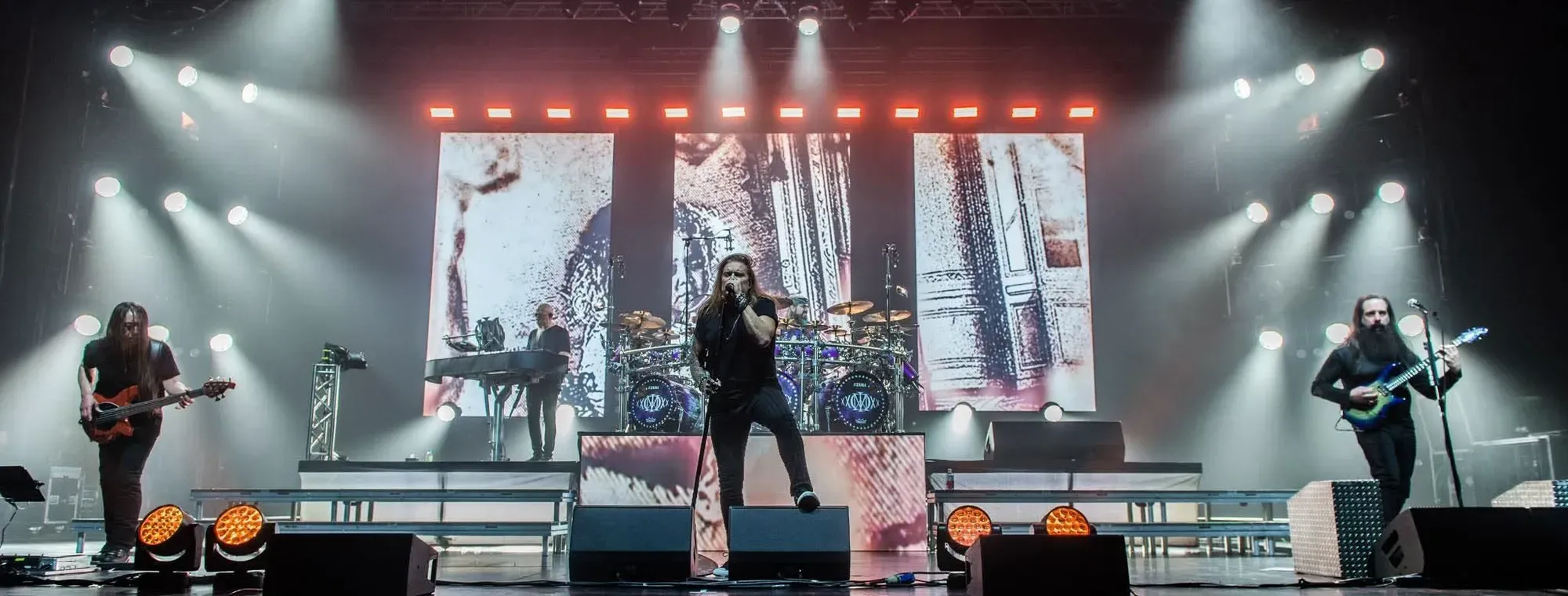
Photograph by Stefan Brending (2eight), taken at Lieder am See in 2016, cropped for this profile.27
Sources
Footnotes
-
Marillion’s official Meet the Band introduction to Pete Trewavas, 2021. ↩ ↩2
-
Malcolm Wyatt, Pete Trewavas interview, December 2014. ↩ ↩2 ↩3
-
Robin Harrison, Pete Trewavas interview on childhood, influences, bass lines and instruments, Lyric Lounge, August 2019. ↩ ↩2 ↩3
-
Marillion’s firsthand account of the Fish/Hogarth transition, Prog. ↩
-
Marillion on the development of the Hogarth-era records, Prog. ↩
-
Dan Volohov, Pete Trewavas interview on writing and The Absolute Universe, Louder Than War, February 2021. ↩ ↩2 ↩3
-
Anoraknophobia, the band’s official release and advance-financing account. ↩
-
Transatlantic’s contemporary history and Trewavas’s Millbrook notes. ↩
-
Contemporary review of the 1999 return to live performance, DPRP, 2000. ↩
-
Mike Portnoy interview, Theater of Dreams 23, 2001, Through My Words. ↩ ↩2
-
Roine Stolt interview on the second album and Trewavas’s writing, official site, February 2001. ↩
-
Official Absolute Universe, Final Flight and Morsefest announcements, including Trewavas’s comments. ↩ ↩2
-
Original Inner Circle release and guest programme; contemporary eyewitness account of the 2018 cruise encore. ↩
-
Iris, Crossing the Desert, recording personnel and programme. ↩
-
Mike Ainscoe, Pete Trewavas interview on Kino and his different musical roles, Louder Than War, March 2018. ↩ ↩2 ↩3 ↩4
-
Kino’s Picture, label-issued album and original 2005 date. ↩
-
Edison’s Children’s official biography and Trewavas’s role. ↩ ↩2
-
Steve Lazenby, interview with Trewavas, Blackwood and Armstrong, June 2026. ↩
-
An Hour Before It’s Dark, official release date and recording information. ↩
-
Original photograph and attribution, Wikimedia Commons, Stefan Brending (2eight), CC BY-SA 3.0 DE. The profile image is a square crop, shared under the same licence. ↩

Releases
- SMPT:eSide projects · 2000 · Bass; vocals
- Bridge Across Europe Tour 2001Side projects · 2001
- Live in America (Video)Side projects · 2001 · Bass; vocals
- Live in AmericaSide projects · 2001 · Bass; vocals
- Bridge Across ForeverSide projects · 2001 · Bass; vocals; organ on Smoke on the Water (bonus disc)
- Building the Bridge: The Making of Bridge Across ForeverSide projects · 2002 · Bass; vocals
- SMPT:e: The Roine Stolt MixesSide projects · 2003 · Bass; vocals
- Live in EuropeSide projects · 2003 · Bass; vocals
- Building the Bridge / Live in AmericaSide projects · 2006 · Bass; vocals
- The WhirlwindSide projects · 2009 · Bass; vocals
- The Official Bootleg DVDSide projects · 2010 · Bass; vocals
- Whirld Tour 2010: Live in LondonSide projects · 2010 · Bass; vocals
- More Never Is Enough: Live in Manchester & Tilburg 2010Side projects · 2011 · Bass; vocals
- Shine (Music Video)Side projects · 2013
- KaleidoscopeSide projects · 2014 · Bass; vocals
- KaLIVEoscopeSide projects · 2014 · Bass; vocals
- Second Nature RoughsSide projects · 2019 · Guest performer
- Live at Sweden Rock 2014 / Live at Wetlands Preserve NYC 2000Side projects · 2020 · Bass; vocals
- Overture / Reaching for the Sky (Music Video)Side projects · 2020
- Reaching for the SkySide projects · 2020 · Bass; vocals
- The World We Used to KnowSide projects · 2020 · Bass; vocals
- The World We Used to Know (Music Video)Side projects · 2020
- Looking for the LightSide projects · 2021 · Bass; vocals
- Looking for the Light (Music Video)Side projects · 2021
- The Absolute Universe: Forevermore (Extended Version)Side projects · 2021 · Bass; vocals
- The Absolute Universe: The Breath of Life (Abridged Version)Side projects · 2021 · Bass; vocals
- The Absolute Universe: The Ultimate EditionSide projects · 2021 · Bass; vocals
- The Making of Breath of LifeSide projects · 2021
- Owl Howl (Live in Paris 2022)Side projects · 2022 · Bass; vocals
- Rose Colored Glasses (Live in Paris 2022)Side projects · 2023 · Bass; vocals
- We All Need Some Light (Live in Paris 2022)Side projects · 2023 · Bass; vocals
- The Final Flight: Live at L’OlympiaSide projects · 2023 · Bass; vocals
- Can You Feel It (Live at Morsefest 2022)Side projects · 2024 · Bass; vocals
- Lay Down Your Life (Live at Morsefest 2022)Side projects · 2024 · Bass; vocals
- Live at Morsefest 2022: The Absolute WhirlwindSide projects · 2024 · Bass; vocals