

Originally published in Noise Full.com · December 2014
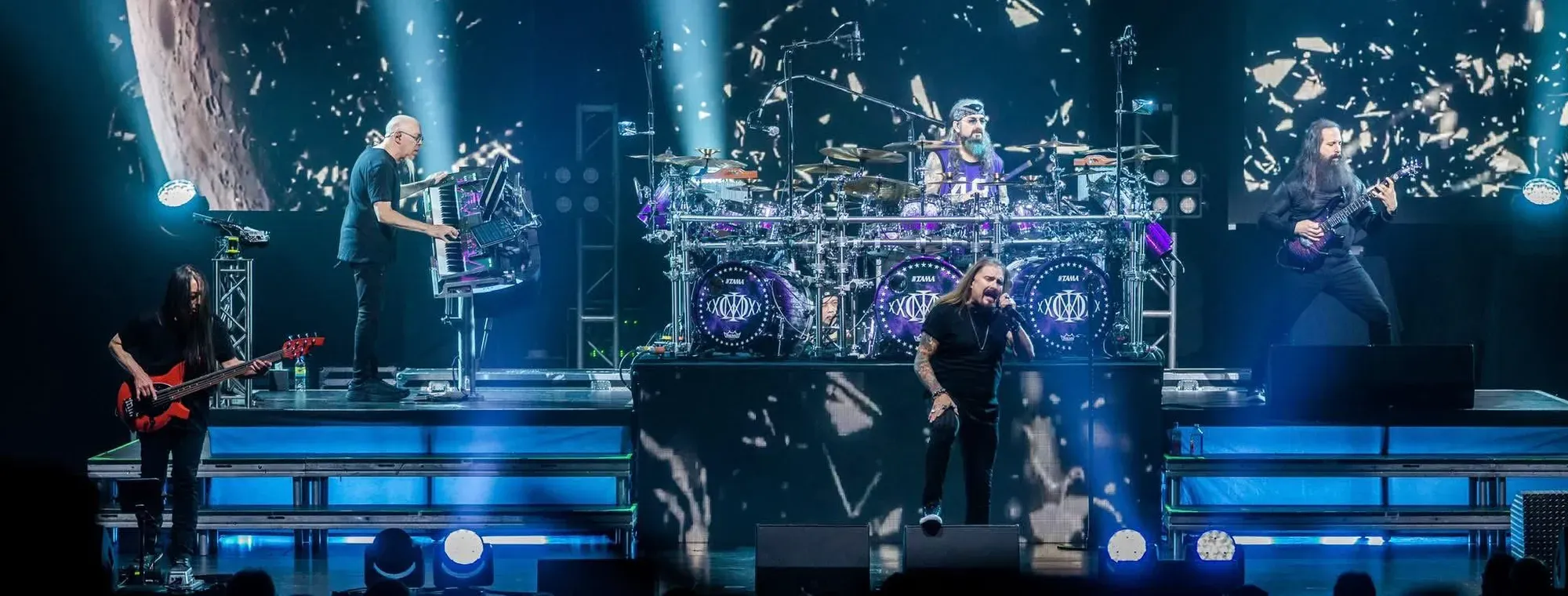
Mike Mangini (Dream Theater)
by Nick Katapidis · on Fri, 12/12/2014
InterviewMike Mangini16 min read
It's a big moment when you meet one of your favorite musicians, and see how grounded and focused on their craft they are, really pouring love in what they do. So is Mike Mangini, who visited Greece for Zildjian Day, and talked with us about the way he approaches his drumming in Dream Theater, full of energy and passion. He actually asked for more time when the manager came to warn us about the end of our limited interview time, so he could answer as many questions as possible. Incredible musician, and an amazing person. Continue reading to see what he had to say...
Welcome to Greece after 3 years. It seems that James broke his promise, because on the last show here he said that you would be back soon with Dream Theater, yet you didn’t visit us during this tour. Didn’t you have any offers to play in Greece?
Well, I don’t have anything to do with what shows get booked, so you’re asking the wrong guy man! (laughs)
This was a long tour for Dream Theater, a very demanding show playing for about three hours each night. Also, you were playing to a click track, so was it tiring for you trying to be so perfect in your execution for each show?
Well, let me just tell you about when, what and how, because things are what they are for each song. The bottom line is that, us playing that show, has to have been the greatest thing for almost every fan, of course you can’t please everybody. That’s the feedback we got, and that’s the way we felt as well. Now how could this be the case with a band that’s playing the same set every night as opposed to changing up the songs, here is why: because us five are on the same page, trying to be the best we can, playing the same show is almost like we try to make a recording of a perfect take, we’re all really trying to do that. So our focus and our attention is even better, way more, because when you change the tunes, you’re thinking about the change of tunes, you’re absorbing maybe different cues, different changes in the lighting, in the video, the tempo of the video, maybe the tempo of the guitar delays and the effects, the tempo differences between songs from night to night, and it’s all changing so much that you can’t concentrate as much on the execution.
The execution cannot be as great, it simply cannot, so Dream Theater fans seeing us are getting us trying to be the best we can, every night trying to get that perfect take be it the first show after we settle in with all the production challenges, or the last one. You can’t be the best you can be when you are not comfortable with the song feeling and production changes, you cannot be, how can you be when your mind is concerned with all these changes and unsure moments?
Your new live album “Breaking The Fourth Wall” I think has the best drum production compared to your other releases with Dream Theater. Do you think that you have finally found your sound for Dream Theater? There has been some criticism for the drum sound for the previous recordings, do you think this is the one where you sound like you want to?
Thank you. That kit took a lot of work to evolve from the last recording. My tech Eric put his two cents in. Lorne, who did my live drum set up for a tour changed my tuning. Our live engineer Nigel has worked with me since the Vai days and our mix engineer Rich is ‘the’ man behind the glass. But no, my sound evolution has room to grow. I’m always improving, everybody around me wants to get better on everything, this is what everybody does, they improve.
My kit for the “4th Wall” was born from things I learned for the recording of “Dream Theater.” Currently, I’ve already come up with some changes that I’ve designed to make life for everybody easier for the next album as far as sound is concerned, but no, it’s going to change because we change, it’s just what happens. We’re evolving, we’re all learning from each other, that’s what’s cool about it.
I mean look, this is really not just my sound we’re talking about and I sounded completely different on both records. If you just want to hear my drums the way that’s really the most reflective of how I played- the way I hear things and then play them, you have to listen to “Mullmuzzler 2.” For an amped up version of that, listen to James LaBrie’s “Elements Of Persuasion.” If you listen to “Mullmuzzler II”, this is what you get from me in the room per my perspective. I’m not saying that’s my best individual drum sounds. “Elements Of Persuasion” is incredible. We got the “Mullmuzzler II” entire kit finished in half of one day. That isn’t much time, but I’m talking about my perspective when I hear the final product versus how I crafted the relationships between the snare drum and the ride sources. Specifically, my ride sources are sometimes as loud as my snare in reality and per my own creativity. This is how I play to this day. They are just as important to me when creating a drum part.
Still, I can’t attain the best overall sound based only on what I hear while I’m sitting on the drum stool. The leakage between the toms and cymbals becomes my enemy, so I need to continue to let others help me become more than just what I perceive and I am actually happy to open up to other ideas.
So now, technology offers all these ways, in microphones, drumheads and all that, to sound in some ways cleaner, or better in order to fit in with 80 tracks of music, there are ways to have more control. Now with Dream Theater, I deal with music that’s just got so many tracks that we can’t even fit any more inputs into the computer , so that’s a lot of sounds to cut through. If I was the person responsible for all this engineering, it would take me a really long time to figure out the possibilities and to try things, so I’m just going along here grateful that these guys are knowledgeable. I’m expecting that everyone is going to continue to grow, because that’s what we do, and when you do it together it’s nice.
Besides the drum sound, I think that your playing on the older songs really showcases your unique style of drumming. On “The Shattered Fortress” or “Trial Of Tears” for example, I thought that “Yeah, this is Mike doing his thing this time”. So did you improvise the parts while playing live, or did you do those changes before the tour and changing it up during the tour?
This is something that I did live, and I was improvising, but I was also improvising from perceptions, thoughts and feelings while I’m performing. In other words, I originally needed to feel comfortable in satisfying the band and the fans. I didn’t need to satisfy myself first. It’s always great to, but I don’t need to. I need to satisfy the people I’m playing with, so we continue playing together, right? I need to satisfy the fans so that the want to hear more of it and they’re happy, most of them at least, so for me, I started to get the feeling that I reached a point where I’ve already showed everybody that I can play these songs, “there you go, there it is”. They know that I’ve a high level of chops, so I have nothing to prove in using a song to show what I can do, or as a drum show case. It is a matter of playing things that satisfy as many people as I can.
Now, I want to try a lot of things just to see what happens coming out of me without destroying the song. The “Breaking The Fourth Wall” DVD is only the beginning, I didn’t even really do much, compared to the end of the tour. By the end of the tour, I was in a completely different playing zone. You know, had that being filmed, we could have released two DVDs and you would have seen the difference, not two different drummers by no means, but you would have seen a serious evolution in playing. This is what I meant in speaking about playing the same set every night. Yes, the songs are the same, but the little bits are different and being executed with extreme focus.
So did you try something different every night?
Well, I don’t know if it’s every night, things go in waves, I need to test first, I need to make sure everybody’s comfortable, and I need to feel it, I can’t calculate some of those things. I mean, look, the guys at the band from the beginning have supported me doing that. They didn’t sit there and force me to play anything just like the record, in fact, I don’t think they wanted that exactly, but you know, you can ask them, but I don’t think so.
In fact, I can hear in my memory now James telling me from the beginning, all of them really telling me “go for it, play”, but there’s a line. It’s me, I’m the one responsible for deciding where to play it safe, and the word “safe” doesn’t mean that I’m not giving everything, but I’m trying to do what I think is right, that’s what I’m trying to say. I’m trying to satisfy the most amount of people. To hear all my band mates tell me to go for it while they trust me not to destroy the original parts, but to evolve them, enhances my feeling fortunate to work with these guys.
Many people are wondering about the degree of your involvement in the writing of the “Dream Theater” album. John Petrucci had revealed that there were some ideas from you which weren’t used on the album, what kind of ideas were those, maybe some drum patterns, a riff, a melody?
Within our group, it’s mostly drumming stuff. The way that I communicate with notes is via one of Jordan’s apps on the iPad, or on the keyboard. Now, that’s his instrument, I don’t want to be in the room playing someone else’s instrument, right? I mean it’s his, but It’s the only way I can communicate, so when I was able to do that, it was few and far between because there were so many ideas that they just keeping coming up with, there wasn’t really a room sometimes for me to be the one sitting and saying “hold it, can all you guys just give me 20 minutes while I come up with a melodic or chordal riff, can you give me 20 minutes please?”, that never happens. It’s the other way around, I have to be quiet and give them 2 hours or 20 minutes of quiet, and I’m happy to do that, but the point is it’s not the other way around.
So there wasn’t much of an opportunity for me to sit and take the time to do that. Now, quite frankly I have a lot of ideas that I don’t communicate, but also quite frankly they’re not sitting on my drums telling me what to do. I don’t sit there messing with what they do, they do what they do better than me, so it is what it is, that’s just how it is thus far.
Jordan said that with you in the band, Dream Theater were able to do things they weren’t able to do before, in terms of rhythms and in terms of drumming, so i was wondering, can you pinpoint a song or a song section that was a result of your rhythmic suggestions?
Do you want to name a song?
I guess!
Go ahead!
Let’s try “Illumination Theory” for example.
Ok, so the part that goes “Tu tu tu pa tu” (editor’s note: The section at 11:11 of the song). That whole phrase, a lot of riffs in between as far as hearing what those guys were composing, and when they weren’t sold on what they were writing, they were looking for ideas, I said “well, what about doing 3 here” or whatever.
At that point I have to say that I don’t know if that’s different to how Mike Portnoy did it, I don’t know If he said to the guys “Hey, let’s drop the key signature by a minor third”, because that’s songwriting right there and a direct contribution to the copyrightable melody, so are drums if the notes go on top of them, then the drums are a part of that, but I don’t know what happened before so I can’t tell you. All I can tell you is that I made some suggestions with notes, but I didn’t really do that a lot because I would’ve needed to stop and compose on the iPad. Those guys are so fast. They seem to always win that race (laughs)! In “Illumination Theory” it’s that part in the middle, the thing with the stick rims, It’s just a bunch of little things like that, that’s what a lot of what I do is made up of thus far anyway.
But the biggest difference is in parts, I can’t tell you the names of the parts, but they had come up with time signature changes that I play with one side of my body while I kept a feeling of three going on with the left side of my body like “one two three, one two three” (editor’s note: Mike demonstrates the feel with his limbs.) I’m going to do that today in the clinic so you’re going to know what I’m talking about. Stuff like that I think is the mechanical difference that affords me the ability to play two completely separate phrases at the same time, and to take time signature changes and give it a feeling of either four or three, you know what I mean?
Yeah, I think you do that also on “Enigma Machine”…
Yeah exactly, so it’s my coordination skills with regard to polyrhythms that is probably what Jordan targeted when he said that. Clearly, I’m not sitting behind those guys’ instruments, attempting to even begin to tell them (editor’s note: with a funny voice) “Hey guys, hey Petrucci, I came up with a great guitar riff”, how am I ever going to do that, you know? But I like getting drum parts suggested to me, those guys can come up with amazing ideas, they sometimes suggest “try the hi-hat here” or “how about trying this”, I love that, that’s what I did with Steve Vai. That’s why it’s a harmonious group situation, you can’t fake that stuff.
You did a nice extended jam during the intro of “Trial Of Tears” during the last shows, is this maybe an idea for the next album, or was it just for fun?(editor’s note: here you can see what I’m talking about)
I have no idea, it was just a jam, a lot of things that we had from the tour for “A Dramatic Turn Of Events” were never used on an album, but a couple did!
Well, you should use this one, it’s very good!
Great, I’m glad you like it! I have no idea how it’s going to fit in the scheme of things.
So do you have any goals for the next album, in terms of sound, in terms of drumming, maybe some stylistic changes that you’d like to try?
In terms of sound, again, I’m trying to learn with every experience I have, I learned a lot from the “Dream Theater” recording, and I learned a different thing from the “A Dramatic Turn Of Events” recording. From “A Dramatic Turn Of Events”, I learned a lot about almost sounding like there were two microphones in the room and that was it. That was not the case, but that’s my impression of my sound. It’s like, ok, there are those drums in the room, and you can hear all the leakage, because I have all that stuff…once you add a zillion tracks of guitar and keyboards, then my performed nuances and power disappears without detailed equalization strategies.
In terms of style, I’m at a new place after two albums and tours both in chops and comfort.
Τalking about the leakage, on the drum track of “On The Backs Of Angels” we can hear you humming, right after the piano solo where you get back on the track...
I’m sure you can, I’m always counting and stuff like that, yeah. My limbs fit into time. What is time and where here is it located? It is felt via my voice so my limbs have something tangible to connect to. On “Dream Theater”, I learned a lot about the feel with the time changes because my snare sound was completely different for me, I didn’t come up with it, and I evolved and changed because of that, here’s what I did: That really different sound made me put ghost notes off of the snare and on to ride cymbals and hi-hats, so essentially because of that change that was suggested to me, and because I was able to adapt to someone else’s ideas, I grew. I want to be clear about that, if I’m too stubborn with things that I want, the way I want them, how do you grow? But if something new comes along and I think “wow, this is really not what I want” but I’ll do it because people have a vision for something, I know that they trust me, that I’m a good guy, then let’s do it together, let’s work together and we’ll follow it.
And look what came out for me, some gem, I honestly would not go back and trade that just because that snare sound wasn’t something I wanted, because we all got something from it, right? So it is what it is, I know I’m going to grow with this next album. All I’m doing right now to prepare, is I have come up with ways to make everyone’s job a lot easier with manipulating my sound, and that will be for us to discuss in private, and for the guys to assess, the band engineer, to agree or disagree with me, because I’ve really worked hard trying to make things easier. I want to say I have a lot of 'junk' on my kit...
But you use all of it, it’s not junk!
Yeah I use it, but people can see it that way. I have a lot of stuff, I would not want to be the engineer having to try to isolate these sounds, it’s freaking impossible, I’m giving them a very tough job, so I’ve come up with ways to actually help that, so we’ll see what happens.
If I was engineering it, I would want at least a solid 4 or 5 days alone with it. I’d then want another two days after all the instruments are weaved in just to adjust to all those other frequencies. However, I basically have to get the drum sound set in a day or two. Once my sound it set, we don’t want to change it and I am not involved in the final production of it after the others still are taking time to craft their sounds. This is a big challenge for me because I am not hearing what the end result is when I record.
Jordan can work out his sounds at home as that’s what one can do with internal keyboard sounds. I cannot do that. When I take my 16 snare drums into different rooms, every single one of them changes. If another person hits them they change dramatically. It is bizarre. Also, the guitar gets worked on at some point every week for months while we’re in the studio. I don’t get that kind of time, luxury or flexibility, or foresight into possibly wanting to change some drum parts or sounds after I hear the decades of tracks put on top of them.
My toms exploded with transience on “Dream Theater.” They were incredible. However, you can’t do anything you want to the toms without affecting all the “ride” sources, which are the rides, hihats, effects and stacks, on my kit. My ride sources are more important to me than a snare drum will ever be. I think I’ve found a way to get more isolation in order to sound more like I play with regard to cutting through all the guitar and keyboard tracks.
Again, we’re all trying to evolve. I’m trying to make all of our jobs easier while shooting for the best compromise between how I hear things and create drum parts based on it, to how it is heard on the other side of the glass in the context of finished songs and a completely full sound spectrum where everyone wants to be heard the way they each perceive things.
So have you set any plans for the next album? When will you start composing and recording the new material?
I’m so tired right now, with all the travelling between the clinics and the Dream Theater tours, I need to go home and just sit with my family, I have no idea what’s going on, but I’ll tell you what, I’m just doing everything I can to be a better player, I’m doing everything I can to evolve on the drums, so I’m going to go home, and start composing riffs and putting them together, whether they are used or not. I’m just going to do what I can do to contribute, and fall into where they might be going right now.
Τhank you very much for your time Mike, it was really a pleasure talking to you.
Thank you Nikos, I hope you enjoy tonight’s clinic.