

Originally published in Dream Theater · 2017
2017 tour program essay
Article6 min read
When all things are considered it is a minor miracle that ‘Images And Words’ was ever recorded and released. I say that not as some half crazed musical agitant, but as someone who was actively involved with every aspect of its creation. Even now, 25 years on, I'm still amazed that this stunning work was actually written, crafted and recorded, in a method and mode that was so utterly alien to the prevailing zeitgeist of the era. Clearly, then, it is a testament to all those involved that the recording actually saw not only the light of day, but also set the band on a triumphant career path which shows no sign of creative or commercial decline.
It was 1992; the world had been full of image driven rock, cheekily dubbed ‘hair metal’, made by musicians dressed like an explosion in a paint factory. There was also another debilitating factor. The scruffy three-piece from Seattle, Nirvana, had managed to upset the apple cart by releasing ‘Nevermind’. It was a caustic lo-fi sonic assault that laid waste to the sort of rock music that had previously ruled the airwaves. Tradition was being challenged and it didn't bode well for a band such as Dream Theater.
Although there is a book to be written about this (and I may well write it in the not too distant future) the emergence of DT into the mainstream was against all the odds. As a journalist for Kerrang!, At the time the world's most influential hard rock magazine, I first heard the band from an advance cassette (remember that format!) of their debut album for the Mechanic label, a spinoff from the giant MCA corporation. It may have been rough and ready, and recorded in a speedy fashion, but the contents indicated that they had a unique style. Heavy metal for sure but played with such technical agility that is suggested these guys were familiar with the grand scope of timeless progressive rock. That they could really play was completely unquestionable, but the aggression suggested that their maturity was beyond their tender age. Clearly, they loved Metallica as much as they worshipped Yes.
In 1991, I was living in New York and working for Atco records, a sister label of Atlantic records. DT’s manager at the time, Derek Simon, call me and said that they were out of their deal with MCA, and were casting around for a new home. The cassette demo tape he played me of new ideas featured no vocals and was barely audible above the tape hiss, but it did contain sections of brilliantly executed instrumentals. Frankly, he needn't have even bothered giving me the tape as I was already consumed with the idea of signing the band and making a genre defining record.
Getting the label psyched was not an easy task. There were political manoeuvres going on in the background which had to be overcome and accusations that they're kind of music handle commercial place in a major label. I thought they were all wrong, and in any case really successful music nearly always comes from left of centre. After several weeks the deal inch its way to a conclusion so we sent about plans to go into the studio.
Firstly, though, a vocalist had to be appointed. Step forward Kevin ‘James’ LaBrie, a Canadian singer who had previously fronted a group by the name of Winter Rose. His mellifluous Voice an easy-going attitude added real value to the package, and a new sense of excitement crept into the project. Armed with the singer and a coveted major label deal, it was now down to pairing the group with a suitable producer. Just prior to this I had met a fast rising talent by the name of David Prater, whose technical ability and sense of purpose seemed perfect for the project. In order to get a feel for what could be achieved, and after tasking the band to write more songs, David recorded three demo tracks. The tapes far exceeded the original brief and it was agreed that yet another, perhaps pivotal, piece of the puzzle had been found.
It has been written that David and the band were like oil and water and I won't deny this. Tension was very much the by-product of the album sessions. The problem, if indeed it was a problem in the end, revolved around David's musical background and his (and to a degree my) I'm shakable vision for how the band and the album could sound. David was very much a musical equal to the band, having been himself in recording acts in the past and also a member of Santana. His technical agility was quite an issue, forcing the band to question virtually every step of the process. It is a very difficult task to ‘produce’ a band in the truest sense and David's often entrenched opinions caused immense friction between such advanced players – he himself being something of a technical wizard. It is no exaggeration to report that the sessions collapsed several times, verging at certain points on complete abandonment. It's all credit to them that both sides finish the project and saved the day and such a spectacular way.
It's true to say, however, that like all great partnerships, tension and friction often produce incredible art, and the results of this particular torturous collaboration have gone down in history as one of the most creatively successful exercises in progressive metal history. To this day, the record exudes a timeless quality, allowing every member of the band to shine and stake a claim to musical immortality.
When David finally came into my office to play me the finished mixes I was astounded. This was the brilliant record that I had been hoping to hear for months, but had feared would never be completed let alone sounds so good. Sure, members of the band have gone on record in announcing some of the production, but to those with fresh ears it was a revelation. The clean crisp separation and depth of detail elevated the album to classic status from the get-go. The fact that the songs stood head and shoulders above anything that they have crafted on the debut album was not lost either. Tracks such as ‘Under A Glass Moon’, the epic ‘Metropolis Pt 1’, ‘Learning To Live’ and the band’s undisputed anthem ‘Pull Me Under’, made for a record that mixed light, shade and full on power metal with infinite aplomb. It was a veritable smorgasbord of delights, even making room for a beautiful ballad ‘Another Day’ featuring the mesmerizing sax solo (courtesy of studio owner Jay Beckenstein) and one of John Petrucci's finest lead guitar solos.
Launched on the back of the implausibly lengthy single ‘Pull Me Under’ (weighing in at a cosy 8 minutes), the track caught fire at radio and MTV, providing the band with a platform that would springboard the record to gold status and beyond. Critics and detractors were caught with their pants down and made to eat their own words. For myself and the band it was almost a case of mystical intervention; one that made no sense to those on the outside yet to us was perfectly understandable.
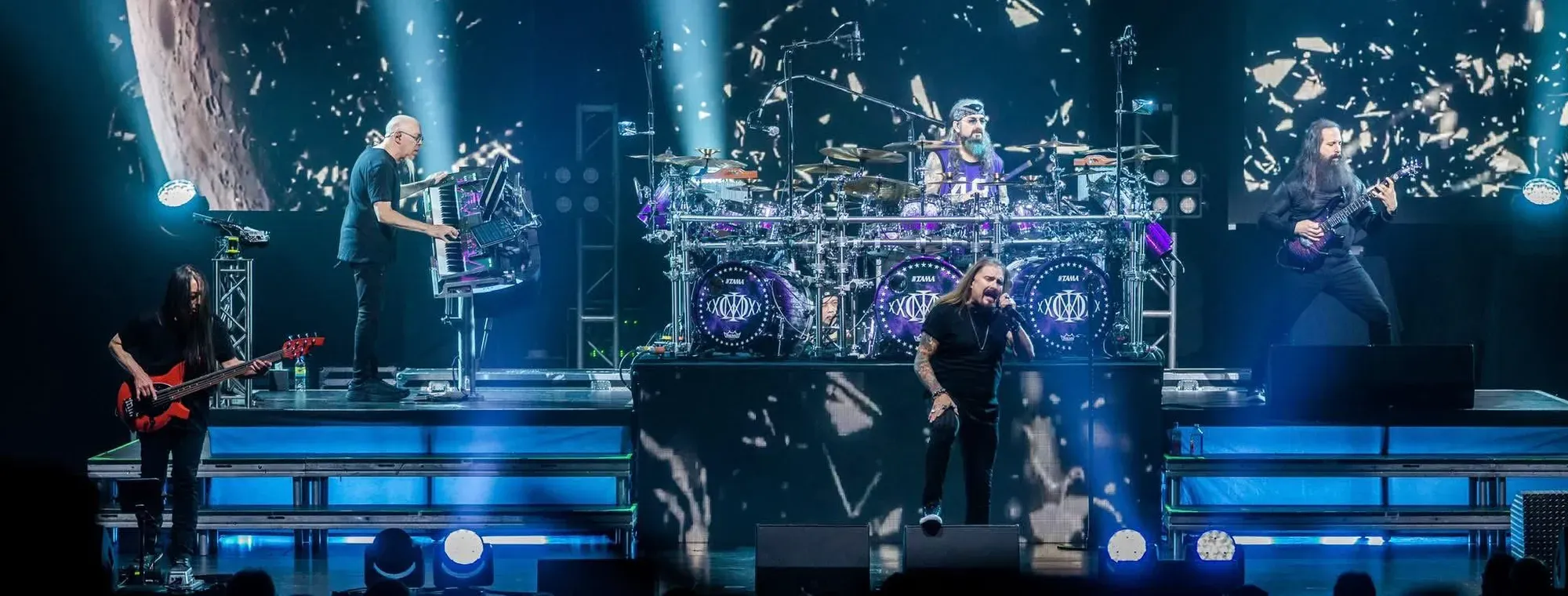
Now, after 25 years the band has made the decision to play the record live in its entirety. For so many of this will be an exhilarating moment, akin to the unveiling of the musical Holy Grail. It is an occasion that I have dreamed about and now can finally revel in all its majesty live, ears primed and ready. I for one would not miss it for the world. Sit back and soak it up!
Derek Oliver
London, March 2017