

Originally published in Radio Metal.com · February 2017
Dream Theater: Images And Words From The Past
by Nicolas Gricourt · Thursday, February 9, 2017
InterviewTranslatedJohn Petrucci21 min read
Translated from the original language with Google Translate, so the wording may differ from what was actually said.
Images And Words, the second Dream Theater album, released in 1992, is undoubtedly one of the most emblematic albums of progressive metal, the one which, failing to have laid the foundations of the genre (Fates Warning, Queensrÿche and Watchtower had appeared before), widely popularized them, with a commercial success never equaled to this day in the discography of the quintet, propelling them to the top of the mountain and installing them on a throne.
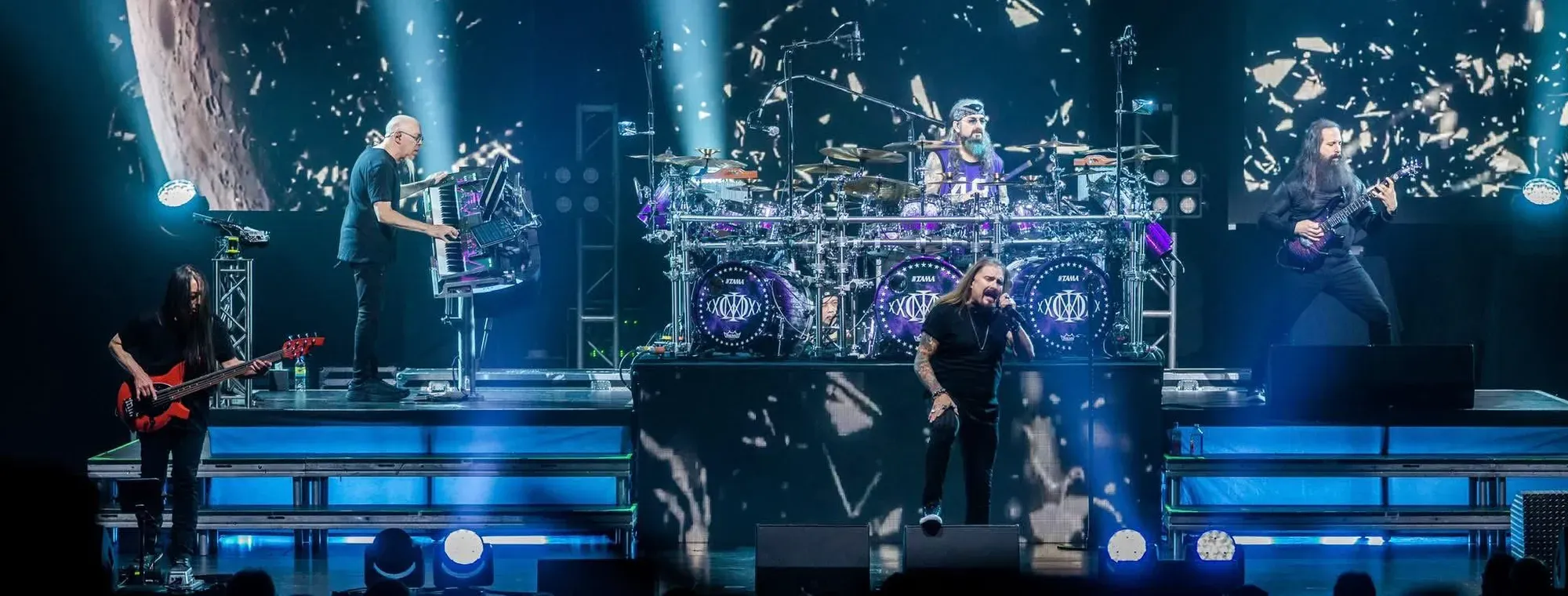
Tireless, after having stopped touring to promote their latest album, The Astonishing, Dream Theater is back on the road tomorrow to celebrate the 25th anniversary of Images And Words – it is even the second time that they organize such a tour, since they had already celebrated the fifteenth anniversary of this same album in 2007, with a visit this Sunday February 12 at the Zénith in Paris, then another on May 2 at the Zénith in Toulon.
We took advantage of these events beforehand to talk to guitarist John Petrucci and come back to this essential album.
Radio Metal: This will be the second time you’ve done an anniversary tour for Images And Words. What makes this album stand out in your discography?
John Petrucci (guitar): For a lot of people, this is the first introduction to Dream Theater. Even though we had an album before that, I think the world really discovered Dream Theater with Images And Words. And we also started our international career with this album. It was the first time that we started touring, not only in North America but also in Europe, Asia and South America. In many ways, it’s kind of the beginning for us and it’s a very special and important album for a lot of fans.
Does this twenty-fifth anniversary seem different to you than when you celebrated its fifteenth anniversary in 2007?
Yeah, that sounds a little more substantial. Twenty-five is a long time, twenty-five is half of my life. A lot has happened in the meantime and I think it’s a time that has allowed us to gain a lot of new fans who have never seen us play Images And Words songs. So it’s pretty thrilling to watch the audience and see a mix of people who are older, who are familiar, and new people who are just seeing these songs performed live for the first time.
Back then, before making Images And Words, Dream Theater’s career was very uncertain. Can you tell us about the background and your state of mind at the time?
Yeah, back then, we had released When Dream And Day Unite before, and after releasing this album, we didn’t really do anything to support it in terms of touring; we didn’t really shoot. And soon after we released the album, we actually fired our singer and left the label. So there was a period between When Dream And Day Unite and Images And Words of about a year and a half where we had no label, no touring career, no singer, and we were just rehearsing, composing songs and auditioning singers. It was a tough time because we had to keep our main jobs, whatever they were, and rehearse in the evenings. And also, at that time, there was war and therefore the possibility, in the United States, even if it was small, to be drafted. So it was a very uncertain time indeed, and it is clear that we doubted, that’s for sure. And so when we got James in the band and signed to ATCO Records, we were really hungry and we were super excited.
Do you think that at one point, in these uncertain times, Dream Theater could have thrown in the towel?
No, because we were very... We love to play together, no matter what. And even though it was hard, nothing in us said, “We need to stop.” We have always more or less been ahead, we have always moved forward. Even though it was difficult, we never doubted the strength we had together as musicians and friends.
Is it important, even with the recognition that Dream Theater enjoys today, to never forget where you come from and what you went through in the beginning?
It’s still important. The thing to remember, what we always do, is why we play music, why we write and compose, what motivates us as an artist and as a musician. And you always have to remember that. You can’t chase things that go against what you believe in or your identity as a musician, and you always have to be hungry, wanting to learn and do better. And we remember this every day.
Images And Words was therefore the first album with James LaBrie on vocals. Would you say it was a game changer?
Absolutely! Yeah, we had auditioned a lot of singers before we found James, and some of them weren’t very good and their auditions didn’t go well, and some were really good and besides, we have almost integrated some of them into the group. But when we found James, heard him for the first time, met him, and he came to where we were rehearsing and sang with us, we knew there was something different with him, it immediately stuck, we knew he had to be a member of the group. We simply knew it! First of all, he had an amazing voice that was significantly superior to the other people we interviewed. I mean his voice is amazing and he could basically sing anything. And in terms of his personality, he got along with us extremely well, and his looks and the way he behaved... He had all the ingredients that we were looking for.
The album was originally planned to be a double, but the record company turned it down. Do you regret not having released it as a double album, with the song “A Change Of Seasons”?
At the time, we were furious. When we were in the studio and the record company said they didn’t want “A Change Of Seasons” on the album, we were clearly upset, but looking back, I don’t regret it. I think it was a smart decision. Because that made Images And Words an hour-long, eight-song album, and it made it more classic. Looking back, if we had added “A Change Of Season”, I think it probably would’ve been too much.
So I imagine the record companies sometimes give good advice...
Indeed! There are people everywhere who work in record companies who are smart, who are passionate about music, who have experience, and sometimes they have very good suggestions, sometimes not, but... You know, when you’re a young band, you don’t have much choice. When you’re a more experienced band, you can discuss these things with the record company and you’re more in a kind of partnership, I find, where you can make decisions based on mutual respect and conversations. But yeah, back then, when we were a young band, we didn’t have much of a choice, but it was a good decision!
In 1992, when the album came out, grunge was exploding, and it was a style that had nothing to do with the kind of sophisticated, complex metal you played. Did you feel like you were going against the grain?
Well, we didn’t think too much about it because we were playing the kind of music that we liked. We played the kind of music that was natural to us, and we were so excited to have signed to a record company, to be able to go back to the studio and do what we love to do. So we weren’t really thinking about the musical climate. But it’s interesting now, looking back, you’re absolutely right, the music that was popular in the rock world had nothing to do with what we were doing. We were apart. It was quite unusual that we were able to have any commercial success at that time, because the biggest bands in 1992/1993 were Nirvana and Pearl Jam, and it didn’t look like what we were doing at all.
Images And Words is still your most popular album commercially to this day. How to explain that twenty-five years later, none of your albums has managed to surpass it?
The biggest thing about Images And Words was that it had a radio hit, which was “Pull Me Under.” Which means that in 1992/1993, if you put on a rock radio, there was a good chance that within an hour you would hear “Pull Me Under”. So the album got a lot more commercial reach, and as a result, it sold a lot more albums. So that was the only time Dream Theater had a commercial hit [chuckles], which is kind of funny. And that’s probably the biggest reason, because it really makes a difference.
Did you feel that this song had that kind of potential or was it a total surprise?
It was a surprise. I mean it was a special song just for us; it just sounded really cool. But, you know, it’s an eight minute song! We had no intention of making it a single, we had no idea that it would become a commercial success, it was done a bit by accident, and by the will of the fans who, at the time, would call the radio stations and say, “I want to hear the song ‘Pull Me Under’ again, I’ve never heard anything like it!” So it was motivated on a basic level by our fan base, which turned out to be something extremely powerful for us. That’s why we’re so grateful to have such amazing fans all over the world and to be able to build a career with what we’ve been doing, for over thirty years now, it’s pretty amazing!
What are you most artistically proud of about this album?
The composition. I think the songs are really solid, and even today when we play the songs live, I really feel the communication that takes place and the fun between the people watching us and us playing. They are always fun to play, the music is very pleasant. So I think the composition is very good on this album.
Do you still keep in mind the composition you had at the time? Even, did Images And Words define what would be a “standard process” for Dream Theater?
In a way, yes. Sometimes we keep that in mind. Not all the time. Sometimes when we do an album we look back and say, “Hey, that was interesting the way we wrote back then, let’s take a look at that. What did we do differently then in comparison to what we are doing now? And sometimes we analyze what we’ve done a little bit and take it into consideration. But not with each album because we like to approach them differently; every album is different. Every album we make has its own set of circumstances surrounding it. Whether it’s writing it over a long period of time, whether it’s writing it in the studio, as in the case of Scene From A Memory or Six Degrees [Of Inner Turbulence]... It really depends on each album. We just try to make each album its own unique creative experience. The last album, The Astonishing, was written in a completely different way than any of our previous albums. And so, it really wouldn’t have made sense to look back to see what we did with Images [And Words] with The Astonishing, because the whole concept was completely unique and different. So it really depends on what we’re doing.
If you could go back and start all over again, what would you change about this album?
There are some things about the way the album was mixed that were decisions that were made by the producer [David Prater] at the time that were not the band’s intentions at all. There are different things in different songs where... For example, it’s just a minor thing, but on the song “Learning To Live”, when the guitar comes into the song, it was originally supposed to fade in, and when they mixed the album, they started the guitar at full volume, directly on the first beat of the bar. So the compositional intent has been changed. But, in fact, I’ve got used to it now. It’s twenty-five years later and I don’t mind it anymore, but back then it was little things like that in the mix that bothered us. So it would be nice to maybe have a little more involvement in the mixing process, because we weren’t involved in it at all. But on the other hand, the album might not have been the same, so it’s hard to say.
And the abrupt end of “Pull Me Under”, was that your intention?
Yes. We wrote it that way.
In the past, you had invited former band members, like Charlie Dominici or Derek Sherinian, to special gigs. Haven’t you considered doing the same for the anniversary of this album with Kevin Moore and Mike Portnoy?
No, not for this one. It will only be the band members as they are today. There will be no guests. I don’t think there is any desire to do that, no.
Why?
I can’t explain it, there’s no... there’s no feeling of wanting to do that, you know. I can’t say it more clearly than that.
Interview conducted by phone on February 8, 2017 by Nicolas Gricourt.
Original text
Dream Theater : les images et mots du passé
jeudi, 9 février 2017 à 17:46 par Nicolas Gricourt
Images And Words, le second album de Dream Theater paru en 1992, est sans conteste l’un des albums les plus emblématiques du metal progressif, celui qui à défaut d’avoir posé les bases du genre (Fates Warning, Queensrÿche et autres Watchtower étaient passés avant), les a largement popularisées, fort d’un succès commercial encore jamais égalé à ce jour dans la discographie du quintette, le propulsant au sommet de la montagne et l’installant sur un trône.
Infatigable, après n’avoir cessé de tourner pour promouvoir son dernier album en date, The Astonishing, Dream Theater repart demain sur les routes pour célébrer les vingt-cinq ans d’Images And Words – c’est même la seconde fois qu’ils organisent une telle tournée, puisqu’ils avaient déjà fêté les quinze ans de ce même album en 2007 -, avec un passage ce dimanche 12 février au Zénith de Paris, puis un autre le 2 mai au Zénith de Toulon.
Nous avons profité de ces événements pour, en amont, nous entretenir avec le guitariste John Petrucci et revenir sur cet album incontournable.
Radio Metal : Ce sera la seconde fois que vous faites une tournée anniversaire pour Images And Words. Qu’est-ce qui fait que cet album est à part dans votre discographie ?
John Petrucci (guitare) : Pour plein de gens, c’est la première introduction à Dream Theater. Même si nous avions un album avant ça, je pense que le monde a vraiment découvert Dream Theater avec Images And Words. Et nous avons également démarré notre carrière internationale avec cet album. C’était la première fois que nous avons commencé à tourner, non seulement en Amérique du Nord mais aussi en Europe, en Asie et en Amérique du Sud. De bien des façons, ça marque un peu le début pour nous et c’est un album très spécial et important pour plein de fans.
Est-ce que ce vingt-cinquième anniversaire te semble différent de lorsque vous avez célébré les quinze ans en 2007 ?
Ouais, ça semble un peu plus substantiel. Vingt-cinq ans, c’est long, vingt-cinq ans c’est la moitié de ma vie. Plein de choses se sont produites entre temps et je pense que c’est un temps qui nous a permis de gagner plein de nouveaux fans qui ne nous ont jamais vu jouer les chansons d’Images And Words. Donc c’est assez palpitant de regarder le public et voir un mélange de gens qui sont plus âgés, qui sont familiers, et de nouvelles personnes qui voient tout juste ces chansons jouées en live pour la première fois.
A l’époque, avant de faire Images And Words, la carrière de Dream Theater était très incertaine. Peux-tu nous parler du contexte et de votre état d’esprit à l’époque ?
Ouais, à l’époque, nous avions auparavant sorti When Dream And Day Unite, et après avoir sorti cet album, nous n’avons pas vraiment fait quoi que ce soit pour le soutenir en termes de tournée ; nous n’avons pas vraiment tourné. Et peu après avoir sorti l’album, nous avons en fait viré notre chanteur et quitté le label. Donc il y avait une période entre When Dream And Day Unite et Images And Words d’environ un an et demi où nous n’avions pas de label, pas de carrière de tournée, pas de chanteur, et nous ne faisions que répéter, composer des chansons et auditionner des chanteurs. C’était un moment difficile parce que nous devions conserver nos boulots principaux, quels qu’ils fussent, et répéter le soir. Et aussi, à cette époque, il y avait la guerre et donc la possibilité, aux Etats-Unis, même si elle était mince, d’être mobilisé. Donc c’était une époque effectivement très incertaine, et il est clair que nous doutions, c’est certain. Et donc, lorsque nous avons eu James dans le groupe et que nous avons signé sur ATCO Records, nous avions vraiment faim et nous étions surexcités.
Penses-tu qu’à un moment, dans cette période d’incertitude, Dream Theater aurait pu jeter l’éponge ?
Non, parce que nous étions très… Nous adorons jouer ensemble, quoi qu’il arrive. Et même si c’était dur, rien en nous ne disait « il faut que nous arrêtions. » Nous avons toujours plus ou moins été de l’avant, nous avons toujours avancé. Même si c’était difficile, nous n’avons jamais douté de la force que nous avions ensemble en tant que musiciens et amis.
Est-ce important, même avec la reconnaissance dont jouit Dream Theater aujourd’hui, de ne jamais oublier d’où vous venez et ce que vous avez traversé au départ ?
C’est toujours important. La chose à se souvenir, ce que nous faisons toujours, c’est pourquoi on joue de la musique, pourquoi on écrit et on compose, qu’est-ce qui nous motive en tant qu’artiste et en tant que musicien. Et il faut toujours se souvenir de ça. Tu ne peux pas courir après des choses qui vont à l’encontre de ce en quoi tu crois ou ton identité en tant que musicien, et il faut toujours avoir faim, avoir envie d’apprendre et de faire mieux. Et nous nous souvenons tous les jours de ceci.
Images And Words était donc le premier album avec James LaBrie au chant. Dirais-tu que ça a changé la donne ?
Absolument ! Ouais, nous avions auditionné énormément de chanteurs avant que nous trouvions James, et certains d’entre eux n’étaient pas très bons et leur audition ne s’est pas bien passée, et certains étaient très bons et, d’ailleurs, nous avons failli intégrer certains d’entre eux au groupe. Mais lorsque nous avons découvert James, que nous l’avons entendu pour la première fois, que nous l’avons rencontré et qu’il est venu là où nous répétions et a chanté avec nous, nous savions qu’il y avait quelque chose de différent chez lui, ça a tout de suite collé, nous savions qu’il fallait qu’il soit un membre du groupe. Nous le savions, tout simplement ! Tout d’abord, il avait une voix extraordinaire qui était nettement supérieure à celle des autres gens que nous avons auditionnés. Je veux dire que sa voix est incroyable et il pouvait grosso-modo chanter n’importe quoi. Et du point de vue de sa personnalité, il allait extrêmement bien avec nous, et son look et la façon dont il se comportait… Il avait tous les ingrédients que nous recherchions.
Il était prévu au départ que l’album soit un double mais la maison de disques l’a refusé. Regrettes-tu de ne pas l’avoir sorti en tant que double album, avec la chanson « A Change Of Seasons » ?
A l’époque, nous étions furieux. Lorsque nous étions en studio et que la maison de disques a dit qu’ils ne voulaient pas que « A Change Of Seasons » soit sur l’album, nous étions clairement énervés, mais en y repensant, je ne le regrette pas. Je pense que c’était une décision intelligente. Car ça a fait d’Images And Words un album d’une heure, huit chansons, et ça l’a rendu plus classique. Avec le recul, probablement que si nous avions ajouté « A Change Of Season » là-dedans, ça aurait fait trop, je pense.
Donc j’imagine que les maisons de disques sont parfois de bons conseils…
Effectivement ! Il y a partout des gens qui travaillent dans des maisons de disques qui sont intelligents, qui sont des passionnés de musique, qui ont de l’expérience, et parfois, ils ont de très bonnes suggestions, parfois pas, mais… Tu sais, lorsque tu es un jeune groupe, tu n’as pas tellement le choix. Lorsque tu es un groupe plus expérimenté, tu peux discuter de ces choses avec la maison de disques et tu es plus dans une sorte de partenariat, je trouve, où tu peux prendre des décisions sur la base d’un respect mutuel et de conversations. Mais ouais, à l’époque, lorsque nous étions un jeune groupe, nous n’avions pas tellement le choix, mais c’était une bonne décision !
En 1992, lorsque l’album est sorti, le grunge explosait, et c’était un style qui n’avait rien à voir avec le genre de metal sophistiqué et complexe que vous jouiez. Est-ce que vous aviez le sentiment d’aller à contre-courant ?
Eh bien, nous n’y pensions pas trop, car nous jouions le genre de musique que nous aimions. Nous jouions le genre de musique qui était naturel pour nous, et nous étions surexcités d’avoir signé sur une maison de disques, de pouvoir retourner en studio et faire ce que nous aimons faire. Donc nous ne pensions pas vraiment au climat musical. Mais c’est intéressant maintenant, avec le recul, tu as absolument raison, la musique qui était populaire dans le monde du rock n’avait rien à voir avec ce que nous faisions. Nous étions à part. C’était assez inhabituel que nous ayons pu avoir un quelconque succès commercial à cette époque, car les plus grands groupes en 1992/1993 étaient Nirvana et Pearl Jam, et ça ne ressemblait pas du tout à ce que nous faisions.
Images And Words est encore à ce jour votre album le plus populaire commercialement. Comment expliquer que vingt-cinq ans plus tard, aucun de vos albums n’ait réussi à le surpasser ?
Le plus gros truc par rapport à Images And Words, c’est qu’il a eu un hit en radio, qui était « Pull Me Under ». Ce qui signifie qu’en 1992/1993, si tu mettais une radio de rock, il y avait de grandes chances que dans l’heure tu entendes « Pull Me Under ». Donc l’album a bénéficié d’une bien plus grande portée commerciale, et en conséquence, il s’est vendu bien plus d’albums. C’était donc la seule fois où Dream Theater a eu un hit commercial [petits rires], ce qui est assez drôle. Et c’est probablement la plus grande raison, parce que ça fait vraiment la différence.
Avais-tu le sentiment que cette chanson avait ce genre de potentiel ou bien c’était une surprise totale ?
C’était une surprise. Je veux dire que c’était une chanson spéciale, rien que pour nous ; c’est juste qu’elle sonnait vraiment cool. Mais, tu sais, c’est une chanson de huit minutes ! Nous n’avions aucune intention d’en faire un single, nous n’avions aucune idée qu’elle deviendrait un succès commercial, ça s’est fait un peu par accident, et par la volonté des fans qui, à l’époque, appelaient les stations de radio et disaient : « Je veux entendre à nouveau la chanson ‘Pull Me Under’, je n’ai jamais entendu quelque chose de semblable ! » Ca a donc été motivé à un niveau basique par notre fan base, qui s’est avérée être quelque chose d’extrêmement puissant pour nous. C’est pourquoi nous sommes si reconnaissants d’avoir des fans aussi extraordinaires partout dans le monde et pouvoir faire carrière avec ce que nous faisons, depuis plus de trente ans maintenant, c’est assez incroyable !
De quoi es-tu le plus fier, artistiquement, à propos de cet album ?
La composition. Je pense que les chansons sont vraiment solides, et encore aujourd’hui, lorsque nous jouons les chansons en concert, je ressens très bien la communication qui a lieu et le plaisir entre les gens qui nous regardent et nous qui jouons. Elles sont toujours amusantes à jouer, la musique est très plaisante. Donc je trouve que la composition est très bonne sur cet album.
Est-ce que encore aujourd’hui, vous gardez en tête la composition que vous aviez à l’époque ? Même, est-ce qu’Images And Words a défini ce qui serait un « processus standard » pour Dream Theater ?
D’une certaine façon, oui. Parfois nous gardons ça en tête. Pas tout le temps. Parfois, lorsque nous faisons un album, nous regardons en arrière et disons : « Hey, c’était intéressant la façon dont nous avons écrit à l’époque, regardons un peu ça. Qu’avons-nous fait différemment à l’époque de ce que nous faisons maintenant ? » Et parfois nous analysons un peu ce que nous avons fait et le prenons en considération. Mais pas à chaque album parce que nous aimons les approcher différemment ; chaque album est différent. Chaque album que nous faisons a son propre lot de circonstances qui l’entoure. Que ce soit le fait de l’écrire sur une longue période de temps, que ce soit le fait de l’écrire en studio, comme dans le cas de Scene From A Memory ou Six Degrees [Of Inner Turbulence]… Ça dépend vraiment de chaque album. Nous essayons simplement de faire de chaque album sa propre expérience créative unique. Le dernier album, The Astonishing, a été écrit de façon complètement différente de n’importe lequel de nos albums précédents. Et donc, ça n’aurait vraiment eu aucun sens de regarder en arrière pour voir ce que nous avons fait avec Images [And Words] avec The Astonishing, car tout le concept était complètement unique et différent. Donc ça dépend vraiment de ce que nous faisons.
Si tu pouvais revenir en arrière et tout recommencer, que changerais-tu sur cet album ?
Il y a certaines choses dans la façon dont l’album a été mixé qui étaient des décisions qui ont été prises par le producteur [David Prater] à l’époque, et qui n’étaient pas du tout l’intention du groupe. Il y a différentes choses dans différentes chansons où… Par exemple, ce n’est qu’un truc mineur mais sur la chanson « Learning To Live », lorsque la guitare entre dans la chanson, c’était à l’origine censé apparaître en fondu, et lorsqu’ils ont mixé l’album, ils ont fait démarrer la guitare à plein volume, directement sur le premier temps de la mesure. Donc l’intention de composition a été changée. Mais, en fait, je m’y suis fait maintenant. C’est vingt-cinq ans plus tard et ça ne me dérange plus, mais à l’époque, c’étaient de petits trucs comme ça dans le mix qui nous embêtaient. Donc ce serait sympa de peut-être avoir un peu plus d’implication dans le processus de mixage, car nous n’y étions pas du tout impliqués. Mais d’un autre côté, l’album n’aurait peut-être pas été le même, donc c’est difficile à dire.
Et la fin abrupte de « Pull Me Under », c’était bien votre intention ?
Oui. Nous l’avons écrite ainsi.
Par le passé, vous aviez invité d’anciens membres du groupe, comme Charlie Dominici ou Derek Sherinian, pour des concerts spéciaux. N’avez-vous pas songé à faire la même chose pour l’anniversaire de cet album avec Kevin Moore et Mike Portnoy ?
Non, pas pour celui-ci. Ce sera uniquement les membres du groupe tels qu’ils sont aujourd’hui. Il n’y aura aucun invité. Je ne crois pas qu’il y ait un quelconque désir de faire ça, non.
Pourquoi ?
Je ne peux pas l’expliquer, il n’y a pas… il n’y a pas de sentiment de vouloir faire ça, tu vois. Je ne peux pas le dire plus clairement que ça.
Interview réalisée par téléphone le 8 février 2017 par Nicolas Gricourt. Fiche ce questions : Nicolas Gricourt & Philippe Sliwa. Retranscription : Aline Meyer. Traduction : Nicolas Gricourt.