

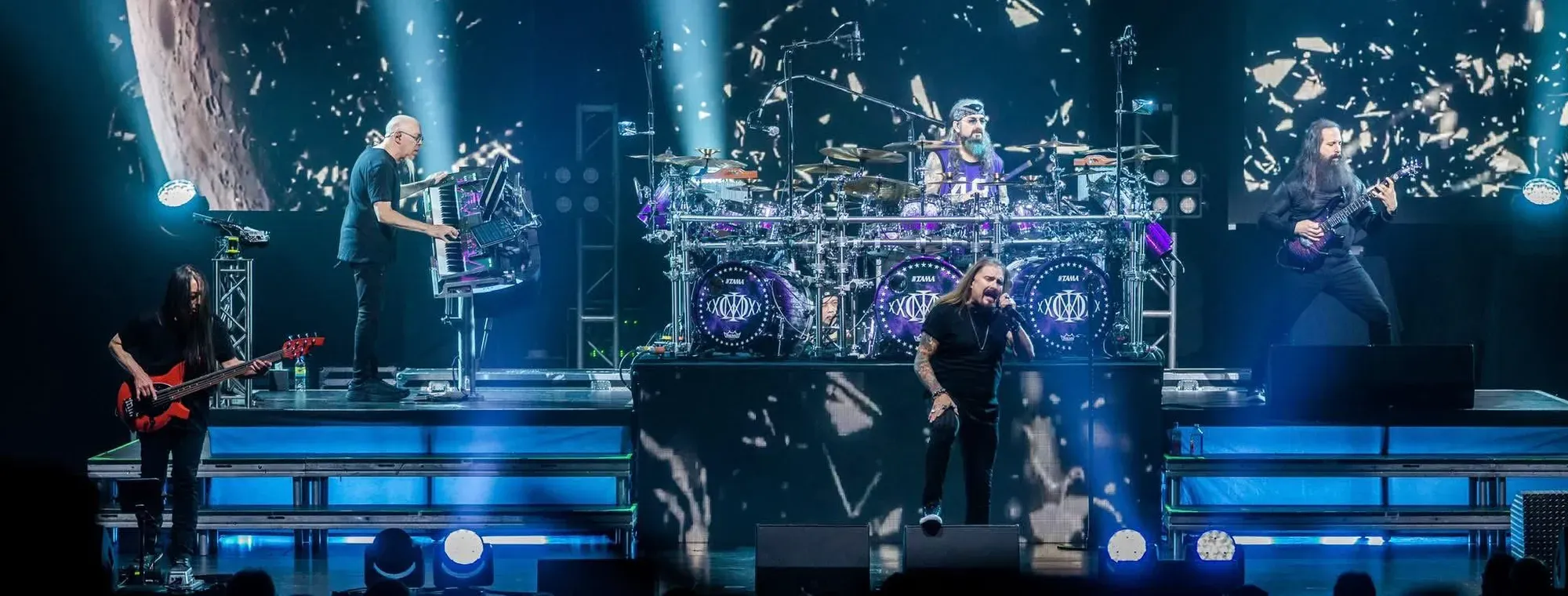
Originally published in Drumheads.de · February 2019
Interviews & Story from the Drummer - Scene (excerpt)
InterviewTranslatedMike Mangini6 min read
Translated from the original language with DeepL, so the wording may differ from what was actually said.
Mike Mangini in the drummer’s Olympus
If you want to play with Dream Theater as a drummer, you have to be good at what you do. If you want to stay with Dream Theater for the long haul, you have to be an exceptional talent. If you want to be responsible for songwriting as a Dream Theater drummer, you have to be a genius. We talked to the man who combines all of that.
DH: Mike, what’s your first memory that involves drums?
Mangini: My first memory is crawling across the floor, towards my parents’ record shelf, pulling out records and looking at the covers and the booklets. That I broke something in the process may be, but I don’t remember that (laughs). Then I see myself getting coffee cans, tuna cans, etc. out of the kitchen and setting them up like Ringo Starr’s drum set. I was about three years old then.
Back then, would you have dreamed of becoming a professional drummer or playing with some of the greatest musicians of our time?
Yes! It was always clear to me that I wanted to become a drummer, and I did everything I could to achieve that. However, I could not have imagined that I would achieve so much, even though I dreamed of it.
Being a drummer for Dream Theater would mean for most drummers that they have climbed the “drum Olympus”. Where do you think your creative and technically extremely demanding playing will take you?
Fascinating question. It has led me to write music that is far less complex than Dream Theater. For the current album, I contributed quite a bit and realized that I come up with a lot of ideas, but they don’t fit the band. So I went back to a virtue of the Dream Theater guys, who all started a solo side project at some point. The bottom line is that the whole thing made me write songs with a continuous four-four time signature (laughs). On the other hand, I’m trying to play more and more complex patterns that flow unchecked into Dream Theater’s sound. For example, on “Outcry,” a song that is far more technical than it seems at first listen. I had to play to a completely different time code than the beat dictated. That was quite a challenge for me. As well as “Pale Blue Dot” on our new album. That’s such a crazy number, too.
The current Dream Theater album, Distance Over Time, is the fourth long player you’ve drummed in. Looking back, which album challenged you the most?
From the moment I joined Dream Theater, I was an equal and full band member. Distance Over Time, however, is the first album where I got involved in songwriting. In this respect, I have not completely lived out before. This difference makes the current album, the album that has challenged me the most.
Distance Over Time is a very typical and at the same time untypical Dream Theater album. Typical, because it bears the unmistakable progressive signature of the band, and atypical, because between all the prog parts there is also a lot of earthy rock, such as the song “Viper King”. How did that come about?
I guess it’s because of my influence (laughs). “Viper King”, for example: there I was strongly inspired by Van Halen and that’s something the band has never done in all these years, in over 200 songs. But it’s also the case that songs like that are not clones. We don’t change our style when we play shuffle or boogie. Of course we put the “progressive part” into such songs, you can notice that in the breaks. In other words, a band that normally plays boogie, shuffle style or something like that would never put in those complex parts like Dream Theater does. That’s exactly the influence I had on Distance Over Time.
Original text
Interviews & Story aus der Drummer - Szene
Mike Mangini im Drummer-Olymp
Wer bei Dream Theater als Drummer spielen will, muss was auf dem Kasten haben. Wer bei Dream Theater auf Dauer bleiben will, muss ein Ausnahmetalent sein. Wer bei Dream Theater als Drummer mit fürs Songwriting verantwortlich sein will, muss ein Genie sein. Wir haben mit dem Mann gesprochen, der all das vereint.
DH: Mike, was ist deine erste Erinnerung, in der ein Schlagzeug vorkommt?
Mangini: Meine erste Erinnerung ist, wie ich über den Boden krabble, hin zum Schallplattenregal meiner Eltern, Platten rausziehe und mir die Cover und die Booklets anschaue. Dass ich dabei etwas kaputt gemacht habe, kann sein, daran wiederum erinnere ich mich nicht mehr (lacht). Dann sehe ich mich, wie ich Kaffeebüchsen, Thunfischdosen etc. aus der Küche hole und so aufstelle wie das Drum-Set von Ringo Starr. Da war ich etwa drei Jahre alt.
Hättest du dir damals träumen lassen, ein Profi-Drummer zu werden oder mit einigen der größten Musiker unserer Zeit zusammenzuspielen?
Ja! Für mich war immer klar, dass ich Drummer werden will und ich habe alles dafür getan. Dass ich jedoch so viel erreichen würde, konnte ich nicht ahnen, auch wenn ich davon geträumt habe.
Drummer bei Dream Theater zu sein, würde für die meisten Schlagzeuger bedeuten, dass sie den “Drum-Olymp” erklommen haben. Wohin, denkst du, führt dich dein kreatives und technisch extrem anspruchsvolles Spiel?
Spannende Frage. Mich hat das dahin geführt, Musik zu schreiben, die weitaus weniger komplex ist als die von Dream Theater. Für das aktuelle Album habe ich Einiges beigesteuert und dabei erkannt, dass mir viele Ideen kommen, die aber nicht zu der Band passen. Also habe ich mich auf eine Tugend der Dream-Theater-Jungs besonnen, die alle irgendwann einmal ein Solo-Side-Project starteten. Im Endeffekt hat mich das Ganze dazu gebracht, Songs mit einem durchgehenden Vier-Viertel-Takt zu schreiben (lacht). Auf der anderen Seite versuche ich, immer komplexere Patterns zu spielen, die ungebremst in den Sound von Dream Theater einfließen. Zum Beispiel bei “Outcry”, ein Song, der weitaus technischer ist, als es beim ersten Hören den Anschein macht. Ich musste zu einem komplett anderen Timecode spielen, als der Takt es vorgab. Das hat mich schon ziemlich herausgefordert. Ebenso wie “Pale Blue Dot” auf unserem neuen Album. Das ist auch so eine verrückte Nummer.
Das aktuelle Dream-Theater-Album Distance Over Time ist der vierte Longplayer, den du eingetrommelt hast. Rückblickend: Welches Album hat dich am meisten gefordert?
Von dem Zeitpunkt an als ich bei Dream Theater eingestiegen bin, war ich ein gleichberechtigtes und vollwertiges Bandmitglied. Distance Over Time ist aber das erste Album, bei dem ich mich ins Songwriting eingebrachte. Insofern habe ich mich zuvor nicht komplett ausgelebt. Dieser Unterschied macht das aktuelle Album, zu dem Album, welches mich am meisten gefordert hat.
Distance Over Time ist ein sehr typisches und gleichzeitig untypisches Dream-Theater-Album. Typisch, weil es die unverkennbar progressive Handschrift der Band trägt, und untypisch, da es zwischen all den Prog-Parts auch viel Erdig-Rockiges, wie zum Beispiel den Song “Viper King”, zu hören gibt. Wie kam es dazu?
Das liegt wohl an meinem Einfluss (lacht). “Viper King” zum Beispiel: Da habe ich mich stark von Van Halen inspirieren lassen und das ist etwas, was die Band in all den Jahren, in über 200 Songs, nie gemacht hat. Es ist aber auch so, dass solche Songs keine Klone sind. Wir ändern unseren Stil nicht, wenn wir Shuffle oder Boogie spielen. Wir packen natürlich den „Progressive-Anteil“ in solche Lieder mit hinein, das merkt man an den Breaks. Anders gesagt: Eine Band, die normalerweise Boogie, Shuffle-Style oder Ähnliches spielt, würde nie diese komplexen Parts einbauen, wie es bei Dream Theater üblich ist. Genau das ist mein Einfluss, den ich auf Distance Over Time ausgeübt habe.