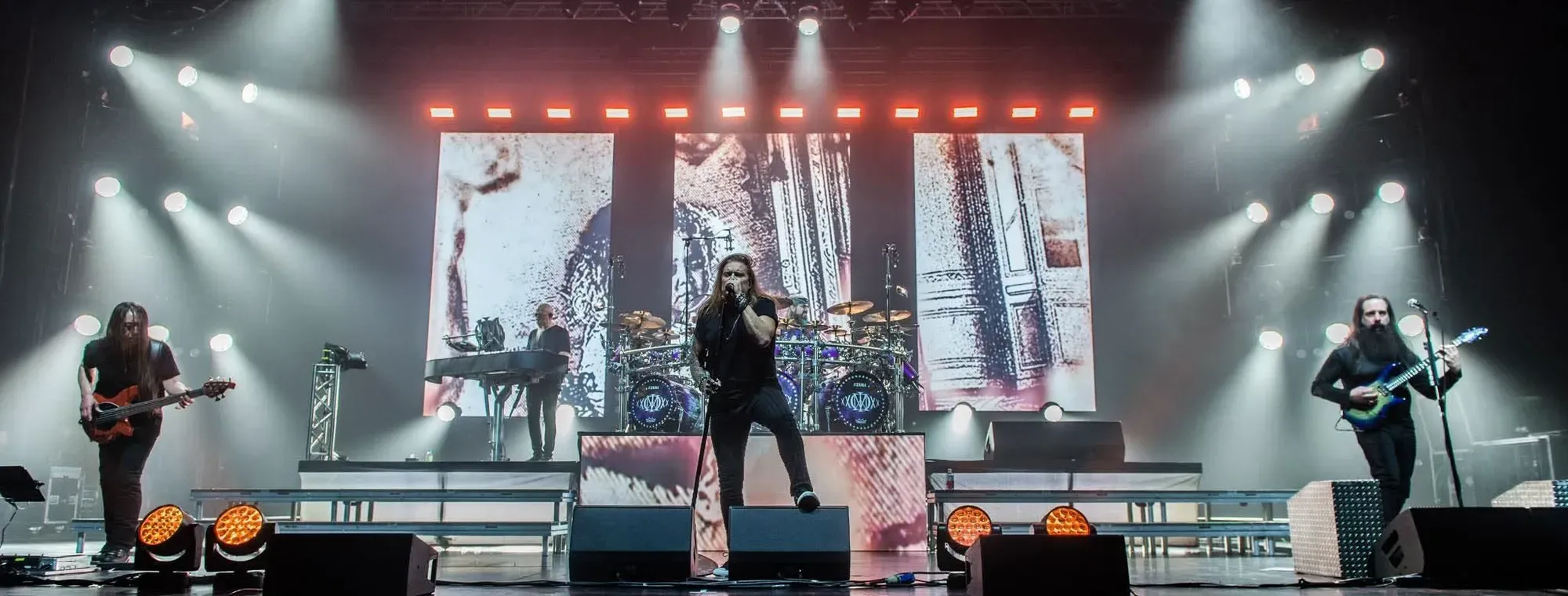

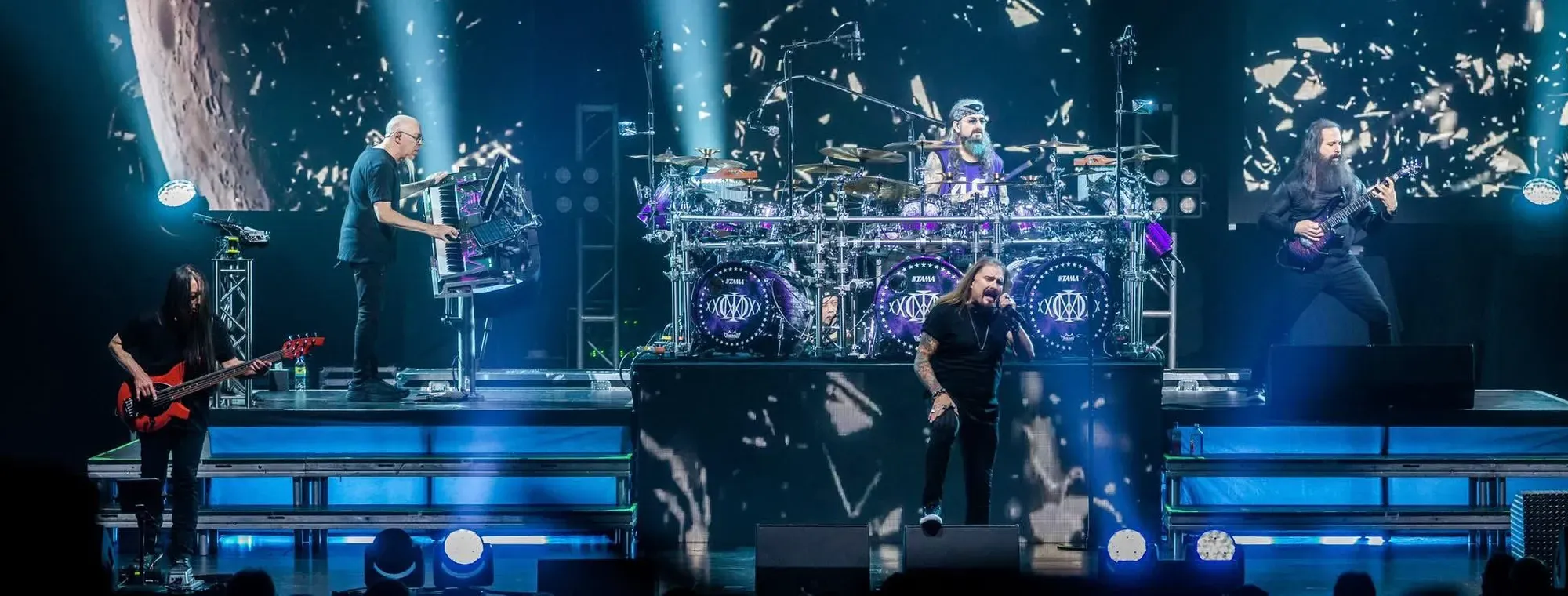
Ty Tabor
Ty Tabor is the guitarist, singer and songwriter whose playing has been one of King’s X’s defining ingredients since the group’s formative years in Missouri. His heavy guitar sound sits alongside a fondness for melody and vocal harmonies that reaches back to the Beatles. John Myung brought him into Platypus in the late nineties, beginning the partnership with Rod Morgenstein that continued through The Jelly Jam. In both groups, Tabor supplied songs, vocals and a substantial amount of the work needed to turn a session into a finished record.12
Mississippi and the records that mattered
Born in Pearl, Mississippi, on September 17, 1961, Tabor grew up playing music with his family. By his teens he was performing bluegrass with his father and brother, while his own listening increasingly pulled him towards rock. He later played in Matthew, before moving to Springfield, Missouri, to attend Evangel College.3
The Beatles were there very early. In his 1998 Gitarre & Bass interview with Myung, Tabor remembered a babysitter bringing Beatles records to the house, leaving him quite happily occupied at the stereo. John Lennon’s voice, phrasing and guitar playing mattered to him, as did George Harrison’s approach to the instrument. He also recalled the excitement of coming home from school during the early seventies and hearing album-oriented rock on the radio.1
In a later interview, Tabor described discovering Alice Cooper through a friend’s copy of Love It to Death. Its unsettling atmosphere and the band’s power made a strong impression. Those interests help explain the range of his work: an appetite for a good vocal melody and a willingness to make the guitar sound fairly unpleasant when the song calls for it.4
The long road to King’s X
Tabor’s association with Jerry Gaskill began when he borrowed the drummer’s kit to get through an opening set for Phil Keaggy. Tabor was filling in after his own band’s drummer left. Doug, later styled dUg, Pinnick also encountered Tabor in Springfield, and the three began working together in the group that went through the names The Edge and Sneak Preview before becoming King’s X.5
There were years of local playing before the records familiar to most listeners. Sneak Preview made an independent album in 1983; the musicians moved to Houston in 1985. As King’s X, they released Out of the Silent Planet in 1988, Gretchen Goes to Nebraska in 1989, Faith Hope Love in 1990 and the self-titled fourth album in 1992. Dogman followed in 1994, with Ear Candy in 1996.6
The major-label years gave way to releases including Tape Head, Please Come Home… Mr. Bulbous, Manic Moonlight, Black Like Sunday, Ogre Tones and XV. The same three musicians remained at the centre of the group. Their record-making slowed considerably after XV, but the lineup held together.6
Tabor’s own account of the touring years is less glamorous than the itinerary might suggest. Speaking to Gitarre & Bass in 1998, he described the exhaustion of travelling, the difficulty of changing from public life to family life and the decision to tour less so they could recover properly. He also pushed back when the interviewer suggested that supporting AC/DC and Iron Maiden had simply been a mistake. Reactions varied by country, he said, and the tours had helped sell records.1
That same conversation caught him enjoying the possibilities of a new band. With King’s X remaining his main commitment, Platypus offered a different working situation and a different set of people to respond to. He wasn’t presenting it as an escape from a failed group.1
With Myung, Sherinian and Morgenstein
Platypus
Myung initiated Platypus, bringing Tabor together with Morgenstein and Derek Sherinian. Their first album, When Pus Comes to Shove, arrived in 1998, followed by Ice Cycles in 2000. Tabor was delighted that Morgenstein had agreed to participate: the Dixie Dregs had been an important influence, and the drummer’s different musical background was part of the attraction.17
Playing alongside Sherinian’s keyboards also changed Tabor’s job. In the 1998 interview preserved in Through My Words, he explained that he had to choose sounds and parts that fitted around another substantial harmonic instrument. He enjoyed the challenge of working out where the guitar belonged in each arrangement. He was equally clear that he wouldn’t change King’s X’s trio format, where the guitar carried a different responsibility.1
The four musicians did not all want exactly the same record. Morgenstein later described his own interest in vocal music and Sherinian’s preference for an instrumental direction. Platypus found a compromise between them. After Sherinian’s departure, Tabor, Myung and Morgenstein tried working as three people.8
The Jelly Jam
The resulting Jelly Jam debut appeared in 2002, followed by 2 in 2004, Shall We Descend in 2011 and Profit in 2016. Myung felt communication and direction had become clearer in the trio. Tabor’s voice and guitar remained central, but the writing could start with any of the three musicians’ ideas.29
Tabor also had considerable responsibility once the shared sessions ended. Myung explained to Antihero in 2016 that, after the drums and bass were recorded, Tabor developed the guitar parts, wrote lyrics, recorded vocals and produced the finished sound. Their partnership allowed collective writing without requiring everybody to be present for every stage of a record.10
On Profit, Tabor’s words grew into the story of a prophet trying to warn people about the condition of their world. He said the connected narrative emerged through writing rather than being imposed at the beginning.11
The Dream Theater connection runs through the actual work rather than a guest appearance added to an otherwise unrelated album. In Music Aficionado, Myung explained that The Jelly Jam could develop ideas that hadn’t found a place in Dream Theater. He also described the space Morgenstein gave him to play melodically. Tabor’s job was to help turn those interactions into songs, then carry much of the recording through to completion.12
Jughead
Tabor also worked again with Sherinian in Jughead, alongside Matt Bissonette on bass and vocals and Gregg Bissonette on drums. The 2002 self-titled album placed the keyboards within another vocal-led rock band. It was a separate collaboration from The Jelly Jam, with a different rhythm section and its own songs.13
Solo records and Alien Beans
Tabor began releasing solo work with Naomi’s Solar Pumpkin in 1997, followed by Moonflower Lane in 1998, which re-recorded much of that material for wider release. Safety arrived in 2002, opening another route for his singing and writing beyond a fixed band lineup.14
Rock Garden followed in 2006, with Balance in 2008, Something’s Coming and the Trip Magnet EP in 2010, and Nobody Wins When Nobody Plays in 2013. His catalogue also includes the demo collection Tacklebox. Several of these recordings are available through his own Bandcamp, alongside 2020’s Angry Monk. Digital upload dates there can be later than the original releases.1514
There is more to that output than conventional guitar-and-vocal records. Xenuphobe, his collaboration with Wally Farkas of Galactic Cowboys, explored ambient and experimental music. In 2018, Tabor described having made three records under that name and continuing to record material that did not necessarily fit the better-known bands.4
Alien Beans, released by Rat Pak in January 2018, combined ten new songs with eleven remixed tracks from his earlier solo work. Tabor initially intended a retrospective with a few new additions, then kept writing until there was enough for a full new album as well. The title also used the name of his recording studio.4
His Alien Beans work includes production and mastering for other musicians, including Gaskill’s Come Somewhere. Recording was already a significant part of his role in the Myung collaborations; it also provided a career beyond being the man holding the guitar at the front of the stage.3
Shades and the return of King’s X
Shades appeared on March 4, 2022. Tabor described it as a return towards straightforward rock after exploring other directions. He wasn’t trying to establish a permanent solo formula, and said repeating the same album would bore him. His account of a successful riff was rather more practical: something that made him smile and want to turn it up.16
The record also carried personal grief. “Best Day in a While” and “Ashes” followed his father’s death, after a period when King’s X took time away from touring so Tabor could be with him in Mississippi. Tabor told Vintage Guitar that the pandemic then left time to begin another record. “Sister Genocide” had first been tried for King’s X before finding its place on Shades.17
King’s X returned with Three Sides of One in September 2022, their first studio album since 2008’s XV. Michael Parnin produced the sessions, which began in 2019. In their joint Guitar World interview, Tabor and Pinnick discussed the renewed appetite to record together and the familiar chemistry that reappeared once they did.18
Tabor’s guitar sound still depends on small physical details as much as equipment lists. In another 2022 Guitar World interview, he explained that he had developed his touch around a particular old Mel Bay pick, and that changing it changed the sound. The attack coming from his hand was part of the instrument’s voice.19
Writing again
In a November 2026 interview with This Day in Metal, Tabor discussed a serious 2022 car accident and the traumatic brain injury that followed. He said the aftermath affected his ability to create music, even as he continued performing. By the time of that conversation, he was beginning to find that creative ability returning.20
The interview also covered his slide-guitar contribution to Cactus’s “300 Pounds of Joy”, with Carmine Appice, and the solo album he had been working on when the accident occurred. Further King’s X writing remained tentative. The immediate development was more basic, and more significant for a musician whose work has always depended on collecting and finishing ideas: he was finding his way back to writing them.20
Portrait: Goongunther, cropped from a King’s X performance photograph, CC BY-SA 4.0. The crop is shared under the same licence.21
Sources
Footnotes
-
John Myung and Ty Tabor, Gitarre & Bass, December 1998, translated interview in Through My Words. ↩ ↩2 ↩3 ↩4 ↩5 ↩6
-
John Myung, Theater of Dreams 27–28, 2002, Through My Words. ↩ ↩2
-
Ty Tabor, Wikipedia: birth details, early career, solo beginnings and studio work. ↩ ↩2
-
Ty Tabor interviewed by Jim Barber, Music Life Magazine, February 27, 2018. ↩ ↩2 ↩3
-
Tabor recalls meeting Gaskill and Pinnick, Josh Turner interview, Music Street Journal, 2005. ↩
-
John Myung on the second Platypus album, Theater of Dreams 17, 2000, Through My Words. ↩
-
Rod Morgenstein on the two bands’ different directions, interview with David Iozzia. ↩
-
John Myung, Antihero, 2016, Through My Words: division of recording and production work. ↩
-
Jughead original album and credits; Sherinian on Jughead, In Rock 36, 2009, Through My Words. ↩
-
Tabor’s official Bandcamp catalogue; Rock Garden, including original 2006 release information. ↩
-
Tabor interviewed by Robert Cavuoto, Myglobalmind, February 19, 2022. ↩
-
Tabor interviewed by Oscar Jordan, Vintage Guitar, June 2022 issue. ↩
-
Tabor and Pinnick on Three Sides of One, Guitar World, August 15, 2022; official King’s X website. ↩
-
Tabor interviewed by Greg Prato, Guitar World, March 8, 2022. ↩
-
This Day in Metal’s interview with Tabor, November 4, 2026, accompanying report and video. ↩ ↩2
-
Original photograph and attribution, Wikimedia Commons, Goongunther, Creative Commons Attribution-ShareAlike 4.0. Square portrait crop from the original. ↩

Releases
- When Pus Comes to ShoveSide projects · 1998 · Vocals; guitars; percussion; Engineering; mixing; mastering
- Ice CyclesSide projects · 2000 · Vocals; guitars; percussion; Engineering; mixing; mastering
- JugheadSide projects · 2002 · Vocals, Guitar
- The Jelly JamSide projects · 2002 · Vocals; guitars; Engineering; mixing; mastering
- 2Side projects · 2004 · Vocals; guitars; Recording
- Two in OneSide projects · 2006 · Vocals; guitars; Engineering; mixing; mastering
- AdditivesSide projects · 2010 · Vocals; guitars
- Shall We DescendSide projects · 2011 · Vocals; guitars; keyboards; Mixing; mastering
- Water (Lyric Video)Side projects · 2016 · Vocals; guitars; keyboards; Mixing; mastering
- ProfitSide projects · 2016 · Vocals; guitars; keyboards; Mixing; mastering