

Originally published in Guitar Tricks Insider · June 2016
John Petrucci On Purple Rain
by John Stix
InterviewJohn Petrucci5 min read
The Guitar Battle recording was dreamed up at the 1996 NAMM (National Association of Music Merchants) show in Anaheim. With the sight of so many world class guitar players, Nat Kusano from Shinko Music Japan and I came up with the idea of multiple guitarists performing on various songs. Each guitarist would be given the spotlight to play melodies, fills, and solos alongside their fellow bandmates. The players were Reb Beach, Brad Gillis, Michael Lee Firkins, George Lynch, Danny Miranda (bass), Steve Morse, John O’ Reilly (drums), John Petrucci, and Al Pitrelli.
Dream Theater’s John Petrucci cemented “Purple Rain” into the lineup as it was one of his favorite songs he used to jam to. The inclusion of “Purple Rain” was an easy sell because I remembered my own similarly endless jams to Grand Funk’s version of The Animals’ “Inside Looking Out.” When Prince died I went back to this recording only to discover that John Petrucci had gone on to perform it again – most impressively at the Musicians Institute. It reminded me that when the writing is great, the chances are vastly improved that the speech will be eloquent. And Prince was a great writer.
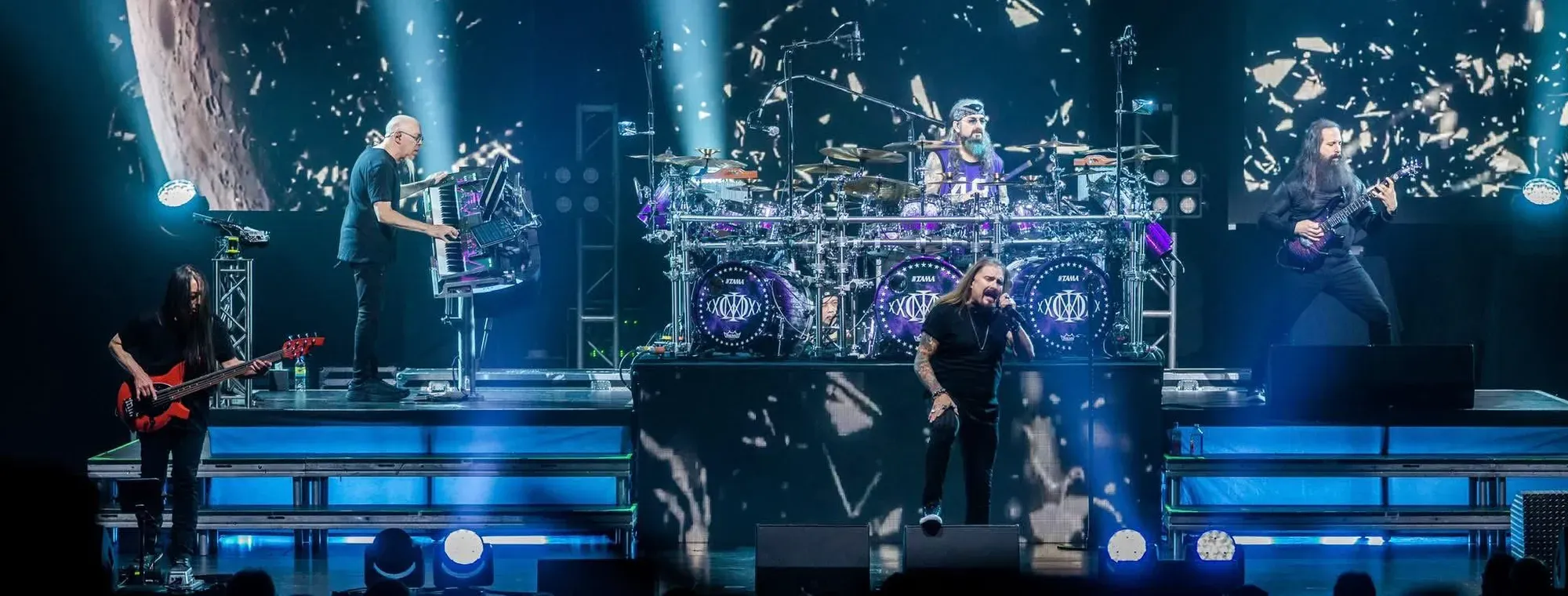
John Petrucci is currently on the road with Dream Theater showcasing their newest album, The Astonishing. When I told him it reminded me of a Broadway show, he lit up saying, “We wrote it as a show. It’s our version of a Broadway rock opera. It’s a live band scoring a movie type of things. It’s all those things in one so it’s creatively very satisfying to say the least.” But for GTI he had no problem looking back to one of his earliest satisfying moments.
“Purple Rain” has a special place in your development as a player.
That was one of them. Going back to Kevin Moore (John’s childhood buddy and DT’s original keyboard player) when we were growing up – one of the things that we loved to do was constantly jam. I believe that helped me as a young player. It really helped me with my improvisation – helped me with my ear. We would have jam sessions at our houses or we would go to friend’s houses. There were all different pockets of musicians. There were Deadheads, and metalheads, and Rushheads, and everything else. Most of the time, it was just the two of us. One of the things that we loved doing was to veg out on these chord progressions that were cool. We’d do that with Pink Floyd and with The Doors. Kevin was really into on The Doors. I remember doing “Roadhouse Blues.” You just had to play that. “L.A. Woman” – that kind of era. “Riders on the Storm.” Floyd, we would kind of do the Dark Side of the Moon era, The Wall era. A great one is of course “Comfortably Numb.” That is something I have done many times. I have done it as a professional – Dream Theater has done it. It is one of those highly influential guitar solos that so many players, certainly myself, used in developing an expressive melodic side to my playing. And at that time the Purple Rain movie came out and that song was really popular. It was just this great, melodic progression to play too. We would literally trade solos for hours. We would jam on that progression over and over and over. It was great for the ear, great for improvisational skills, great for your ability to play with other musicians in different settings.
What do you remember about recording The Guitar Battle version of “Purple Rain”?
In finding out that you and I were going to talk and listening back to it, I kind of forgot a bunch of things. I forgot we were all trading solos and I had my part. And some guys were doing the melodies and some guys were improvising. You had Brad Gillis on there and Andy Timmons. Al Pitrelli was on there, as well. It brought back memories hearing everybody’s take and everybody’s different tones. When you hear guitar players playing on a single song like that back-to-back, it really demonstrates how there are so many voices you can have on that instrument. There are so many different ways to manipulate the strings and the tone to make it your own. You can really hear that on this.
Like you said, it’s a great song to play on.
It’s such a beautiful progression. It’s really simple but I really like it. I tried to use the different melodic motifs that Prince originally put in there, to kind of pay tribute to the actual song. It also reminds me growing up I was a big fan of Journey and Neal’s playing. Again, it’s that same side where there’s a very melodic chord progression and his guitar playing is a blend of fiery technique and rock playing, but also really super tear-jerking melodic lines. “Mother Father,” “Faithfully” – songs like that. In fact, I think I did a little bit of “Faithfully” in the MI version. I think I snuck some in there. But it’s that same kind of thing I was talking about with Gilmour, with Neal. I love that side – the super, pulling-on-your-heartstrings, melodic, rock guitar playing.
Since our recording I’ve seen videos of you playing it at a NAMM show and at Musicians Institute (using the Guitar Battle track). What I love about the one from MI is that it shows the full range of your expressiveness, technique, emotion, and your melodic invention. In other words it was a guitar masterpiece and you played it masterfully.
First of all, thank you. I appreciate it, John. It was a long time ago. It kind of stemmed from all the things that we were just talking about. It’s being comfortable playing on a progression like that for a long period of time and sort of exploring different opportunities. As I was watching that, too, I thought to myself it was kind of a foreshadowing of what I would eventually do with some solo material outside of Dream Theater and with G3. It’s being in a situation where the guitar is carrying all those things you said. You’re playing the melody. You’re improvising. You’re really providing all of the focal point and attention as a single guitar player. And of course that’s what Joe (Satriani) does so well, and Steve Vai, and Eric Johnson, and all the other players that I played with. But I didn’t have a bunch of experience with that as a solo artist until I started doing G3. But that little MI thing is definitely a foreshadowing. That was something that I guess I had the ability to do and the desire to do as a guitar player – to take on all those musical elements in one full song.
inset
Guitar Battle – Purple Rain
0:00-1:03 John Petrucci
1:04-1:38 Al Pitrelli
1:39-2:05 Andy Timmons
2:05-2:12 Andy Timmons & Al Pitrelli
2:13-2:46 Brad Gillis
2:46-3:13 John Petrucci
3:14-3:20 John Petrucci & Brad Gillis
3:21-4:25 Brad Gillis
4:26-5:01 Andy Timmons
5:02-5:35 Al Pitrelli
5:36-6:44 John Petrucci
6:45-7:11 Al Pitrelli
7:12- end Andy Timmons, John Petrucci, Brad Gillis, Andy Timmons, Al Pitrelli