

Originally published in Metal Italia.com · January 2017
Dream Theater – Images, Words, and Music
by Andrea Raffaldini · Published on January 30, 2017
InterviewTranslatedJordan Rudess15 min read
Translated from the original language with Google Translate, so the wording may differ from what was actually said.
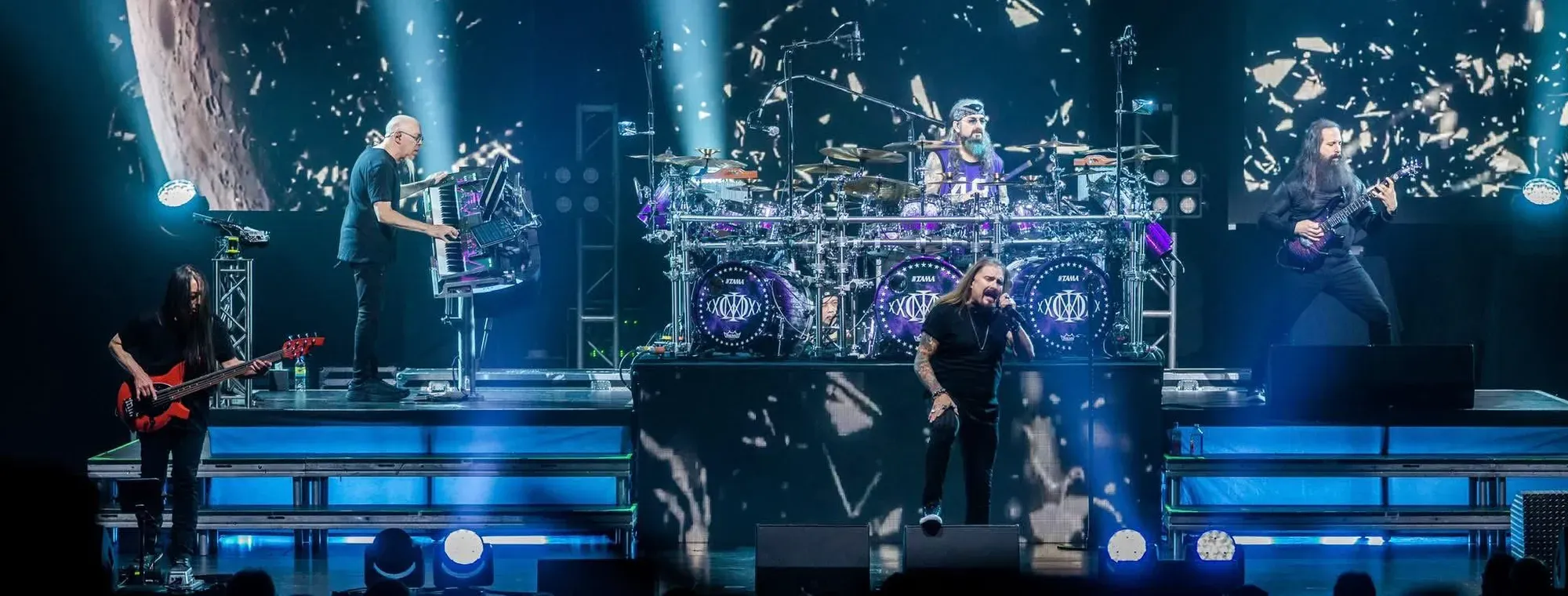
The upcoming Italian dates of Dream Theater’s tour, which will feature a very long and intense show featuring the masterpiece Images And Words in its entirety, allowed us to contact the band’s keyboardist Jordan Rudess for a brief interview, unrelated to the typical promotional context of an upcoming album. We discussed a variety of topics, and Rudess, with his usual openness, was not shy about answering them.
Andrea Raffaldini: In a few days, you’ll be touring Italy, and you recently confirmed three more dates in May. What should fans expect from you this time?
Jordan Rudess: I think the most exciting thing about this tour is our intention to play the entire Images And Words album live to celebrate its twenty-fifth anniversary. That’s not all, though. Dream Theater now has a vast catalog to choose from, and I think our fans will be happy to know we’ll be playing some songs we haven’t performed live in a while and others we’ll be performing live for the first time. I think it’ll be fun; the show will be about three hours long, packed with music, and we’re all preparing hard together to put on the best show. The other guys in the band and I all got together to rehearse, and I’m really pumped!
AR: Dream Theater has a huge fan base in Italy. How do you feel every time you come over?
JR: I’ve been saying this for a long time now. When someone asks me which country I absolutely love, I always say Italy, for many reasons. One of those reasons is definitely the fans, who are among the most loyal and passionate in the world. We have a fantastic fan club in Italy that has done truly exceptional work for us for many years. I’ve been to Italy several times and have always enjoyed the food, the art, the people—all of these elements have remained in my heart.
AR: We know you know some Italian bands; in the past, you’ve even performed live, for example, the song ‘Impressioni Di Settembre’ by PFM. Did the Italian progressive rock scene of the 1970s influence you in any way?
JR: You see, I’m not an early fan of the Italian prog scene, because I discovered it later, over the years. I must admit, however, that every time I found myself listening to a new album, I was surprised to hear such beautiful, high-quality music. I found some of your bands truly extraordinary. I’d be lying if I said I was influenced by Italian bands in my youth, but for the simple reason that I didn’t know them, they reached my ears later, but I’m very happy I was able to discover them.
AR: Let’s talk now about Images And Words, your most famous album, which upon its release catapulted Dream Theater into the ranks of music greats and is still considered a cornerstone of the genre. When it came out in 1992, you weren’t yet in the band. Can you tell me when you first heard it and what your impressions were after listening to it?
JR: I admit I didn’t listen to it right away. The first time was in 1994, when the band found themselves without a keyboardist after Kevin Moore left. I remember that album was brought to me, I listened to it, I really liked it, and shortly afterward I received a call to audition with Dream Theater. As I was saying, I really liked the album. What surprised me most was that it wasn’t just progressive rock; I could also hear a lot of metal influences in it. I was shocked by the technique of all the musicians in the band. After listening to Images And Words, I was very curious and excited to meet the band when I auditioned for them for the first time. The audition went very well, but due to my busy schedule at the time, I turned it down. In the following years, I found myself playing with Mike Portnoy and John Petrucci in Liquid Tension Experiment, a band that achieved considerable success. This brings us to 1998, when I was asked to join the band again. and I accepted very enthusiastically.
AR: Images And Words was released in 1992, a time when grunge was taking over the music scene. Many believe that one of the album’s merits was that it reacquainted audiences and many musicians with more classical and metal sounds. Do you agree?
JR: Yes, I think Images and Words was a small miracle for its time. The songs were powerful, played with a unique style, and they immediately captured the hearts of fans.
AR: Playing an entire album live has become a standard practice, almost a trend that many bands are adopting more and more often.
JR: I don’t know, I’ve never thought about it, especially in terms of trends or anything like that. I simply think that performing Images And Words in its entirety is a very beautiful and interesting thing for fans, especially considering the twenty-fifth anniversary of its release. Of course, fans are very attracted to this type of offering, but as we said before, our next shows will be very long; in the three-hour concert we’ll also play many other songs, both old and new. I’m sure we’ll be able to satisfy all our fans’ tastes.
AR: Your live concerts are very technical and complex. What songs do you enjoy playing the most?
JR: Dream Theater now has a very vast catalog, and it’s difficult for me to name a single song. I like to take on challenges on stage, trying to always play better, changing songs. Among my favorites to perform live are definitely ‘Dance Of Eternity’ and ‘Metropolis’; I really enjoy playing them.
AR: Speaking of concerts, the problem of secondary ticketing has recently come to the forefront of public attention in Italy. Is the same thing happening in America?
JR: Yes, unfortunately, secondary ticketing is a problem in America too, and I consider this increasingly widespread phenomenon to be very sad and wrong.
AR: In 2010, you founded the company Wizdom Music, which develops new musical instrument interfaces for smartphones and tablets. Do you think an iPad will replace a real guitar or keyboard in the coming years?
JR: I’m taking a cue from your question because the latest software my company has developed, GeoShred, allows musicians to create effects and sounds via tablets, beautifully simulating various instruments. This makes it possible to create professional music on an iPad, Windows, or iPhone. I make a clear distinction between software like GeoShred and a real musical instrument. Anyone who wants to become a musician must play a real instrument, have fun, put together a band, and then use today’s technology, which can provide enormous help in composing and recording music. One doesn’t necessarily have to replace the other; music and technology run on two parallel tracks, together.
AR: In the coming years, how do you plan to further develop your company’s products for music?
JR: Over the years, technology has made giant strides. Processors are increasingly powerful while taking up less space. Each new generation allows us to push the limits. Let me give you an example, still speaking about GeoShred: this software allows for the physical modeling of music, a concept that until recently was unthinkable and unattainable with older processors. The new iPhones, for example, can sense the amount of pressure the user applies to the screen. This technology could also be developed for music interfaces.
AR: Are you currently working on new music for Dream Theater or for any of your other projects?
JR: No, right now I’m focusing on the tour we’re doing in support of The Astonishing. When we take some time off, I’ll start working on new music.
AR: In 2013 and 2016, you released two albums with your project with Tony Levin and Marco Minnemann. The high quality of the music on this project makes me think of a remarkable bond between you and Marco Minnemann, who was one of the drummers auditioning for the Mike Portnoy vacancy. So, what did Marco need to join the band?
JR: First of all, let me say that I’m really proud of these two albums I played with Tony Levin and Marco Minnemann. I really enjoyed making music with them, and they were a huge success. The first time I heard Marco Minnemann, I was absolutely blown away by his drumming, his innovative style, and his great technique! Marco is a fantastic drummer, but when it comes to working with Dream Theater, you have to take a lot of parameters into account. It’s hard to explain in words, and Marco played really great, but in the end, they made a different choice because Dream Theater was looking for something a little different. That doesn’t change the fact that we’re talking about one of the best drummers around.
AR: A lot has already been written about music; Dream Theater has been around for almost thirty years and has released a lot of albums. How do you think your music will further progress and evolve in the years to come?
JR: Going back to the earlier discussion about technology, the emergence of increasingly powerful processors and software will help us develop new sounds and solutions, pushing us beyond what we’ve done so far. Personally, I always try to push myself to the limit to propose new forms of musical expression. I personally work on developing new musical instruments, the keyboards I play, you know what I mean? The other guys in the band also share this mentality of always pushing themselves further and exploring the new opportunities offered by technology. The easier it is to translate ideas into music, the more inspired you are; there’s freedom to dare things that weren’t possible to reproduce on record in the past. After so many years of career, I think a band doesn’t necessarily have to reinvent itself with each new album; rather, it’s about maintaining consistently high quality standards. For us, it’s important to carry forward all those elements that over the years have built and consolidated the ‘Dream Theater sound’.
Original text
Dream Theater – Immagini, parole e musica
da Andrea Raffaldini
Pubblicato il 30/01/2017
L’occasione delle imminenti date italiane del tour dei Dream Theater, che proporranno uno show molto lungo ed intenso in cui verrà proposto interamente il capolavoro “Images And Words”, ci ha permesso di contattare il tastierista della band Jordan Rudess e di tenere insieme a lui una breve intervista slegata dal tipico contesto promozionale dovuto ad un disco in uscita. Insieme si è spaziato su più argomenti a cui Rudess, con la sua consueta disponibilità, non si è sottratto.
Andrea Raffaldini: Fra pochi giorni verrete in tour in italia e da poco avete confermato altre tre date a maggio. Cosa dovranno aspettarsi i fan questa volta da voi?
Jordan Rudess: “Credo che il fattore più interessante di questo tour sia la nostra intenzione di suonare dal vivo tutto il disco ‘Images And Words’ per festeggiare i venticinque anni dalla sua pubblicazione. Non è tutto però, ormai i Dream Theater possono avvalersi di un vasto catalogo da cui scegliere i brani, e credo che i nostri fan saranno contenti di sapere che suoneremo alcune canzoni che dal vivo non proponiamo da tempo ed altre che presenteremo live per la prima volta. Credo ci sarà da divertirsi, lo show sarà lungo circa tre ore, pieno di musica e noi ci stiamo preparando duramente tutti insieme per offrire il miglior spettacolo. Io e gli altri ragazzi della band ci siamo ritrovati tutti insieme a provare, sono molto carico!”.
AR: In italia i Dream Theater possono vantare un gran numero di fan. Tu come ti senti ogni volta che vieni dalle nostre parti?
JR: “Lo dico da tempi non sospetti, quando qualcuno mi chiede quale sia il Paese dove preferisco andare in assoluto, io rispondo sempre l’Italia, per molte ragioni. Sicuramente uno di questi motivi sono i fan, tra i più leali nei nostri confronti ed appassionati al mondo. In Italia abbiamo un fan club fantastico che svolge un lavoro davvero eccezionale per noi da molti anni. Sono stato diverse volte in Italia ed ho potuto sempre apprezzare il cibo l’arte, le persone, tutti questi elementi mi sono rimasti nel cuore”.
AR: Sappiamo che tu conosci alcune band italiane, in passato dal vivo hai anche suonato, ad esempio, la canzone “Impressioni Di Settembre” della PFM. In qualche modo la scena progressive rock italiana degli anni settanta ti ha influenzato?
JR: “Vedi, non sono un fan di prima data della scena prog italiana, perché l’ho scoperta più tardi, con il passare degli anni. Devo ammettere però che ogni volta che mi ritrovavo ad ascoltare qualche nuovo disco ero sorpreso di sentire musica così bella, di grande qualità. Alcune vostre band le ho trovate veramente straordinarie. Ti mentirei se dicessi che in gioventù sono stato influenzato dalle band italiane, ma per il semplice motivo che non le conoscevo, sono arrivate più tardi alle mie orecchie, ma sono molto contento di essere riuscito a conoscerle”.
AR: Parliamo a questo punto di “Images And Words”, il vostro disco piu’ famoso che alla sua uscita catapulto’ i Dream Theater nell’olimpo dei grandi della musica e tutt’ora e’ considerato un caposaldo del genere. Nel 1992 quando usci’, tu non eri ancora nella band, mi dici quando l’hai ascoltato per la prima volta e le tue impressioni dopo l’ascolto?
JR: “Ammetto che non l’ho ascoltato subito, la prima volta è stata nel 1994, quando la band si ritrovò senza tastierista dopo l’abbandono di Kevin Moore. Ricordo che quel disco mi fu portato, lo ascoltai, mi piacque veramente molto e pochissimo tempo dopo ricevetti una chiamata per fare un’audizione con i Dream Theater. Come ti dicevo, il disco mi piacque molto, la cosa che più mi lasciò sorpreso è che non si trattava semplicemente di progressive rock, sentivo anche un sacco di influenze metal al suo interno. Rimasi scioccato dalla tecnica di tutti i musicisti della band. Dopo aver ascoltato ‘Images And Words’ ero molto curioso ed eccitato di incontrare la band nel momento della mia prima audizione con loro. L’audizione andò molto bene, ma a causa dei molti impegni che avevo in quel periodo, rifiutai. Negli anni successivi mi ritrovai a suonare con Mike Portnoy e John Petrucci nei Liquid Tension Experiment, una band che ottenne un buon successo. Arriviamo così al 1998, quando mi fu chiesto nuovamente di unirmi alla band e accettai in modo molto entusiasta”.
AR: “Images And Words” e’ uscito nel 1992, anni in cui il grunge stava spopolando ovunque. Molti ritengono che uno dei meriti di questo disco fu di riavvicinare il pubblico e molti musicisti a sonorita’ piu’ classiche e metal. Tu concordi?
JR: “Sì, credo che per quei tempi ‘Images And Words’ fu un piccolo miracolo. I brani erano pieni di potenza, suonati con uno stile unico e riuscirono subito ad entrare nel cuore dei fan”.
AR: Suonare un’intero disco dal vivo e’ diventata una prassi, quasi una moda che molte band stanno proponendo sempre piu’ spesso.
JR: “Non saprei, non ci ho mai pensato, soprattutto in termini di trend o cose del genere. Semplicemente credo che suonare interamente ‘Images And Words’ sia una cosa molto bella ed interessante per i fan, vista anche la ricorrenza dei venticinque anni dalla sua pubblicazione. Certo, i fan sono molto attratti da questo tipo di proposte, ma come dicevamo prima, i nostri prossimi show saranno molto lunghi, in tre ore di concerto suoneremo anche tanti altri pezzi, vecchi e nuovi. Sono certo riusciremo a soddisfare i gusti di tutti i nostri fan”.
AR: Dal vivo i vostri concerti sono molto tecnici ed articolati, quali sono le canzoni che ti diverti di piu’ a suonare?
JR: “Ormai i Dream Theater possiedono un catalogo molto vasto e citare una singola canzone mi risulta difficile. Mi piace accettare delle sfide sul palco, cercare si suonare sempre meglio, di cambiare canzoni, sicuramente tra le mie mie preferite da proporre in sede live ci sono ‘Dance Of Eternity’ e ‘Metropolis’, mi diverto molto a suonarle”.
AR: Parlando sempre di concerti, in italia e’ recentemente esploso all’attenzione generale il problema del secondary ticketing. Da voi in america succede lo stesso?
JR: “Sì, purtroppo anche in America il secondary ticketing è un problema ed io considero molto triste e sbagliato questo fenomeno sempre più dilagante”.
AR: Nel 2010 hai fondato la compagnia Wizdom Music che sviluppa nuove interfacce di strumenti musicali per smarthpone e tablet. Tu credi che negli anni a venire un iPad riuscira’ a sostituire una vera chitarra o una vera tastiera?
JR: “Prendo spunto dalla tua domanda, perché l’ultimo software che la mia compagnia ha sviluppato, GeoShred, permette ai musicisti di creare effetti e suoni tramite tablet, simulando in maniera fantastica diversi strumenti. In questo modo è poi possibile creare musica professionale su iPad o su Windows o su iPhone. Io faccio una netta distinzione tra un software come GeoShred ed un vero strumento musicale. Chi vuole diventare un musicista deve suonare un vero strumento, deve divertirsi, mettere insieme una band, poi può utilizzare la tecnologia che al giorno d’oggi è in grado di fornire un grandissimo aiuto per comporre e registrare musica. Uno non deve per forza sostituire l’altro, musica e tecnologia corrono su due binari paralleli, insieme”.
AR: Nei prossimi anni come pensi di sviluppare ulteriormente i prodotti della tua societa’ al servizio della musica?
JR: “Negli anni la tecnologia ha fatto passi da gigante, i processori sono sempre più potenti e contemporaneamente occupano sempre meno spazio, ogni nuova generazione permette di spingersi oltre il limite. Ti faccio un esempio, sempre parlando di GeoShred, questo software permette la modellazione fisica della musica, un concetto fino a poco tempo fa impensabile ed irrealizzabile con i vecchi processori. I nuovi iPhone ad esempio riescono a sentire il grado di pressione con cui l’utente preme sullo schermo, questa tecnologia potrà essere sviluppata anche in ambito di interfacce musicali”.
AR: Attualmente stai gia’ lavorando a nuova musica per i Dream Theater o per qualche tuo altro progetto?
JR: “No, ora mi sto concentrando al tour che stiamo facendo a supporto di “The Astonishing”. Quando prenderemo un periodo di pausa inizierò a dedicarmi a nuova musica”.
AR: Nel 2013 e nel 2016 hai pubblicato due dischi con il tuo progetto insieme a Tony Levin e Marco Minnemann. La grande qualita’ della musica di questo progetto mi fa pensare ad un notevole affiatamento tra te e Marco Minnemann, che e’ stato uno dei batteristi a prendere parte alle audizioni per prendere il posto vacante dai Mike Portnoy. Ti chiedo a questo punto, cosa e’ mancato a marco per entrare nella band?
JR: “Innanzitutto lasciami dire che sono davvero molto orgoglioso di questi due dischi suonati insieme a Tony Levin e Marco Minnemann, mi è piaciuto molto comporre musica con loro ed inoltre hanno ottenuto un buon successo. La prima volta che ho ascoltato Marco Minnemann sono rimasto proprio senza parole dal suo modo di suonare la batteria, dal suo stile innovativo e dalla sua grande tecnica! Marco è un batterista fantastico, ma quando si parla di lavorare con i Dream Theater bisogna tener conto di un gran numero di parametri. E’ difficile da spiegare a parole e Marco ha suonato veramente alla grande, però alla fine si è fatta una scelta differente, perché i Dream Theater stavano cercando qualcosa di leggermente diverso. Ciò non cambia il fatto che stiamo parlando di uno dei migliori batteristi in circolazione”.
AR: Nella musica molto e’ gia’ stato scritto, i Dream Theater sono in giro da quasi trent’anni ed hanno pubblicato un sacco di dischi. Negli anni a venire come pensi potra’ ulteriormente progredire, evolvere la vostra musica?
JR: “Tornando al discorso di prima sulla tecnologia, il nascere di processori e software sempre più potenti potrà aiutarci a sviluppare nuove sonorità e soluzioni, a spingerci oltre quanto fatto fino ad ora. Personalmente cerco sempre di spingermi al massimo per proporre nuove forme di espressione musicale, in prima persona lavoro allo sviluppo di nuovi strumenti musicali, delle tastiere che suono, capisci cosa intendo? Anche gli altri ragazzi della band possiedono questa mentalità di spingersi sempre oltre e provare le nuove opportunità offerte dalla tecnologia. Più è facile tradurre le idee in musica, più si è ispirati, c’è libertà di osare cose che in passato non era possibile riprodurre su disco. Dopo tanti anni di carriera, io penso che una band non debba per forza reinventarsi ad ogni nuovo disco, piuttosto si tratta di mantenere gli standard qualitativi sempre ad alto livello. Per noi conta portare avanti tutti quegli elementi che negli anni hanno costruito e consolidato il ‘Dream Theater sound’”.