

Originally published in Rockzone magazine · February 2019
The Magnificent Five
InterviewTranslatedJames LaBrie13 min read
Translated from the original language with DeepL, so the wording may differ from what was actually said.
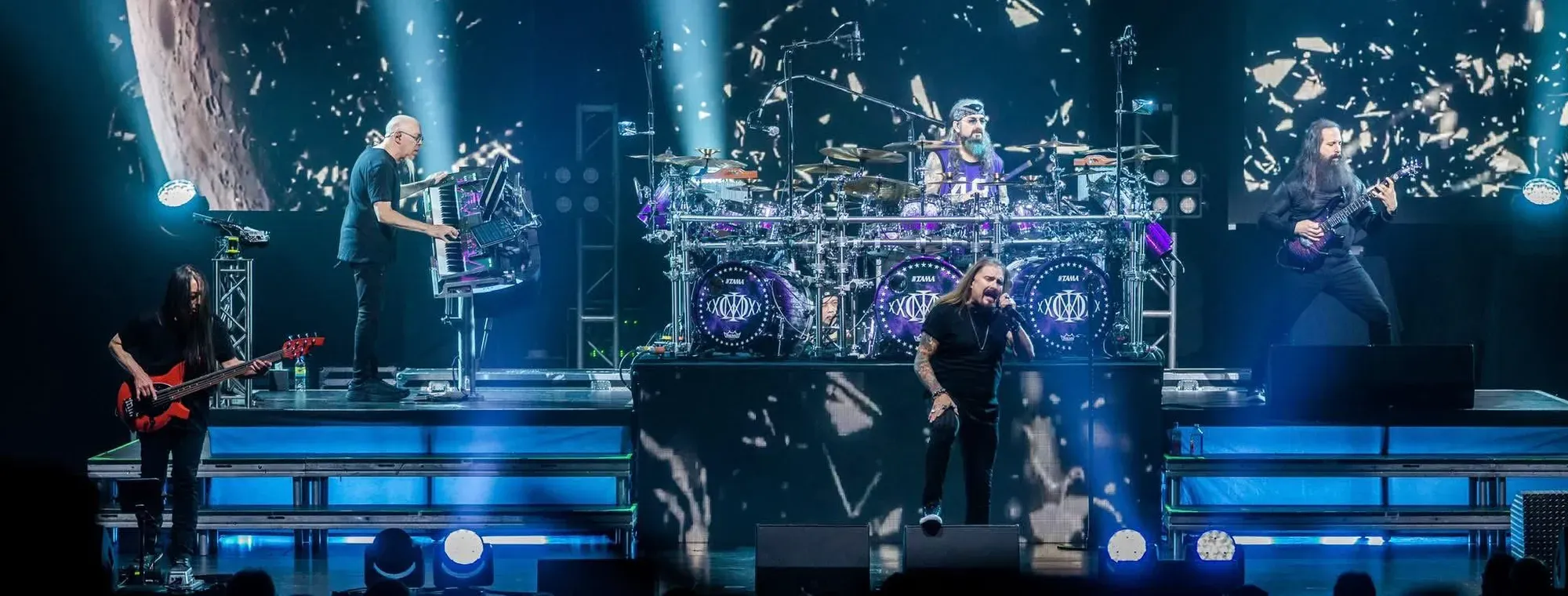
Dream Theater are back with their fourteenth album, which is soon to be released. However, on Distance Over Time, the kings of progressive metal have opted more for the former than the latter. Their vocalist James LaBrie tells us why.
Text: Jordi Meya
It seems logical that when you have gone to the limit, then you only have the option of going in the opposite direction. With their previous album The Astonishing, Dream Theater produced one of the most complex and longest albums of their career, full of orchestral arrangements and a science fiction story devised by guitarist John Petrucci. Both the album and its subsequent tour were a huge success, but the whole band – which is completed by James LaBrie (vocals), Jordan Rudess (keyboards), John Myung (bass) and Mike Mangini (drums) – agreed that it wouldn’t make much sense to repeat the same thing. So, for the first time in twenty years they decided to write the album all together, going to live for four months in studios in the countryside outside New York. What we hear on Distance Over Time (Inside Out), which will be released on February 22nd, is a more organic album, both in terms of its music and its lyrics, which are down to earth, addressing issues such as sexual abuse or the uncertainty in which the new generations live. Taking advantage of his visit to Madrid, and a few hours before he appeared, along with Petrucci, in the program La Resistencia, we had the opportunity to talk to James LaBrie about this new work that will be presented on July 7 at Rock Fest Barcelona.
Maybe it’s a silly question to start with, but in your concerts there are a lot of instrumental parts and solos. What do you think about while all that is going on? Is it easy for you to keep your concentration or do you start thinking about other things?
James LaBrie: “Let’s see, we are a band where the instrumental parts are very important. Usually when they happen I go to a little tent I have backstage and do stretches or jumping jacks or start thinking about the next song, but I always try to stay focused on what’s going on, even if I’m not on stage. If you think of Robert Plant when Led Zeppelin played ‘Dazed & Confused’, which has a big instrumental part, he would stand there, posing, but I don’t think I should stand there. It’s time for others to have all the attention.”
Talking already about Distance Over Time, it seems a more song-oriented and heavier album than the previous one.
“Yes, each song stands alone and speaks for itself. The Astonishing was a totally conceptual album, it was a big story set in a dystopian world. But once we took that to the limit, now we felt like going back to our heavy roots and making a song-based record. Each song has its own message and its own sound”.
Is it liberating to work without a concept, without everything having to be connected?
“Well, it depends. When you work on an album like The Astonishing you get totally immersed. And with an album like the new one too, but in a different way. In the end, when you do something, it’s because you feel like doing it at that moment. Already on the last tour we said that we would like to make a more aggressive album, more metal. I don’t know if it was liberating, but it was certainly exciting to leave the more progressive side a little bit and go back to the metal side”.
They’re more direct songs too, at least for Dream Theater.
“Yeah, they certainly are. It was a conscious thing. We wanted the songs to hit you over the head. We didn’t want very long endings or instrumental parts, or interludes. We wanted every song to have a powerful message and hit you. By Dream Theater standards they are very straightforward songs, there are no 12 or 14 minute songs”.
You all went to live together on a farm outside of New York to write the album. Was this the first time you’d done something like this?
“Yes. Well, when we did Images & Words in 1992 we also all lived together in a house outside of New York, but the difference was that all the material was already written then. This time we went near Woodstock. We lived in a big farmhouse and nearby there’s a shed that they’ve converted into a state-of-the-art studio. So we lived and wrote the record there. It’s a very beautiful place, it retains its old spirit because it’s all wood, with very high ceilings and big windows where we could see deer and even the occasional bear walking by. We were able to concentrate totally on the music. Every day we started around noon or one o’clock and we were there until midnight or beyond. But we had a great time. We barbecued, we cooked, we laughed, we sunbathed.... It was a great experience and I think being all together is reflected in the intensity of the album.”
Who is the best cook of all?
“I don’t know. I don’t know, John Petrucci is very good with barbecue, but Mangini is also a very good cook. I think it depends on one’s taste.”
Although you’re very used to spending a lot of time together on the road, did living together in this way make you discover something that maybe you didn’t know?
“I don’t think so. We’ve known each other for so long and we’ve toured so much that at this point it’s very complicated for there to be secrets. After 25 years you know each other’s quirks. We all respect each other’s space. Obviously we’ve had to work through little squabbles that come up from time to time, but in the end that’s all behind us. In the end the more time you spend together, the better you understand each other. Now we hardly argue at all. When there is a problem, we are able to put it behind us quickly. That good understanding and respect is what allows us to create music. We are all in the same boat.
Considering that the group is made up of virtuosos, it’s surprising that there are no ego problems.
“I guess from the outside you might think that we clash a lot because everyone is so sure of what they do, and that there’s a lot of friction, but it’s not like that at all. Doing this album we came up with a lot of ideas and at least we tried them out and listened to them at least once. The fact that everyone is such a good musician allows you to do that in a very agile and fast way.
I imagine that when you joined the group in 1991 it must have been a bit intimidating to work with the others. How long did it take you to feel confident to come up with your ideas?
“Well, as I was telling you before, when I joined Images & Words it was pretty much already written. But over the years I’ve gotten more involved in the melodies and lyrics. That’s my main contribution. When you’re in a group with such creative people you also have to know when to stay in the background. I only speak or make suggestions when I’m very sure of what I’m going to say. In the end, songwriting has always been about guitars and keyboards, so John and Jordan are the ones who carry the weight.”
Your lyrics seem to come from a very humanistic point of view.
“Thank you. I’m very interested in philosophy, art, literature, history.... In the end we all question our existence. And it’s a bit scary, isn’t it? I’m a very observant person and in the end my lyrics come from observing and understanding what surrounds me. How does everything I observe affect me? That’s what I try to tell in my lyrics. I think my lyrics are thoughts that, at some point, we all have. I just try to choose the most appropriate words to tell them”.
How should we understand the title Distance Over Time?
“For me it’s the journey from the beginning of humanity to where we are now. On the cover it’s represented by the skull and the robotic hand. We live in a very technological world and we have to find the balance between humanity and technology. It’s something we have to constantly question because our future depends on it.”
When you were still living in Canada, in the late 80’s, you were in the band Winter Rose that Sebastian Bach was also in before Skid Row. Have you ever considered resurrecting that band?
“It’s been 30 years (laughs) I remember that time fondly and we had a great time. In fact, guitarist Richard Chycki ended up working as Dream Theater’s engineer on A Dramatic Turn Of Events and the album of the same name, he mixed The Astonishing. And I actually recorded the vocals on this record with him. So we’re still connected, but it wouldn’t make sense to me to do that kind of music again. When I want to take a break from Dream Theater I already make my solo records, and that, to me, is the perfect situation.”
Original text
Los Cinco Magníficos
Dream Theater están de vuelta con su decimocuarto álbum, que se dice pronto. Sin embargo, en Distance Over Time, los reyes del metal progresivo se han decantado mas por lo primero que por lo segundo. Su vocalista James LaBrie nos cuenta por qué.
Texto: Jordi Meya
Parece logico que cuando uno ha ido al límite, a continuación, sólo le quede la opción de ir en dirección contraria. Con su anterior disco The Astonishing, Dream Theater facturaron uno de los discos más complejos, y largos, de su carrera, lleno de arreglos orquestales y una historia de ciencia ficción ideada por el guitarrista John Petrucci. Tanto el álbum como su posterior gira fueron un gran éxito, pero toda la banda – que completan James LaBrie (voz), Jordan Rudess (teclados), John Myung (bajo) y Mike Mangini (batería) – estuvieron de acuerdo en que no tendría mucho sentido repetir lo mismo. Por eso, por primera vez en veinte años decidieron componer el álbum todos juntos, yéndose a vivir durante cuatro meses a unos estudios en el campo en las afueras de New York. Lo que escuchamos en Distance Over Time (lnside Out), que verá la luz el 22 de febrero, es un disco más orgánico, tanto por su música como por unas letras que tocan con los pies en el suelo abordando temas como los abusos sexuales o la incertidumbre en la que viven las nuevas generaciones. Aprovechando su visita a Madrid, y unas horas antes de que apareciera, junto a Petrucci, en el programa La Resistencia, teníamos la oportunidad de hablar con James LaBrie sobre este nuevo trabajo que presentarán el 7 de julio en el Rock Fest Barcelona.
Quizá sea una pregunta tonta para empezar, pero en vuestros conciertos hay muchas partes instrumentales y solos. ¿En qué piensas mientras pasa todo eso? ¿Te es fácil mantener la concentración o empiezas a pensar en otras cosas?
James LaBrie: “A ver, somos una banda en la que las partes instrumentals son muy importantes. Normalmente cuando ocurren me voy a una pequeña tienda que tengo detrás del escenario y hago estiramientos o saltos o me pongo a pensar en la próxima canción, pero siempre intento mantenerme concentrado en lo que está pasando, aunque no esté en el escenario. Si piensas en Robert Plant cuando Led Zeppelin tocaban ‘Dazed & Confused’, que tiene una gran parte instrumental, él se quedaba ahí, posando, pero yo no creo que deba quedarme ahí. Es el momento para que los demás tengan toda la atención”.
Hablando ya de Distance Over Time, parece un álbum más orientado a las canciones y más heavy que el anterior.
“Sí, cada canción es independiente y habla por sí misma. The Astonishing era un disco totalmente conceptual, era una gran historia situada en un mundo distópico. Pero una vez llevamos eso al límite, ahora nos apetecía volver a nuestras raíces heavies y hacer un disco basado en canciones. Cada canción tiene su propio mensaje y su propio sonido”.
¿Es liberador trabaiar sin un concepto, sin que todo tenga que estar conectado?
“Bueno, depende. Cuando trabajas en un álbum como The Astonishing te sumerges totalmente. Y con un disco como el nuevo también, pero de manera distinta. Al final, cuando haces algo, es porque te apetece hacerlo en ese momento. Ya en la última gira comentamos que nos gustaría hacer un disco más agresivo, más metal. No sé si fue liberador, pero desde luego fue excitante dejar un poco el lado más progresivo y volver al lado del metal”.
Son canciones más directas también, al menos para Dream Theater.
“Sí, desde luego. Fue algo consciente. Queríamos que las canciones te golpearan en la cabeza. No queríamos finales o partes in strum entales muy largas, ni tampoco interludios. Queríamos que cada canción tuviera un mensaje poderoso y te impactaran. Dentro del estándar de Dream Theater son canciones muy directas, no hay temas de 12 ó 14 minutos”.
Para componer la obra os fuisteis a vivir todos juntos a una granja en las afueras de Nueva York. ¿Era la primera vez que hacíais algo así?
“Sí. Bueno, cuando hicimos Images & Words en 1992 también vivimos todos juntos en una casa fuera de Nueva York, pero la diferencia es que entonces todo el material ya estaba escrito. Esta vez fuimos cerca de Woodstock. Vivíamos en una gran granja y cerca hay un cobertizo que han convertido en un studio de lo más moderno. Así que vivimos y compusimos el disco ahí. Es un sitio muy hermoso, conserva su espíritu antiguo porque es todo de madera, con techos muy altos y grandes ventanas en las que veíamos pasar ciervos, e incluso algún oso. Nos pudimos concentrar totalmente en la música. Cada día empezábamos sobre las doce o la una del mediodía y estábamos ahí hasta la medianoche o más allá. Pero lo pasamos genial. Hicimos barbacoas, cocinábamos, nos reímos, tomamos el sol... Fue una gran experiencia y creo que el estar todos juntos se refleja en la intensidad del disco”.
¿Quién es el meior cocinero de todos?
“Uuuy... no lo sé. John Petrucci es muy bueno con la barbacoa, pero Mangini también es muy buen cocinero. Creo que depende del gusto de cada uno”.
Aunque estáis muy acostumbrados a pasar mucho tiempo juntos en la carretera, el convivir de esta manera ¿os hizo descubrir algo que quizá no sabíais?
“Creo que no. Nos conocemos desde hace tanto tiempo y hemos hecho tantas giras que a estas alturas es muy complicado que haya secretos. Después de 25 años ya sabes las manías de cada uno. Todos respetamos el espacio de los demás. Obviamente hemos tenido que trabajar en pequeñas rencillas que salen de vez en cuando, pero al final todo eso queda atrás. Al final cuanto más tiempo pasas junto, mejor te entiendes. Ahora apenas discutimos. Cuando hay algún problema, somos capaces de dejarlo a trás rápidamente. Ese buen entendimiento y respeto es lo que nos permite crear música. Todos estamos en el mismo barco”.
Teniendo en cuenta que el grupo está compuesto por virtuosos, sorprende que no haya problemas de ego.
“Supongo que desde fuera podría pensarse que chocamos mucho porque cada uno está muy seguro de lo que hace, y que hay muchas fricciones, pero no es para nada así. Haciendo este disco salieron un montón de ideas y, al menos, las probábamos para escucharlas ni que fuera una vez. Que todo el mundo sea tan buen músico te permite hacer eso de manera muy ágil y rápida”.
Me imagino que cuando entraste en el grupo en 1991 debía ser un poco intimidante trabajar con los demás. ¿Cuánto tardaste en sentirte confiado para proponer tus ideas?
“Bueno, como te decía antes, cuando entré lmages & Words ya estaba prácticamente escrito. Pero a lo largo de los años me he ido involucrando en las melodías y las letras. Ésa es mi principal contribución. Cuando estás en un grupo con gente tan creative tienes que saber también cuándo quedarte en un segundo plano. Sólo hablo o hago sugerencias cuando estoy muy seguro de lo que voy a decir. Al final, la composición siempre se ha basado en las guitarras y los teclados, así que John y Jordan son los que llevan el peso”.
Tus letras parecen surgir de un punto de vista muy humanista.
“Gracias. Me interesa mucho la filosofía, el arte, la literatura, la historia... Al final todos nos cuestionamos nuestra existencia. Y da un poco de miedo, ¿verdad? Soy una persona muy observadora y al final mis letras vienen de observar y comprender lo que me rodea. ¿Cómo me afecta todo lo que observo? Eso es lo que intento contar en mis letras. Creo que mis letras son pensamientos que, en algún momento, todos tenemos. Sólo trato de escoger las palabras más adecuadas para contarlas”.
¿Cómo debemos entender el título Distance Over Time?
“Para mí es el recorrido desde el principio de la humanidad hasta donde estamos ahora. En la portada está representado por la calavera y la mano robótica. Vivimos en un mundo muy tecnológico y temenos que encontrar el equilibrio entre humanidad y tecnología. Es algo que tenemos que cuestionarnos constantemente porque de ello depende nuestro futuro”.
Cuando todavía vivías en Canadá, a finales de los 80, estuviste en la banda Winter Rose en la que también militó Sebastian Bach antes de Skid Row. ¿Te has planteado alguna vez resucitar ese grupo?
“¡Han pasado 30 añosl (Risas) Recuerdo con cariño esa época y lo pasamos muy bien. De hecho, el guitarrista Richard Chycki acabó trabajando como ingeniero de Dream Theater en A Dramatic Turn Of Events y el disco homónimo, mezcló The Astonishing. Y de hecho grabé las voces de este disco con él. Así que seguimos estando conectados, pero para mí no tendría sentido volver a hacer ese tipo de música. Cuando quiero descansar de Dream Theater ya hago mis discos en solitario, y eso, para mí, es la situación perfecta”.