
Studio albums · 1992
Images and Words
✎ Edit this releaseTracklist
Personnel
Dream Theater
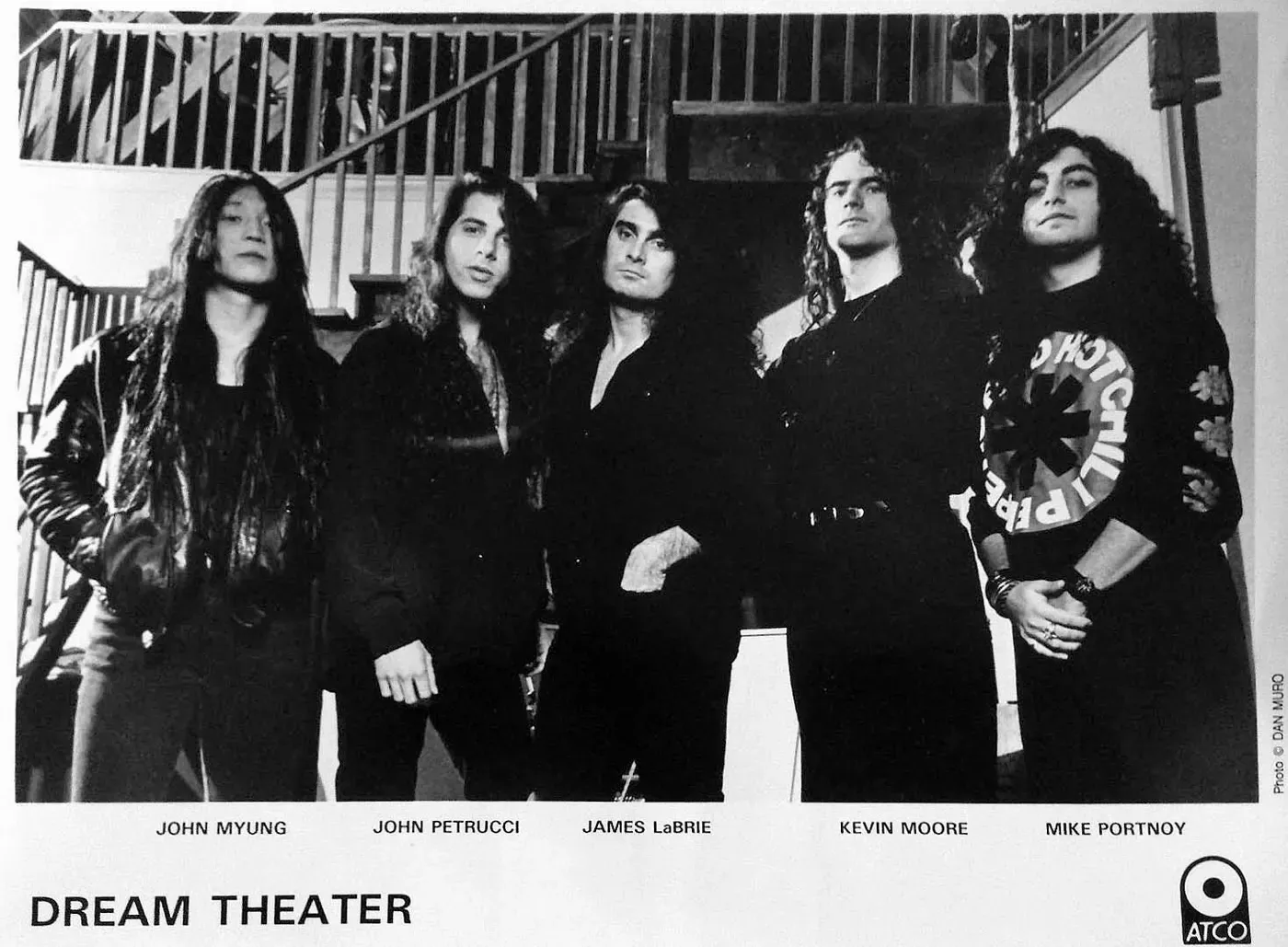
- Mike Portnoy – Drums
- John Petrucci – Guitar
- John Myung – Bass
- Kevin Moore – Keyboards
- James LaBrie – Vocals
Guest musicians
- Jay Beckenstein – Soprano Saxophone on "Another Day"
Production
- David Prater – Mixing, production
- Doug Oberkircher – Engineering, mixing
- Steve Regina – Engineering assistance
- Ted Jensen – Mastering
Artwork
- Larry Freemantle – Art direction
- Dan Muro – Photography
- Access Images – Computer imaging
Images and Words is Dream Theater’s second studio album, and it changed just about everything for them. Released in the United States on July 7, 1992, through ATCO Records, it introduced James LaBrie on vocals, gave them their first real hit with “Pull Me Under” and eventually earned American gold certification. It turned a promising but little-known Long Island band into an unlikely leading name in progressive metal. And it did so with an opening single that runs over eight minutes and stops in the middle of a phrase.12
It’s easy to see why so many fans start with Images and Words. The musicianship, long arrangements and interplay between John Petrucci and Kevin Moore are all central to the sound. The band moves from heavy riffs to delicate piano passages as though the two naturally belong together. And despite all the complexity, it’s a very melodic album, accessible in its own way. There are plenty of parts to hum or sing along to, even if matching LaBrie’s range might test both the listener’s voice and the neighbours’ patience.
About the album
Two Johns, one Kevin, no singer
By the end of 1989, Dream Theater had managed to release a debut, lose most of their momentum, and conclude that Charlie Dominici wasn’t the singer to take them any further. When Dream and Day Unite had demonstrated what Petrucci, Moore, John Myung and Mike Portnoy could do, but the record’s limited reach and the unsatisfactory relationship with Mechanic Records left them in an awkward position. They still believed they had the makings of a serious band. They just didn’t have a singer, much of a career, or a particularly encouraging record deal.34
Dominici’s departure, usually placed in late 1989, began a long and occasionally absurd audition process. The band listened to something approaching 200 prospective vocalists and invited a procession of hopefuls to try out. Some were technically good but wrong for the music. Others seemed to rely on volume and looking the part. Steve Stone even made it onto a concert stage, only to deliver an unfortunate attempt at audience participation and disappear from the picture almost as quickly as he’d arrived. The group considered carrying on as an instrumental four-piece. To be fair, anyone listening to the music they were writing could understand why.345
They didn’t stop working. “Metropolis” was already being played when Dominici was in the band, and the subsequent months produced instrumental demos, increasingly elaborate arrangements and much of the music that would end up on Images and Words. The original Images and Words demos document a band effectively writing its second album without knowing who would sing it. Petrucci later explained that most of their compositions grew out of rehearsal-room jams: one person offered a riff, rhythm or chord progression, everybody pulled it apart, and the results were recorded and painstakingly assembled. Some of the music was carefully calculated, certainly, but its beginnings were often surprisingly spontaneous.67
In the meantime, the band were trying to escape Mechanic. They felt they hadn’t received the touring and promotional support they’d been promised, while accounts from the label suggest financial limitations and competing expectations rather than one simple villain. What matters is that their future seemed to be going nowhere. An unsigned progressive-metal group with an impossible amount of music, a reputation for being difficult to pigeonhole, and no singer: precisely what every major record company was desperate to sign in 1990. Or perhaps not.38
Enter James LaBrie
James LaBrie was not the only serious candidate, and he was nearly overlooked altogether. New York vocalist Chris Cintron had impressed the group enough for them to consider the search effectively over. Then a tape from Canada arrived. LaBrie, previously associated with Coney Hatch and Winter Rose, had heard the debut and the newer material and thought the band’s musical ambition was worth investigating. Dream Theater initially told him they had already found someone. Mike Portnoy eventually listened to the tape properly, persuaded the others to give it a hearing, and the search reopened.45
LaBrie travelled to New York in January 1991 and auditioned with the group. The connection was immediate. He had the high register they wanted, but he could also deliver the melodic lines without making every song sound like an Olympic event for tenors. He could sing over the odd time signatures, find his way through the instrumental passages and, just as importantly, get along with four people who had already spent years developing their own little musical universe. A Journey cover was part of the audition too, giving them something to judge beyond the twenty-minute prog pieces.49
His full name is Kevin James LaBrie. With Kevin Moore already occupying the Kevin department, and John Petrucci and John Myung doing their best to make introductions unnecessarily confusing, he chose to use James professionally. It solved at least one administrative problem. It also provided Dream Theater with the voice that would become inseparable from the band, though their new label would reportedly have its own doubts about the choice further down the road.49
What makes Images and Words especially interesting is that LaBrie joined after much of the music had been developed. In an August 1992 interview for Good Times, he said most of the material was already written when he arrived. Kevin Moore described a genuinely collective writing process in which the band would build arrangements at rehearsal rather than have one songwriter dictate everything. The new vocalist’s contribution was therefore not to reinvent the group but to make music they already loved sound complete. That is harder than it sounds when the band in question seems constitutionally incapable of writing a simple middle eight.6
The unlikely second chance at ATCO
The next piece of good fortune came courtesy of Derek Oliver, a British A&R executive who knew the band from its Mechanic days and had moved into the ATCO orbit. Former Gentle Giant singer Derek Shulman was also an important figure at the label. The fact that one of the people assessing Dream Theater’s commercial prospects had once sung in Gentle Giant was encouraging. He was already comfortable with unconventional time signatures.810
Oliver believed in the material even when the demos were rough and, at one stage, instrumental. To convince the label, Dream Theater recorded a more professional three-song demonstration with producer David Prater and engineer Doug Oberkircher. The selections were “Metropolis”, “Take the Time” and “To Live Forever”. Three tracks, around three quarters of an hour of music. A perfectly normal demo, then, provided the intended audience was prepared to devote most of its lunch break to it. The so-called ATCO Demos helped secure the new contract.81011
The exact sequence of the contract negotiations, recordings and final signatures is described somewhat differently in contemporary interviews and later recollections. LaBrie told Good Times that an album had been finished before the ATCO signing, while Oliver’s account in RIP describes the professional three-track demo as the decisive step. Lifting Shadows lays out a more extended process of demonstrations, a development arrangement and the eventual album sessions. The safe conclusion is that ATCO’s commitment grew out of the band’s existing music and Oliver’s persistence, not out of some last-minute decision to write a few potential hits.6810
Early plans for the next record were larger than what eventually reached the shops. The band wanted room for “A Change of Seasons”, a lengthy piece that Portnoy had developed after the death of his mother, alongside material such as “To Live Forever” and “Don’t Look Past Me”. An expanded album, sometimes described as a double-album ambition, was discussed. ATCO wasn’t having it. “A Change of Seasons” was cut from the running order, and the other two songs also missed out as “Another Day” and “Surrounded” became part of the final selection. The excised music didn’t vanish: “A Change of Seasons” finally appeared as the title piece of a 1995 EP, while versions of the other songs surfaced on demos, singles and archival releases.812
The album that nearly drove everybody mad
The album sessions began on October 14, 1991, at Bear Tracks Studios in Suffern, New York, with additional recording at The Hit Factory in Manhattan. Recording and mixing continued into December. Compared with the rushed, underfunded sessions for When Dream and Day Unite, this was a substantial step up: a serious studio, a more experienced production team and a record label with the resources to do something with the finished product. There was, naturally, a catch.813
David Prater came from a production background that valued precision, carefully controlled performances and polished rock-radio sound. Dream Theater were five musicians who had spent years arguing about exactly how many notes should be in each bar. The difference in priorities became apparent almost immediately. The removal of “A Change of Seasons” was a bitter blow, particularly to Portnoy, and the studio sessions brought further disputes about arrangements, tones, vocals and what the band was supposed to sound like on tape.814
Portnoy’s snare drum became one of the great controversies of the Dream Theater catalogue. Prater used triggered drum sounds, giving the snare a tight, remarkably consistent attack. That was fairly fashionable in early-nineties rock production, but it was not the sound Portnoy wanted. He hated what it did to the subtler elements of his playing, particularly the ghost notes and dynamics. Even listeners who love the songs have been complaining about the snare ever since. It became a production decision the drummer would still be discussing thirty years later, willingly or otherwise.814
The keyboard sessions produced another famous disagreement. Prater later accused Kevin Moore of deliberately playing incorrect chord inversions, claiming that Moore had become obstructive. Petrucci offered a different explanation, arguing that the arrangements and production were simply more complicated than they had anticipated and rejecting the idea of intentional sabotage. There is no good reason to present Prater’s allegation as established fact. What is beyond dispute is that he and Moore did not enjoy a smooth working relationship, and that the atmosphere became difficult at times.814
The vocals caused arguments, too. The band wanted to retain some of the harsher, more aggressive qualities of LaBrie’s singing, whereas Prater favoured a smoother, cleaner presentation. Portnoy was particularly frustrated by how some of the more forceful takes were treated. Petrucci, interestingly, was more appreciative of the producer’s work at the time. In a 1992 RIP interview and a 1993 Guitar World conversation he credited Prater with making the instruments occupy their own space and giving the compositions a clarity the debut had lacked. The later accounts of shouting matches aren’t fiction, but neither was the whole enterprise an uninterrupted shouting match.81015
That tension is audible in the finished album. The low end is controlled, the vocals sit prominently in the mix, and the guitars and keyboards are much easier to distinguish than on When Dream and Day Unite. On the other hand, the drums can sound unnaturally rigid and some of the heavier material could have benefited from a less glossy approach. A surprising number of fans regard Images and Words as both a masterpiece and an album that badly needs a different snare sound. The two opinions are perfectly compatible.1415
More than just a guitar and keyboard contest
The new production also helped reveal something that was easy to miss on the debut: the band could be extraordinarily restrained when the music called for it. Kevin Moore’s piano lines on “Wait for Sleep”, the dynamics in “Surrounded” and the relatively straightforward melodies of “Another Day” are every bit as important to the record as its technical exhibitions. The longer compositions work because there is something to return to after the musicians have disappeared down one of their instrumental rabbit holes.716
Petrucci explained in Guitar World that the group had become more conscious of orchestration. Rather than everyone filling every available gap, they began arranging the parts so that one instrument might dominate while the others supported it. He singled out “Pull Me Under” as an example of how the same basic chord progression could be presented in very different ways through rhythm and arrangement. It gives the music a sense of direction even when the surface is changing constantly.7
Moore was equally important in defining the sound. In a 1993 Keyboard interview he talked about shaping his synthesiser tones so they could stand alongside distorted guitars rather than disappear beneath them. His setup was comparatively modest, built around instruments such as the Korg DW-8000 and Roland JD-800, with older Roland sounds used on the recordings as well. Moore even admitted that the opening keyboard sound on “Take the Time” was rather thin. A nice reminder that not every musician who helped define a genre was automatically in love with every noise he made along the way.16
Portnoy, meanwhile, was trying to combine the influence of Neil Peart and the classic progressive drummers with the weight and immediacy of modern metal. In a 1993 Modern Drummer interview, he described how his understanding of harmony and arrangement allowed the drums to participate in the writing, not merely keep time beneath it. The playing is impressive. More interestingly, the songs hold together despite how much is happening in the arrangements. And on a record containing “Metropolis” and “Learning to Live”, coherence was no small achievement.17
The songs
1. Pull Me Under
It’s almost comical that the song which finally broke Dream Theater into the mainstream was “Pull Me Under”. Eight minutes and fourteen seconds, a lengthy instrumental introduction, shifting rhythms, a sinister atmosphere and an ending that simply stops. No neat fade, no reassuring final chord, no attempt to persuade the radio listener that everything has been wrapped up nicely. And somehow it worked.118
The song began life under the working title “Oliver’s Twist”, a nod to A&R man Derek Oliver, and early demo arrangements included an additional instrumental passage that was removed from the album version. Part of that material later resurfaced in “Erotomania” on Awake. By the time Images and Words was recorded, the band had managed to streamline the composition without turning it into a conventional rock single. Its central progression holds much of the music together, while changes of instrumentation and rhythm make the various sections feel more different than they harmonically are.718
Kevin Moore wrote the lyrics, drawing on Hamlet, particularly the prince’s confrontation with mortality, vengeance and the consequences of his choices. References to Shakespeare are woven into the words rather than presented as a straightforward retelling of the play. The title refers to an existential crisis, rather than a literal rescue from underwater. The famous abrupt cut was deliberate, inspired in part by the way the Beatles ended “I Want You (She’s So Heavy)” on Abbey Road. It’s not a mistake in your CD player, however much it might have sounded like one in 1992.818
The band’s label initially had modest expectations for it, but rock stations began playing “Pull Me Under”, requests followed, and MTV gave the video valuable exposure. It eventually reached number 10 on Billboard’s Mainstream Rock chart. It remains Dream Theater’s best-known crossover success, and it changed the band’s touring prospects overnight. The band would spend the next thirty years writing increasingly long songs. Their commercial breakthrough, though, came with an eight-minute track inspired by Shakespeare. Good luck drawing up that marketing strategy in advance.119
2. Another Day
After that imposing opener, “Another Day” is a reminder that Dream Theater can write a genuinely moving song without requiring the listener to count anything. John Petrucci wrote the lyrics about his father, John Sr., and his fight with cancer. This is sometimes mangled into a claim that Petrucci himself had cancer. He didn’t. The subject was his father’s illness, and the sadness and helplessness of watching someone close to you struggle with it. His father died in 1996, an experience Petrucci would later address again in “Take Away My Pain”.18
The arrangement is deliberately more direct than much of the album. LaBrie delivers one of his most affecting early performances, the acoustic touches keep it intimate, and the chorus provides the sort of melodic release that works even if you have absolutely no interest in progressive metal. It is not an attempt to pretend the band are something else. It’s the same musical care applied to a smaller, more personal canvas.8
The soprano saxophone solo comes from Jay Beckenstein of Spyro Gyra, who also owned Bear Tracks Studios. Having the studio owner happen to be a highly accomplished saxophonist was convenient, particularly when the song called for a sound outside the band’s usual guitar-and-keyboard arsenal. A second promotional video was made for the track, but it would not reproduce the extraordinary radio success of “Pull Me Under”.818
3. Take the Time
If “Another Day” shows the band’s more approachable side, “Take the Time” spends eight minutes gleefully undoing that impression. It moves through funk-inflected rhythms, aggressive riffs, brightly coloured keyboards, unison runs, a big chorus and some thoroughly outrageous instrumental playing. The early working title was “Grab That Feel”, which thankfully never made it onto the album sleeve. It sounds like an advertising slogan for a sports drink that has been recalled for health reasons.1118
The lyrics are unusually revealing. This is Dream Theater writing about Dream Theater, specifically the exhausting period between the debut and their second chance: changing singers, escaping a record deal, finding management and keeping the band together when there was precious little evidence that the effort would pay off. In a 1993 Hit Parader interview, Portnoy and Petrucci explained how the instrumental members each took responsibility for different sections. Portnoy wrote the first verse, Myung the second, Moore the choruses, and Petrucci the remainder. The result was deliberately written from different personal perspectives, with the entire band finding common ground in its determination to keep going.20
That accounts for the song’s changing moods. Portnoy’s contribution is direct and frustrated, Myung’s more inward-looking, and the chorus draws the different viewpoints together. It’s effectively a short history of what the band had just survived. The song is also linked thematically to “Only a Matter of Time” from the debut, which had explored their early determination to make a career despite repeated setbacks.20
The samples are another little piece of Dream Theater folklore. The opening incorporates snippets from Kurtis Blow’s “Christmas Rappin’”, Frank Zappa’s “Dancin’ Fool” and Public Enemy’s “Power to the People”. Later, a line in Italian is borrowed from Giuseppe Tornatore’s film Cinema Paradiso, tying into the idea of understanding something more clearly through apparent blindness. In 1992, it was quite a combination to find on one track by a progressive-metal band from Long Island. A promotional video followed, making “Take the Time” the third album track to receive the treatment.1820
Petrucci later admitted that some of the instrumental material was extremely difficult to play because he had to double fast keyboard phrases that weren’t conceived with a guitarist’s fingers in mind. Moore, for his part, thought the keyboard intro could have sounded better. Each member had different complaints. The rest of us can concentrate on the fact that the section where guitar and keyboards chase one another remains one of the band’s most entertaining displays of organised musical nonsense.716
4. Surrounded
“Surrounded” is another of Kevin Moore’s lyrical contributions and one of the album’s most underrated songs. It opens quietly, gathers pace, shifts into an uplifting chorus and eventually turns into something rather more muscular. It’s melodic enough to make sense on the radio but complex enough that nobody would mistake it for an ordinary early-nineties power ballad. Like much of Moore’s best writing, it manages to sound hopeful and melancholy at the same time.818
What the lyrics are definitively about has never been established as clearly as some fan explanations suggest. They contain images of darkness, light, spiritual change and release, and spiritual awakening is a reasonable interpretation. But that is an interpretation, not a confirmed chapter-by-chapter plot supplied by the songwriter. During the Images and Words touring period, the band also dedicated performances of “Surrounded” to tennis player Arthur Ashe, whose death from AIDS-related pneumonia in 1993 gave those performances an additional meaning.18
Prater reportedly wasn’t impressed with Petrucci’s guitar solo, dismissing its Van Halen influence. Petrucci, who was understandably rather pleased with it, has remembered that exchange many years later. With hindsight, the solo’s exuberance is part of the appeal. It gives the track a sudden rush of energy without losing the song’s underlying warmth. The band and producer were again hearing different possibilities in the same music.14
5. Metropolis, Part I: The Miracle and the Sleeper
Now this is what most people think of when they hear the name Dream Theater. “Metropolis” has the sweeping introduction, the fantasy lyrics, an extraordinarily busy instrumental middle section and an almost complete disregard for the normal rules of rock-song construction. It was one of the songs already in the repertoire during Charlie Dominici’s time, and it became an important part of the material that persuaded ATCO the band had something special.38
Petrucci’s lyrics draw on mythic and fantastical storytelling, with the figures of the Miracle and the Sleeper. The imagery has often been compared to the story of Romulus and Remus and the origins of Rome, but it isn’t a direct retelling of that ancient tale. Nor is it connected to Fritz Lang’s 1927 film Metropolis. It’s an original fantasy lyric, deliberately leaving things unexplained and making room for larger ideas. The story wasn’t written to answer every question fans might ask of it.18
Musically, there’s enough going on here to keep several less ambitious bands busy for an entire album. The rapid-fire guitar and keyboard exchanges, the intricate bass lines and Portnoy’s rhythmic manoeuvring make it a showcase for the group’s collective technique. Kevin Moore even referred to one instrumental passage as “the Dregs section”, an acknowledgement of the Dixie Dregs influence that sits alongside the group’s more obvious love of Rush, Yes and metal. Hearing them play this live was an altogether different proposition from listening to a neatly separated studio mix. They had to remember every last note.1617
And what about “Part I”? The band added it without an actual second part waiting in the wings. Portnoy has explained that it began as a joke. The musicians hadn’t considered how seriously dedicated fans would take the implied promise. Eventually those fans got their wish, though not in the form anyone could have predicted in 1992. An attempted continuation during the Falling into Infinity period developed into the story that would become Metropolis Pt. 2: Scenes from a Memory in 1999. Its earlier working title, “Crumbling Metropolis”, shows the more practical naming of these ambitious pieces on rehearsal tapes.1821
6. Under a Glass Moon
If there’s a single Images and Words track guaranteed to start an argument among guitar players about John Petrucci’s finest solo, it’s “Under a Glass Moon”. It brings together jagged riffs, shifting meters, a surprisingly memorable chorus and a solo that seems determined to demonstrate every technique the man had spent the previous decade mastering. Speed, legato, unusual phrasing, precise picking and carefully chosen melodic notes all get their turn. It is flashy, certainly. More difficult, and more important, is that it makes musical sense.722
The lyrics are Petrucci’s, full of nocturnal and romantic imagery that sits somewhere between a dream and a recollection. The title fits the slightly unreal atmosphere of the song. The wonderfully ridiculous early title, “The Battle of Jimmy Cocoa and Fishface”, makes the case for letting musicians change their minds before a record is pressed. The working title also captures something of the band’s rehearsal-room humour, very much at odds with the stern, mysterious atmosphere of their finished album covers.1823
The instrumental passage is a particularly good example of the chemistry between Petrucci, Myung, Moore and Portnoy. Everybody is doing something interesting, but the parts don’t simply compete for attention. Petrucci’s solo naturally grabs the spotlight, yet it’s the rhythm section’s precision and the changing harmonic support that give it the space to work. The performance sounds spectacular even without knowing the guitar techniques involved. Possibly more spectacular if you don’t.717
7. Wait for Sleep
Then the album suddenly goes quiet. “Wait for Sleep” lasts barely two and a half minutes, features Kevin Moore’s piano and James LaBrie’s voice, and makes no attempt to fit a guitar solo into the available space. Moore wrote both the music and lyrics, making it the clearest example on the album of an entirely self-contained composition by one member rather than an arrangement assembled by the whole band. Its simplicity, especially in the company of songs like “Metropolis”, is part of what makes it so effective.1318
Moore’s lyrics were inspired by someone close to him struggling with grief and questions of faith after losing a loved one, described in Lifting Shadows as her sister. The song’s central image is of a woman searching for comfort and meaning when the usual religious answers no longer seem sufficient. The words aren’t a simple declaration of belief or disbelief. They’re about what it feels like to need reassurance and not know where to find it. It’s a more mature subject than the band’s occasional reputation for writing lyrics as complicated as their instrumental sections might suggest.818
The phrase “images and words” appears in the lyrics, giving the record its title. The composition also flows directly into “Learning to Live”, whose later sections recall its melodic material. It is easy to treat “Wait for Sleep” as a little prelude and move on, but the album’s emotional centre is arguably right here. Moore’s understated piano figure manages to say something the preceding fifty-odd minutes of instrumental gymnastics could never quite express in the same way.818
8. Learning to Live
At eleven and a half minutes, “Learning to Live” was the longest studio track Dream Theater had released at that point and the first to cross the ten-minute mark. It also provides a very suitable ending to Images and Words: heavy and melodic, meticulously arranged, full of changes in pace and texture, and ultimately more interested in taking the listener somewhere than in obeying a sensible song length. There isn’t a straightforward verse-chorus ending because there was never going to be one.113
John Myung wrote the lyrics, drawing on the fear and uncertainty surrounding the AIDS epidemic. This is frequently missed because the words aren’t written as a literal medical narrative; they focus instead on mortality, prejudice, the instinct to protect ourselves and the decision to keep living with compassion despite the knowledge that life is fragile. Portnoy later confirmed the AIDS connection. Placed alongside “Another Day” and “Wait for Sleep”, it gives the album a more substantial lyrical thread than the familiar stereotype of progressive-metal musicians writing nothing but fantasy stories and strange dreams.18
The early working title was “Creep With Tonality”. What kind of creature the title describes hasn’t been reliably established. It does sound slightly less alarming than “Jimmy Cocoa and Fishface”. The finished piece uses recurring motifs, extended instrumental development and a climactic return to melodic ideas associated with “Wait for Sleep”. It’s the sort of long-form construction that the band would spend much of the rest of its career exploring, and it shows how much their ambitions had grown since the debut.823
There’s also an interesting balance to the playing. Portnoy has plenty of opportunities to demonstrate why drummers were already talking about him, Petrucci and Moore trade increasingly involved ideas, and Myung’s bass remains crucial to the whole structure. Yet LaBrie’s vocal lines give the track its humanity. By the time the final instrumental passages arrive, it feels less like a collection of impressive sections than the conclusion of a journey. That is what makes an eleven-minute song worth eleven minutes, as opposed to merely being a very long one.1617
The artwork
The sleeve of Images and Words is as recognisable as the music. A young girl sits on a bed surrounded by a collage of seemingly unrelated images: a sparrow, an antique mirror, a burning heart wrapped in barbed wire, a surreal outdoor landscape. None of it screams “progressive metal” in the traditional sense. There are no dragons, exploding planets or long-haired guitarists posing next to a ruined cathedral. Instead, it’s mysterious, slightly unsettling and clearly meant to reward a closer look.824
The concept came from the band, with Kevin Moore closely involved in relating visual ideas to the lyrics. The sparrow connects to “Pull Me Under” and its Hamlet references; the girl and the image she holds evoke “Wait for Sleep” and its preoccupation with memory, loss and spiritual uncertainty. The burning heart draws on the imagery of the Sacred Heart of Jesus, with the barbed wire representing adversity, the heart endurance and the flames the passion needed to keep going. You can read it as a summary of the band’s own difficult route to making the record, even though it also has more personal and religious associations.818
Larry Freemantle handled the art direction, with photography by Dan Muro and computer imagery associated with Access Images. The Majesty emblem, which the band had kept after being forced to abandon its original name, is worked into the bed’s canopy. That little symbol would continue to turn up on Dream Theater records for decades. The finished cover is immediately distinctive, though difficult to describe to someone who hasn’t seen it.1324
A hit single, a world tour and a career
The album’s release was the payoff after nearly three years in which Dream Theater had been forced to justify their existence to singers, record companies and, probably, themselves. In the United States the release date was July 7, 1992, although some European discographies document a July 6 issue. That one-day discrepancy is the source of the competing dates commonly found in album listings; both have appeared in reputable catalogues, but July 7 is the date used by the band for the American release.12
Reviews were far from unanimous. Some critics loved the astonishing technique and the way the band had brought the progressive-rock tradition into the metal world. Others heard overplaying and a style with no obvious place in a musical landscape increasingly dominated by grunge and alternative rock. Both reactions were understandable. It was 1992, after all. A group openly influenced by Rush, Yes, Metallica and Gentle Giant wasn’t exactly the most obvious proposition for mainstream rock radio. But then mainstream rock radio started playing them anyway.1025
“Pull Me Under” began attracting attention at radio, and its video found an audience on MTV. It eventually entered the top ten of Billboard’s Mainstream Rock chart, reaching number 10. The other singles and videos, “Another Day” and “Take the Time”, helped keep the album visible, but “Pull Me Under” was the one that did the heavy lifting. Dream Theater finally had a song people outside progressive-rock circles recognised, even if some of them probably had no idea what happened after the third chorus.119
The band had already played a handful of crucial shows with LaBrie, including Long Island warm-ups at Hammerhedz and Sparks in June 1992. One particularly nerve-racking assignment was opening for Iron Maiden at the Ritz in New York. A contemporary RIP report caught them backstage, wondering whether Maiden’s audience would accept a largely unknown opening act. Steve Harris reportedly offered Petrucci some typically practical advice about dealing with a hostile crowd. Before long, Dream Theater were undertaking proper tours through North America, Europe and Japan, building the international following they had spent years trying to reach.1026
The album ultimately earned RIAA Gold certification in the United States on February 2, 1995. That might seem modest compared with the multi-platinum world of mainstream hard rock, but for this band it was enormous. Their first album had struggled to reach people who already liked this sort of music. Their second reached listeners who didn’t yet know this sort of music existed. It gave progressive metal a much larger audience, and it gave Dream Theater a career they could actually sustain.127
The legacy
Images and Words has been treated as a landmark progressive-metal album ever since, and it’s still the one many listeners point to when asked where Dream Theater got everything right. There are perfectly reasonable arguments for later records being more adventurous, more mature or better produced. Awake is darker and heavier; Metropolis Pt. 2 tells a bigger story; subsequent albums take the technical demands into entirely different territory. But Images and Words has a rare balance of urgency, melody, instrumental ambition and memorable songs. It also benefits from Kevin Moore’s particular musical character, which gave this era of the band a flavour it would never quite reproduce.1516
That doesn’t mean it’s beyond criticism. The triggered snare remains divisive, the production can sound distinctly of its time, and there’s enough enthusiastic keyboard and guitar playing to wear out anyone who thinks an instrumental section should end after sixteen bars. Those are genuine criticisms. They’re also part of what makes the album such an interesting document of five musicians finding out what they could do together. In 1992 they hadn’t yet become an institution. They still sounded like they had something to prove.1415
The tenth anniversary was marked in 2002 by the fan-club CD Taste the Memories, which assembled live recordings from the early-nineties tours, including material that hadn’t appeared on the usual official live albums. For the fifteenth anniversary in 2007, the band went further, performing Images and Words in full at selected concerts during the Chaos in Motion touring period. An international fan-club CD documented the complete album performed in Bonn, Germany, on June 16, 2007. Jordan Rudess was behind the keyboards by then, but the songs were still capable of causing the same mixture of delight and alarm among technically minded musicians.2829
The fact that they can still go onstage and play this music from beginning to end is impressive enough. The continuing demand to hear the whole album says more about its appeal. Images and Words isn’t a perfect-sounding record, and it certainly isn’t a straightforward one. It’s a remarkably complete expression of the band they wanted to become, recorded before they knew whether an audience would be interested. Fortunately, it found a substantial audience.
Sources
The numbered references below identify the interviews, published research and discographical records used to expand and check this article. Lifting Shadows references are to the printed page numbers in Rich Wilson’s authorized biography, checked against the supplied full text. Where people recall the same incident differently, the article identifies the disagreement rather than presenting one recollection as an uncontested fact.
Further reading and original links
- Through My Words: Dream Theater interviews, reviews and articles, 1992
- Through My Words: Dream Theater interviews, reviews and articles, 1993
- DT World: Images and Words, archived original album page
- Wikipedia: Images and Words
- Dream Theater Wikia: Images and Words
Footnotes
-
Dream Theater, Images and Words, official album entry (US release date, lineup, ATCO, commercial success). ↩ ↩2 ↩3 ↩4 ↩5 ↩6 ↩7
-
MusicBrainz, Images and Words, release-group catalogue (European July 6 and US July 7, 1992 editions). ↩ ↩2
-
Rich Wilson, Lifting Shadows: The Authorized Biography of Dream Theater, pp. 64-85 (Dominici’s departure, the singer search and the band’s uncertain position after the debut). ↩ ↩2 ↩3 ↩4
-
Pippa Lang, “Dream Theater: More Than Words”, Metal Hammer UK, July 1992 (contemporary Mike Portnoy interview on the 200 auditions and singer search). ↩ ↩2 ↩3 ↩4 ↩5
-
Rich Wilson, Lifting Shadows, pp. 72-90 (Steve Stone, Chris Cintron, James LaBrie and the auditions). ↩ ↩2
-
John Blenn, “Dream Theater: L.I. Progressive Rockers Challenge the Boundaries of Music”, Good Times, August 1992 (Kevin Moore and James LaBrie on songwriting, band organisation and ATCO). ↩ ↩2 ↩3
-
Jeff Kitts, “Dream Come True”, Guitar World, June 1993 (John Petrucci on composition, arrangements, unison playing and recording). ↩ ↩2 ↩3 ↩4 ↩5 ↩6 ↩7
-
Rich Wilson, Lifting Shadows, pp. 88-112 (ATCO, recording, Prater, songs, artwork and release). ↩ ↩2 ↩3 ↩4 ↩5 ↩6 ↩7 ↩8 ↩9 ↩10 ↩11 ↩12 ↩13 ↩14 ↩15 ↩16 ↩17 ↩18 ↩19 ↩20
-
Dave Ling, “When Dream Theater Beat the Odds with Images and Words”, Prog retrospective (2017 interviews, republished 2025, with LaBrie, Petrucci and Portnoy). ↩ ↩2
-
Michael Moses, “Lifting the Curtain On… Dream Theater”, RIP, December 1992 (Portnoy, Petrucci, LaBrie and Derek Oliver on the label, demo, auditions and production). ↩ ↩2 ↩3 ↩4 ↩5 ↩6
-
DT World, “What are the ATCO Demos?”, FAQ (“Metropolis”, “Take the Time” and “To Live Forever” demo details). ↩ ↩2
-
Dream Theater, A Change of Seasons, official discography (the later 1995 release of the omitted composition). ↩
-
MusicBrainz, Images and Words, 1992 release credits (album track and performance credits, studios and recording dates); Guitar Nine album credits (engineering, mastering and artwork personnel). ↩ ↩2 ↩3 ↩4
-
Rich Wilson, Lifting Shadows, pp. 96-104 (detailed accounts from Prater, Portnoy and Petrucci of the recording disputes); Dave Ling, Prog retrospective (later reflections on the snare and the arguments). ↩ ↩2 ↩3 ↩4 ↩5 ↩6
-
RIP magazine, December 1992, Petrucci interview; Guitar World, June 1993, Petrucci interview (contemporaneous positive comments about Prater’s arrangement and production work). ↩ ↩2 ↩3 ↩4
-
Robert L. Doerschuk, “Kevin Moore: Kicking the Prog Corpse with Dream Theater”, Keyboard, April 1993 (Kevin Moore’s equipment, synth sounds, musical approach and criticisms of his recorded tones). ↩ ↩2 ↩3 ↩4 ↩5 ↩6
-
Matt Peiken, “Mike Portnoy of Dream Theater”, Modern Drummer 165, August 1993 (Portnoy on rhythmic writing, arrangements and musical training). ↩ ↩2 ↩3 ↩4
-
DT World, Images and Words song questions, FAQ (lyrics, samples, working titles, “Metropolis”, artwork and interpretation); Rich Wilson, Lifting Shadows, pp. 106-110 (album tracks, lyric backgrounds and Moore’s “Wait for Sleep” account). ↩ ↩2 ↩3 ↩4 ↩5 ↩6 ↩7 ↩8 ↩9 ↩10 ↩11 ↩12 ↩13 ↩14 ↩15 ↩16 ↩17
-
Dream Theater, “Pull Me Under” chart fact (Billboard Mainstream Rock top-10 peak); official album entry (single’s role in the band’s commercial breakthrough). ↩ ↩2
-
“The Story Behind the Song: Dream Theater’s Take the Time”, Hit Parader 346, June 1993 (Portnoy and Petrucci’s precise division of the lyrics and the song’s connection to the band’s difficulties). ↩ ↩2 ↩3
-
Mike Portnoy, interview, Dutch Progressive Rock Page, April 8, 2000 (“Metropolis” title and the eventual sequel); DT World FAQ (the original joke and later development of part two). ↩
-
John Petrucci, Guitar World interview, June 1993 (guitar approach and album-era compositions). ↩
-
DT World, Images and Words working titles and demos, FAQ (early names and songs’ development); Images and Words Demos 1989-1991, official bootleg entry (archive of song sketches and demos). ↩ ↩2
-
Rich Wilson, Lifting Shadows, pp. 106-110 (Freemantle, sleeve details and cover meanings); Images and Words album credits (art direction, photography and imagery). ↩ ↩2
-
Jeff Kitts, “Dream Come True”, Guitar World, June 1993 (1993 assessment of musical tastes and the album’s reception); Rich Wilson, Lifting Shadows, pp. 107-113 (contemporary reviews and promotion). ↩
-
“Lifting the Curtain On… Dream Theater”, RIP, December 1992 (Iron Maiden Ritz show); Rich Wilson, Lifting Shadows, pp. 104-115 (LaBrie’s early performances and the first world tour). ↩
-
Images and Words, album certification chronology (RIAA Gold, February 2, 1995). ↩
-
Taste the Memories, DT World release entry (2002 international fan-club CD and early live recordings). ↩
-
DT World, fan-club CD/DVD release history (2007 Images and Words 15th-anniversary disc); Images and Words: 15th Anniversary Performance, Bonn concert details. ↩