

Originally published in Classic Rock Revisited.com · August 2007
The Long & Winding Yellow Brick Road: An Exclusive Interview with Dream Theater’s Jordan Rudess
By Ryan Sparks
InterviewJordan Rudess17 min read
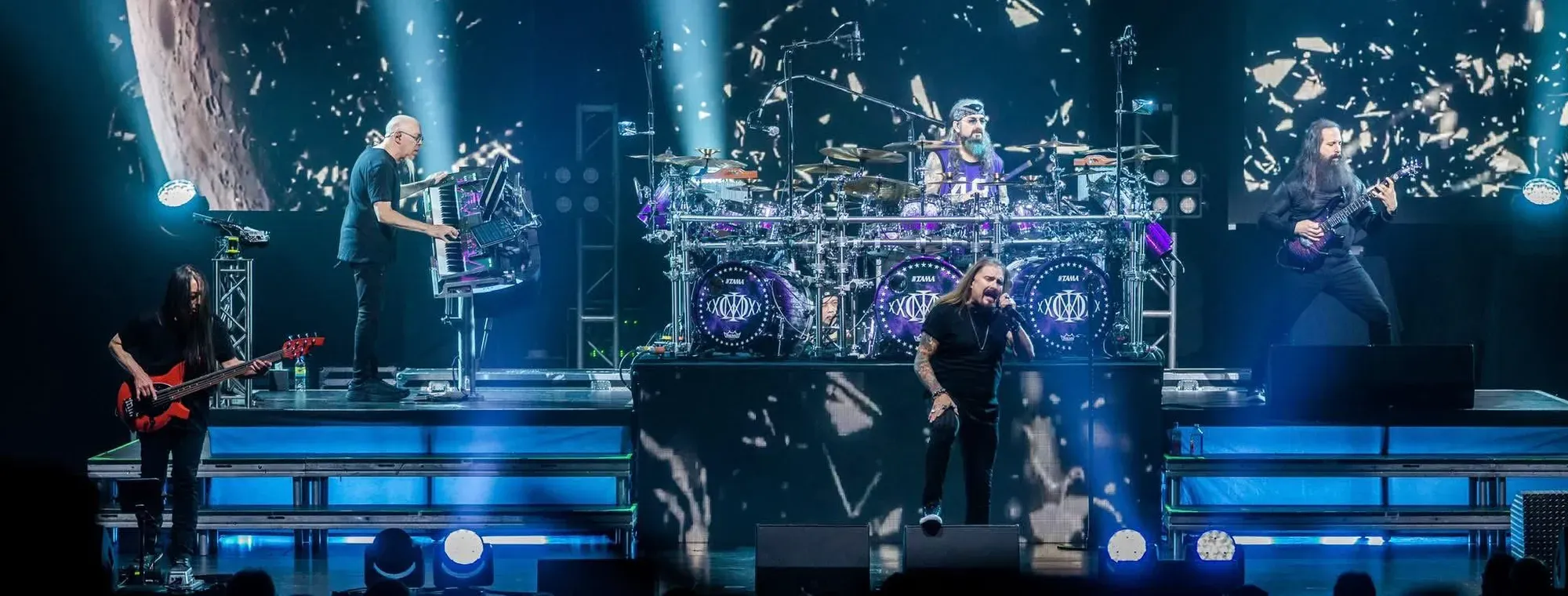
Keyboard wizard Jordan Rudess has made it a habit for years now of causing the jaws of serious music fans all over the world to drop to the floor with his staggering display of technique and prowess on the instrument. The term virtuoso can be applied to maybe a handful of musicians who play rock ‘n roll for a living and it just so happens that Jordan also plays with three equally talented players, John Petrucci (guitar), Mike Portnoy (Drums) and John Myung (Bass) in the progressive hard rock outfit Dream Theater. When he’s not touring endlessly around the globe with DT as he is currently in support of the bands stunningly epic new CD Systematic Chaos, he keeps busy maintaining his online conservatory and magazine Accent, pumping out instructional books and DVD’s as well as furthering his burgeoning solo career where he continues to push a musical envelope that’s already bursting at the seams.
Jordan’s latest solo endeavor, issued by the musical masterminds over at Magna Carta Records, is entitled The Road Home and this disc which features his reinterpretations of some of progressive rock’s finest moments was truly a labor of love. Stifle that yawn right now because this isn’t another half hearted, shameless pastiche nor does it reek of a cop out as so many of these ‘tributes’ usually wind up sounding like. Jordan successfully treads the fine line between staying true to the original where it counts most and still managing to put his own unique stamp on this collection of engaging material. It’s a classic example of reinvention and reinterpretation, not to mention it takes a lot of balls in my opinion to tackle and pull off covering the progressive opus “Tarkus”, originally done by ELP. He also enlisted an impressive list of musicians to help him out such as Steven Wilson (Porcupine Tree), Nick D’Virgilio (Spock’s Beard), Neal Morse, Kip Winger and longtime musical collaborator drummer Rod Morgenstein (The Dregs, RMP, Winger). You really owe it to yourself to check out this fantastic disc because I think you’ll be amazed and pleasantly surprised. I recently had a chance to catch up with Jordan pre-show at one of Dream Theater’s stops on the current tour where he was more than eager to discuss The Road Home, as well as the key ingredient that makes Dream Theater run like a well oiled machine. He also gave me an update on the status of the side project, the super group in which he plays with Petrucci, Portnoy and bassist Tony Levin known as Liquid Tension Experiment.
Ryan: Let me begin by saying that I think it speaks volumes about your abilities as a musician and arranger because when I listened to your interpretations of these classic songs it really felt like I was hearing completely new compositions at times.
Jordan: Oh that’s cool, thank you
Ryan: Like one of your peers and I’m assuming someone who was an influence on you; Keith Emerson, he drew heavily on his classical influences for ELP in the rock world and here you are a classically trained player interpreting these progressive classics. It’s kind of a nice twist don’t you think?
Jordan: It is yeah. For me, the pieces that I chose to do were so vital to my development as a musician. All of that music kind of came to me when I was leaving the classical world, because I was studying to be a classical pianist. It was then that I heard Tarkus and Gentle Giant and all of these things really had a tremendous influence on me, probably the strongest of any kind of music. It really felt like it was my own and it was strong enough to make me want to change my course and play electronic keyboards, buy a Moog synthesizer and really do what I do.
Ryan: What exactly does the title of the record The Road Home mean to you?
Jordan: It’s a straight ahead title in the sense that I feel like I’m kind of returning to my roots. One can say that classical music is my roots but in this case I’m going back to the music that I really, really love which is the progressive and art rock of the 70’s.
Ryan: Earlier this year you opened for Blackfield on some east coast dates in the US which featured just yourself performing some of these classic songs on the piano, did these performances perhaps sow the seed for this project?
Jordan: Absolutely I was basically trying out the whole idea. Part of what’s on The Road Home is a piano medley of some of these beautiful progressive rock melodies. I was in that frame of mind and I wanted to go out and play a whole set of piano music that was focused on those melodies. I took a few of them, the highlights and put them into that medley that’s on the album. That is something I definitely want to do more of.
Ryan: How was the actual recording process done? For example you’ve got quite a few high profile guests appearing on this disc and I’m assuming that you weren’t in a position to be all in the same room together. Does recording this way in this day and age pose any challenges for you?
Jordan: The way that I worked was a little different. The way that I do it most people when they listen to the album might think I did it a different way than what it is. What I mean by that is, when you listen to my rock albums, primarily the core of it is keyboards and drums. I’m playing the bass, there’s no rhythm guitar or anything like that. Any guitars that you hear on the albums are these wonderful solos at certain points that I allotted for those solo sections. I did the arrangements on the keyboards while Rod Morgenstein is playing the drums, which is like the Rudess Morgenstein Project. What’s different of course about this project for me, besides it being a cover album, is that it’s also an album with vocals. I really haven’t had a lot of my rock albums feature that many vocals so this to a certain extent is an album of songs. What happened was I recorded all the parts at home, I flushed out all the arrangements and I got it all cooking. In some cases we’d put down some MIDI drums just to have something down so I could understand what it was going to do and also to give Rod an idea what I wanted to have happen. There are not too many MIDI drums on this album as far as pre-production whereas with my other albums, it was original music and he’d have no idea. On this he could go back and hear the song and make up some part. After we got all that together we started Fed Ex’ing it out to people and sending out the music online. At that point everyone has their own system, one guy has Pro Tools, and another has Logic or Cubase. So what my engineer John Guth, who’s very technically capable, did was he ended up making an FTP site where he’d put up a Pro Tool file, a MIDI file and all these different types of files. Instructions went out through John and my assistant Dani Koesterich to all the guys on how to get onto the FTP site, how to access the files and what kind of files were there. Then we figured out what they had and what they needed and how to get it back to us. A lot of times I work with a lot of people who are really technically savvy, like Steven Wilson who is not only an amazing musician but also a producer as well. He knows how to record and how to prepare this kind of stuff because he’s so into technology. Kip Winger is a master engineer and singer so with him it was the same thing. One interesting thing that happened on this album is that for “Sound Chaser”, the intro vocal section was sung by Kip and Nick D’Virgilio together. First the tracks went to Nick and then they went to Kip. He just massaged the vocals, recorded his and then sent it back. He totally produced the vocals because we didn’t have to do anything to it. It was spot on.
Ryan: Your original track Piece of The Π has everything including the kitchen sink and I could detect a bit of an Autechre or Aphex Twin influence in the beginning. Do you think an all-electronic CD of that type of material could be a possibility in the future as well as perhaps one with all classical interpretations?
Jordan: I’ve been thinking for a while of taking that modern and interesting electronic stuff in the style of Autechre, Aphex Twin and Boards of Canada and groups like that and using the progressive rock to bring that into my fusion of styles. For sure it’s something that one way or another will continue to creep into my blend of styles and it’s something that I’d like to focus on.
Ryan: You’ve mentioned in the past how the Tarkus album opened your eyes in a big way, was it important for you to stay faithful to the original yet also update it for today and give it a new, fresher sound?
Jordan: All of those pieces had those challenges because when you love something so much and it’s always in your head it’s hard to go too far. So what I ended up doing on all the pieces and definitely “Tarkus” is I stayed true in a lot of ways to the original as far as the note choices and stuff like that but I’d add little original sections. The other way I kind of put my own voice on it is with the orchestration of it. Like “Tarkus” with Keith Emerson’s Hammond organ. If I tried to play the Hammond maybe I’d come up with a sound that was cool or maybe not. It definitely wouldn’t be any better; everybody would just say “Oh he’s doing the Emerson Hammond organ thing”. So I didn’t really use much Hammond on it. I went with the approach of using my synthesizers more to layer sounds much like a painter would have a pallet. I’d use a splash of yellow, splash of blue or red. That was my way to mix it up.
Ryan: You’ve been active in performing various benefit shows over the years for The Jay Monahan Center, Helen Hayes Performing Arts Center as well as you recorded a disc of music called 4NYC a couple of weeks after the tragic events of 9/11. I’m curious if there are other causes which are near and dear to your heart as well as your feelings on artists in the entertainment industry being able to use their abilities and influence to get people more involved.
Jordan: I think it’s a really important thing because it’s actually pretty easy for an artist to direct people to certain causes. Dream Theater right now is supporting a cancer cause which Mike Portnoy’s sister is involved in which directly helps people with cancer. They have an auction and at this very moment people are bidding online for an Ipod that we filled up with Dream Theater classics and rarities and which we all signed. We talk about different things we can do and a lot of stuff like that is no skin off our bones to help and do stuff and for sure I feel that way about my solo work as well.
Ryan: What do you think the chances are that a third Liquid Tension Experiment CD will happen?
Jordan: Well did you hear that The Liquid Trio Experiment is coming out?
Ryan: No.
Jordan: It’s coming out in October and this is an album of music that we recorded as a trio. We were with Petrucci in the studio but he had to leave because his wife’s water broke, which was the title of one of the songs “When the Water Breaks” on our second record. We continued to play, record and jam just to get ideas down. There was some fun stuff put down and now it’s being released and it’s called Spontaneous Combustion which Magna Carta will put out in October. I just put a little thread on the website with a picture of the album cover and “Sssh” underneath. You’re the first person I’ve spoken to about it.
Ryan: You’ve been a member of Dream Theater for about 10 years now or half of the bands existence. I’ve often heard that being in a band is like being married, so what do you think is the key to maintaining the bands personal chemistry over the years?
Jordan: One of the reasons that Dream Theater is so stable is our personal chemistry. We all get along really well and we have a lot of experience together. We’re all mature guys with families and when we do this, it’s a professional organization. It’s our job and what we love to do and we respect what we do and we respect each other as well. It’s a pretty cool situation on that level and it’s really enabled us to go on for years. It’s a great thing for us; it’s a good ride you know. We’re really good musicians, really nice people with great families around the world. I think the other part of it is that we’re not playing fashionable music.
Ryan: You’re always in search of new sounds for your keyboards both in the studio which can be seen in the excellent “Chaos in Progress” DVD which was included on the bands latest release Systematic Chaos, and in your live setup you’re adding new things as well. I understand for this tour you’ve got some different equipment out on the road, can you tell me a bit about that?
Jordan: I do want to keep things fresh and fun for the fans. I was thinking about that for this tour, how was I going to do something a little different on this run than I did last time. I think when people come out to see a world tour, if they came out the last time, they wanna open their eyes and uncover the gear and see something a little bit fresh or new. I got to the point where all of a sudden I was playing the Continuum which is a brand new instrument. I had modular synthesizers in a Keith Emerson style and I was thinking before this tour what I could do and I didn’t really know. I know have this really cool metal sculpture of a hand that holds my master keyboard up and it rotates it around so that looks really awesome. I’ve had a rotating stand for years but now I’ve got this really cool metal hand which was done by a wonderful artist so I went with that approach. I’ve been using the Korg Oasys for some years now so that’s not new but what I did was add a Korg Radius to my rig which is a really cool new Korg Synthesizer that has these real warm analogue sounds, but it’s digital. It’s got a lot of knobs on it that light up so it looks really cool. I used the Radius because when we were in the studio recording the album, Korg sent me one to use and everyone thought it was so cool and loved it. Every sound I’d go to they’d go “Oh my god that’s a great sound”.
What I do when I go into the studio is I’ve got all these different synthesizers and software and all this stuff but when it comes time to play live I don’t have all that so I end up reprogramming. In this case I would find the sound on my Oasys but I thought instead of having to reprogram all of the Radius sounds, the Radius comes as a keyboard with a rack now so it’s sort of like a version of a mini-moog or something like that so I used that. I’m also using an instrument called a Memotron which is like the third version of the Mellotron which is digital recreation of the old Mellotron. It even looks like it, it’s white with the knobs on it so it looks like a Mellotron but it’s all digital and sounds amazing. The reality of the situation is that it’s just fun really and it’s a quick way to nail the Mellotron sound on my Oasys. Three days before the tour started when we were in rehearsals this guy brought me this keyboard called the Zen Riffer, his name is Charles Tentindo and he’s the builder of the Zen Riffer which is a new keyboard design that you can play almost like an upright bass. You can stand up with it or take it off and play it like a strap on keytar or whatever you want to call it.
Ryan: Like something Jan Hammer used to play.
Jordan: Kind of like that but it has a whole other look.
Ryan: You’re playing this live on this tour?
Jordan: Yeah I use it for a couple of bits. It really graduates from the cheesy keytar thing. The design is a big part of it. It looks amazing. It’s this beautiful artistic thing, look for it.
Ryan: It looks like the band was truly having a good time in the studio making this record, if not then Mike really did a good job in the editing of the DVD. James has said this was the most fun he’s had in the studio making a record since Awake. What were your feelings on the creative process this time around?
Jordan: It really was a good experience and we have a pretty good flow going now. It’s a similar thing for me with each album, they’re always fun and I look forward to going into the studio, it’s always creative. I do my keyboard tracks, I usually set up all my stuff at a certain point in time, after we’re done writing and the guitar parts are down. I’ll get all my stuff together in the control room and I’ll take two weeks or I’ll plan on two weeks to just go nuts. I had a wonderful setup with the Roland Fantom, V-Synth, Korg Oasys, the Mini-Moog, the Radius, my computer and all my different toys. It’s just a real fun time. What Mike captured was the actual recording and what he didn’t capture because he was playing was the actual writing process which is a whole other thing.
Ryan: I was surprised to see that you actually write while you’re in the studio and you don’t go in with the songs or basic structures already written. I would think it’s more costly that way no?
Jordan: Yeah maybe but that’s the way we’ve always done it; every album that I’ve done with the band. Actually we’re pretty quick, we’re all setup and we’re writing so it’s right there and it’s fresh. We’ll take a couple of days on a tune to put something together and then say to Mike “Do your drums” and then we’ll all play it together and he looks for the drum track and then we’ll start tracking. When we’re done we’ll start the next tune. It’s this whirl wind of energy and when I listened back to the album I went “My God, this happened fast”.
Ryan: A lot of artists hate to hear the album back when they’re done after having lived with it for so long. Do you listen to it back afterwards?
Jordan: I have to. In my case, we write the music and it takes anywhere from a day to a week to write a number of complicated songs and then it’s done. Then I’ll go into my studio and for example on “In The Presence of Enemies”, the whole thing took maybe two full work days to play all my parts and then I’m done with it basically. John and Mike have to sit with it and go through all the production steps, the mixing and mastering and by the end they’re probably completely sick of it. Luckily Mike has one of the best memories on the planet earth, he remembers what he did and doesn’t have to listen to it again after having listened to it that many times and John is very similar. Meanwhile in the couple of months since I’ve worked on it, it’s gone out of my mind and I don’t think about it. When the album is done I’ve got to reprogram everything because I’m not playing it on the same synthesizers. I’ve got to figure out how I’m going to take all those tracks and do it live. I’ll have an orchestral sound happening under the cello section and up top I’ve got some weird synthesizer sound overtop or a sample. It’s a whole other production level so I’ll listen to the music a lot. I’ll go into my studio and sit down in front of my keyboards, stare at them for awhile and think “How the hell am I going to do this?” I’ll generally spend about on a song figuring out how to do it.
Ryan: If you knew then what you know now would you do anything different or change anything?
Jordan: I wouldn’t even be in this business [laughing]. No I’m kidding. It’s been a pretty good ride so I’d have to say it’s been pretty smooth. With the information that I have now I think I could have had my career a little bit earlier. Some of the guys in the band are ten years younger and have had a lot of success and they had it very early but my path has been different. I have respect for the path that I’ve taken even when the path got weird and perhaps a little spacey and unfocused. I just go with it and luckily it’s all turning out pretty well.
Ryan: Last one. What do you think Magda (Jordan’s first music teacher) would think of your rise to prominence in the seedy underbelly of rock ‘n roll?
Jordan: I was with her for two years and she trained me when I was really young. She trained me to go to Julliard basically. I was thirteen years old. Her son was the pianist in Guy Lombardo’s band and she never got over that. When I came to her she figured she would take me under her wing and train me to go to Julliard in the hopes that I’d end up a classical musician. Of course she didn’t stay alive long enough to see my whole path but she probably would have been completely horrified, she would have freaked out. Any person who knows the music business would have been happy for me because it’s really hard to make a living doing this.