

Originally published in Metal-Immortel.com · October 2005
Interview With: James LaBrie (Singer)
October 13, 2005
InterviewTranslatedJames LaBrie18 min read
Translated from the original language with Google Translate, so the wording may differ from what was actually said.
Journalist: Lord Henry
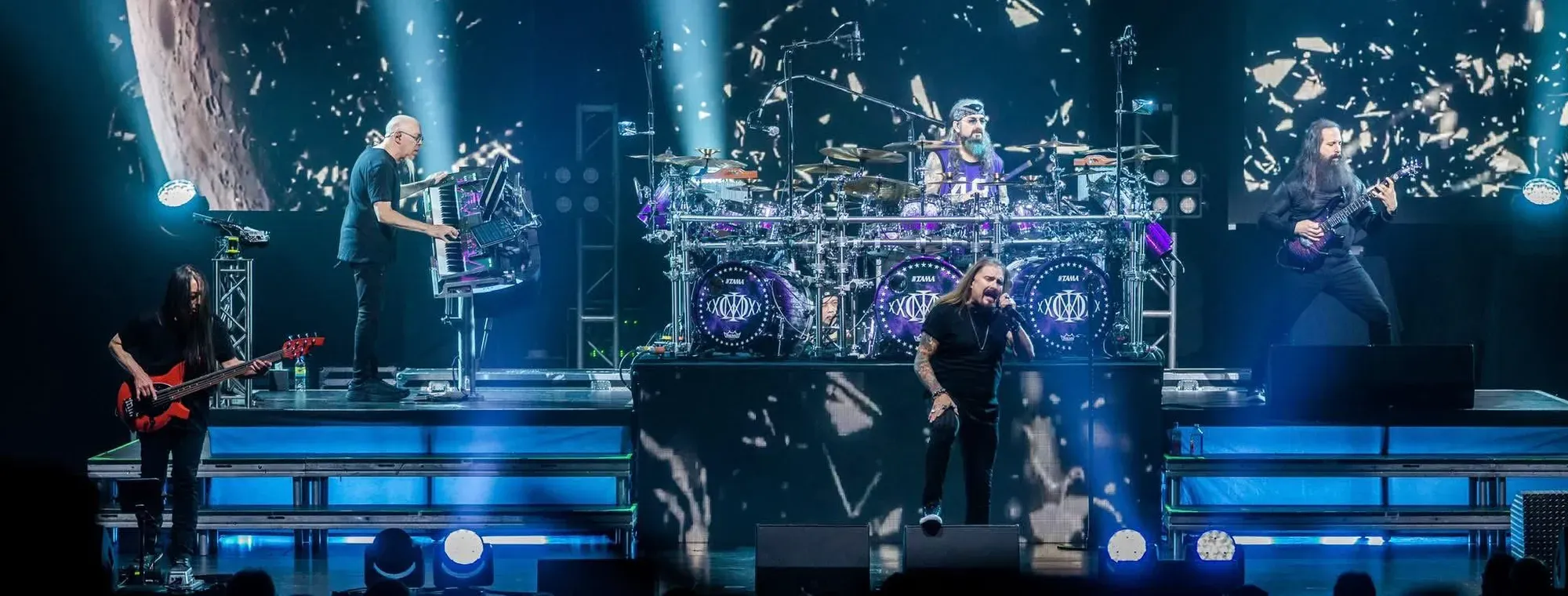
The Immortals have decided: Dream Theater is your favorite group. The sanctified combo n°1 of the Battle of the Bands granted us a moment in the dressing rooms of the Aéronef in Lille, shortly before the concert of October 13. Barely two hours before the show, we come across a hilarious John Petrucci hanging on the phone, a visibly tense (annoyed?) John Myung, and a smiling Jordan Rudess, not hesitating to strike up a conversation. Boss Portnoy is nowhere to be found. But it is James LaBrie who grants us the following interview; an interview during which the singer of the band emeritus showed himself to be very relaxed and confident about the potential of their latest album, Octavarium. Our man having shown himself late compared to the planned schedule, the interview had to be slightly shortened at the request of the tour-manager. Here is the report anyway. (A big thank you to Lordlatem for having fought hard to get me this date)
Lord Henry: Octavarium revives the musical diversity that characterized Dream Theater before the release of Train Of Thought. The latter seems all the more special, and difficult to classify in your discography. As far as you are concerned, how did you experience the Train Of Thought period?
James LaBrie (vocals): I think Train Of Thought is a really good album, and we released it at the right time. We’ve been talking about releasing a very heavy album, more radical than Awake, for a long time. Six Degrees Of Inner Turbulence proved itself particularly swift, with titles like “The Glass Prison” and “The Test That Stumped Them All”. So it was natural for us to conceive an album like Train Of Thought right after, which ended up just retaining the spirit of those Six Degrees songs, while applying it to a record in full length. It made sense to us. But I don’t consider Train Of Thought as a straight album: for me, it’s half very heavy, half very progressive. If you take the time to penetrate the spirit of the record, you realize that it is ultimately very complex, full of technical aspects. Maybe even more than the others...
Lord Henry: And vocally, did the “extreme” tenor of the album change anything for you, in your approach to vocal lines?
James LaBrie: It is certain that I generally use on Train Of Thought a more hoarse voice, more harsh. I had to force certain features, and change others, to support and best correspond to the direction we had decided to explore. Like the rest, it came naturally.
Lord Henry: I have the feeling that your singing is much more liberated on your last album, and that you are experimenting with new things that are very beneficial to the band’s music. Does this musical diversity, which we mentioned at the beginning, make you more confident? Do you feel more comfortable with recent material?
James LaBrie: The songs themselves, on Octavarium, required that effort. When we got together, John Petrucci, Mike (Portnoy) and myself, to work on the vocal melodies, we thought long and hard about the characteristics to be accentuated to give the songs their personality. In comparison with Train Of Thought, indeed, the result is much closer to my “natural” voice: clearer, more dynamic. On Octavarium, I sing sometimes very low, sometimes very high, sometimes in a very soft way, or on the contrary very hard. The titles, as they were conceived, allowed me to diversify myself vocally. Which is very enriching.
Lord Henry: What excerpts from the Octavarium album do you like to perform on stage?
James LaBrie: I love singing the title track “Octavarium”. I think it’s a wonderful piece of music. I also really like “Never Enough” and “Panic Attack”, which are particularly catchy... Pretty much everything, in fact (laughs)! Yes, as I said before, this album allows me to deliver a dynamic performance, I have plenty of time to express myself because it is very varied. And then the scene always provides additional energy, different every night.
Lord Henry: Who are your favorite vocalists, your influences?
James LaBrie: Oh, there are quite a few! My favorite singer of all time is Freddie Mercury. Steve Perry was also a big influence for me, as well as Lou Gramm, in the early days of Foreigner. I really like Jeff Buckley: he reminded me of Freddie Mercury, that’s probably why. He had a great voice. Among the contemporary singers, I would say Matthew of Muse, as well as the singers of Dredg and Ours. In metal, as for many, Ronnie James Dio and Rob Halford were decisive for me. In the early Aerosmith albums, Steven Tyler was awesome. Like all the people I quoted, he has a lot of personality. I forget a lot... There are so many.
Lord Henry: On tour, some singers try to use their voice as little as possible, not even to speak in interviews, in order to keep it as much as possible for the concerts. This is obviously not your case. What are your habits to keep your voice healthy?
James LaBrie: When we get to the venue, I practice in the afternoon; I do vocalizations, in sessions of twenty/twenty-five minutes, in order to gradually expand my abilities. I do a lot of physical exercise, even when we’re not on tour, because you have to be in good physical condition to sing properly and give three-hour concerts. Generally, I always manage to have bananas in my dressing room, because bananas are full of potassium. It’s very good for the voice. As well as orange juice and lots and lots of water. (Editor’s note: the dressing room is indeed full of packs) I make small beverages based on hot water and honey. It’s my little secret! And I always take Zinc tablets with me. But I don’t mind giving interviews. There, the show starts in about two hours; I’m going to wait a bit after this interview and lock myself in my dressing room to do vocalizations again, that’s all. Then, when the concert is over, I always take some time for a little “cool-down”, where for twenty minutes I try to bring my voice back to its “normal” position. These are demanding exercises, but I can’t live without them. The tours are long and our concerts never last less than two and a half hours, so I have to be properly prepared. But that doesn’t stop me from having my bad days! The voice is an organic instrument, so the performance of singers is always dependent on external circumstances. More than other musicians, we are prone to flu, cold, various infections...
Lord Henry: During your career, you had the opportunity to work with three different keyboardists. Can you tell us what changes caused, after the experience with Kevin Moore, the successive arrivals of Derek Sherinian and Jordan Rudess?
James LaBrie: I would say that there are some similarities between Kevin’s and Jordan’s respective styles, as they have this commonality of having a classic background. Their personalities are quite different, though. Kevin was arguably more introspective, while Jordan has a very colorful style. Derek, he comes from jazz and rock ‘n’ roll... He is able to play anything, in any style, because he is very talented, but his approach to the instrument is similar more like that of a guitarist. This can be heard very clearly in his leads. Anyway, they are all three unique instrumentalists, with their own strong style. The way they present themselves, each in their own way, in their interpretations, in their compositions, or as soloists, has rubbed off on the group in each period. If you want my personal opinion, I think Jordan has a style that fits exceptionally well with our music. Since he joined us in 1999, the group has reached a higher level. And we continue to progress. Jordan is a huge asset.
Lord Henry: On the occasion of the recording of Octavarium, for the first time, an orchestra appears on a few songs. Do you plan to perform on stage with an orchestra one day?
James LaBrie: We talked about it, yes. We thought it would be something really cool to try. When? I don’t have the faintest idea, but I think it will happen eventually. Surely for a very special occasion, a show that we would film.
Lord Henry: You write regularly for Dream Theater, but most of the time it’s John and Mike who write everything. What are the songs you feel closest to, the ones that mean the most to you?
James LaBrie: It’s hard to name them that way. In a way, they all appeal to me. Anyway, for each song that we record, before getting behind the microphone, I try to capture the atmosphere, and the message it seeks to deliver. So that I can “become” the character, or the appropriate voice. If we stick to our last album, I think Mike really hit it hard with “The Root Of All Evil”. It’s a song that describes the turmoil of a man in the grip of substances such as drugs or alcohol. As for John, I particularly appreciated his work on “Panic Attack”. On each of our albums, there are a few songs that have a really strong message. “In The Name Of God”, or “The Great Debate” for John, “The Glass Prison” for Mike... They all have their place.
Lord Henry: Would you like to invest more in writing?
James LaBrie: I’m not the only one writing for Dream Theater, but I have the opportunity to express myself with my solo albums. I write almost everything there. With Mike and the two Johns, the distribution of lyrics is absolutely democratic: we meet, then everyone designates which songs they want to work on and develop. Generally, we manage to find an agreement, and everyone ends up writing as much as they want. I often end up with one or two songs per album, and that satisfies me completely. I am not limited.
Lord Henry: You talk about your solo career; all members of Dream Theater also have parallel projects or groups. Do you think your main band’s music is influenced by it?
James LaBrie: I think all of our projects evolve us as musicians, each one of us. When you work with other people, you necessarily gain experience, you learn constantly. All musicians work differently, and it is often enriching to work “in the manner” of so-and-so... Then, you are able to concretize what you have learned in the studio with your regular band. All musical experiences, whatever they are, are beneficial because they allow us to explore alternative paths aimed at the improvement and evolution of our style. And they allow us to express ourselves differently, in other musical styles, which gives listeners a more accurate insight into our personalities. So I believe that indirectly, the music of Dream Theater benefits from our side-projects. They are, like Dream Theater, a means for us to evolve. For me, it’s positive.
Lord Henry: The life of a musician is not easy. Have you ever considered leaving Dream Theater?
James LaBrie: It’s not just about me, but the band did come close to breaking up. It was during the period following the release of Falling Into Infinity, a very dark period for all of us. We were in conflict with each other, we had personal problems, family problems, problems with the management of the band, as well as with the label, which tried to push us towards a direction which we did not approve. We were not heard, not supported. In these cases, the negative energy is palpable, and I can assure you that we were very close to dropping everything. It was really heavy to bear, because everyone had their problems. But we got through it, and more motivated than ever. Today, the situation is optimal.
Original text
Interview Avec : James LaBrie (Chanteur)
13 octobre 2005
Journaliste : Lord Henry
Les Immortels ont tranché: Dream Theater est votre groupe préféré. Le combo sanctifié n°1 du Battle of da Bands nous a accordé un petit moment dans les loges de l’Aéronef à Lille, peu avant le concert du 13 Octobre (cliquez ici pour lire le report). A à peine deux heures du show, nous y croisons un John Petrucci hilare pendu au téléphone, un John Myung visiblement tendu (agacé?), et un Jordan Rudess tout sourire, n’hésitant pas à engager la conversation. Le patron Portnoy, lui, est introuvable. Mais c’est James LaBrie qui nous accorde l’entretien qui suit; un entretien au cours duquel le chanteur du groupe émérite s’est montré très décontracté et confiant quant au potentiel de leur dernier album, Octavarium. Notre homme s’étant montré en retard par rapport à l’horaire prévu, l’interview a dû être légèrement écourtée sur la demande du tour-manager. En voici tout de même le compte-rendu. (Un grand merci à Lordlatem d’avoir bataillé ferme pour me dégotter ce rencard)
Lord Henry : Octavarium renoue avec la diversité musicale qui caractérisait Dream Theater avant la parution de Train Of Thought. Ce dernier en paraît d’autant plus particulier, et difficile à classer dans votre discographie. En ce qui te concerne, comment as-tu vécu la période Train Of Thought?
James LaBrie (chant) : Je pense que Train Of Thought est un très bon album, et que nous l’avons sorti au bon moment. Cela faisait un bon bout de temps que nous parlions de sortir un album très heavy, plus radical qu’Awake. Six Degrees Of Inner Turbulence s’est lui-même révélé particulièrement véloce, avec des titres comme “The Glass Prison” et “The Test That Stumped Them All”. Il nous était donc naturel de concevoir un album comme Train Of Thought juste après, qui n’a finalement fait que conserver l’esprit de ces chansons de Six Degrees, tout en l’appliquant à un disque dans toute sa longueur. C’était logique pour nous. Mais je ne considère pas Train Of Thought comme un album rectiligne: pour moi, il est pour moitié très heavy, pour moitié très progressif. Si tu prends le temps de pénétrer l’esprit du disque, tu t’aperçois qu’il est en fin de compte très complexe, empli d’aspects techniques. Peut-être même plus que les autres...
Lord Henry : Et vocalement, la teneur “extrême” de l’album a-t-elle changé quelque chose pour toi, dans ton approche des lignes de chant?
James LaBrie : Il est sûr que j’utilise globalement sur Train Of Thought une voix plus rauque, plus âpre. Il m’a fallu forcer certains traits, et en changer d’autres, pour soutenir et correspondre au mieux à la direction que nous avions décidé d’explorer. Comme le reste, cela est venu naturellement.
Lord Henry : J’ai le sentiment que ton chant est beaucoup plus libéré sur votre dernier album, et que tu y expérimentes de nouvelles choses très bénéfiques à la musique du groupe. Est-ce que cette diversité musicale, que nous évoquions au début, te met plus en confiance? Te sens-tu plus à l’aise avec le matériel récent?
James LaBrie : Les chansons elles-mêmes, sur Octavarium, demandaient cet effort. Lorsque nous nous sommes réunis, John Petrucci, Mike (Portnoy) et moi-même, pour bosser sur les mélodies vocales, nous avons longuement refléchi sur les caractéristiques à accentuer pour donner leur personnalité aux morceaux. En comparaison avec Train Of Thought, effectivement, le résultat se rapproche beaucoup plus de ma voix “naturelle”: plus claire, plus dynamique. Sur Octavarium, je chante tantôt très bas, tantôt très haut, parfois d’une façon très douce, ou au contraire très dure. Les titres, tels qu’ils ont été conçus, m’ont permis de me diversifier moi-même vocalement. Ce qui est très enrichissant.
Lord Henry : Quels extraits de l’album Octavarium aimes-tu interpréter sur scène?
James LaBrie : J’adore chanter le morceau-titre “Octavarium”. Je trouve que c’est une magnifique pièce de musique. J’aime beaucoup également “Never Enough” et “Panic Attack”, qui sont particulièrement entraînants... A peu près tout, en fait (rires)! Oui, comme je l’ai déjà dit, cet album me permet de délivrer une performance dynamique, j’y ai tout le loisir de m’exprimer car il est très varié. Et puis la scène procure toujours une énergie supplémentaire, différente chaque soir.
Lord Henry : Quels sont tes vocalistes préférés, tes influences?
James LaBrie : Oh, il y en a pas mal! Mon chanteur préféré de tous les temps est Freddie Mercury. Steve Perry a été aussi d’une grande influence pour moi, de même que Lou Gramm, aux débuts de Foreigner. J’aime beaucoup Jeff Buckley: il me rappellait Freddie Mercury, c’est sans doute pour ça. Il avait une superbe voix. Parmi les chanteurs contemporains, je dirais Matthew de Muse, ainsi que les chanteurs de Grudge et de Ours. En metal, comme pour beaucoup, Ronnie James Dio et Rob Halford ont été déterminants pour moi. Dans les premiers albums d’Aerosmith, Steven Tyler était génial. Comme tous les gens que j’ai cité, il a beaucoup de personnalité. J’en oublie beaucoup... Il y en a tellement.
Lord Henry : En tournée, certains chanteurs s’efforcent d’utiliser leur voix le moins possible, même pas pour parler en interviews, afin de la conserver au maximum pour les concerts. Ce n’est visiblement pas ton cas. Quelles sont tes habitudes pour maintenir ta voix en bonne santé?
James LaBrie : Quand nous arrivons sur le lieu du concert, je m’entraîne dès l’après-midi; je fais des vocalises, par sessions de vingt/vingt-cinq minutes, afin d’élargir progressivement mes capacités. Je fais beaucoup d’exercice physique, même quand nous ne tournons pas, car il faut être en de bonnes conditions physiques pour chanter correctement et assurer des concerts de trois heures. Généralement, je m’arrange toujours pour avoir des bananes dans ma loge, car les bananes sont pleines de potassium. C’est très bon pour la voix. Ainsi que du jus d’orange et beaucoup, beaucoup d’eau. (NDLH: la loge est effectivement pleine de packs) Je me confectionne de petits breuvages à base d’eau chaude et de miel. C’est mon petit secret! Et j’emmène toujours des tablettes de Zync avec moi. Mais donner des interviews ne me dérange pas. Là, le show commence dans deux heures à peu près; je vais attendre un peu après cette interview et m’enfermer dans ma loge pour faire des vocalises à nouveau, voilà tout. Ensuite, quand le concert est terminé, je prends toujours un peu de temps pour un petit “cool-down”, où pendant vingt minutes je m’efforce de ramener ma voix à sa position “normale”. Ce sont des exercices contraignants, mais je ne peux pas m’en passer. Les tournées sont longues et nos concerts ne durent jamais moins de deux heures trente, je me dois donc d’être correctement préparé. Mais cela ne m’empêche pas d’avoir mes mauvais jours! La voix est un instrument organique, donc la performance des chanteurs est toujours tributaire des circonstances extérieures. Plus que les autres musiciens, nous sommes sujets à la grippe, au froid, aux infections diverses...
Lord Henry : Au cours de ta carrière, tu as eu l’opportunité de travailler avec trois claviéristes différents. Peux-tu nous dire quels changements ont occasionné, après l’expérience avec Kevin Moore, les arrivées successives de Derek Sherinian et de Jordan Rudess?
James LaBrie : Je dirais qu’il existe quelques similarités entre les jeux respectifs de Kevin et de Jordan, car ils ont ce point commun d’avoir un background classique. Leurs personnalités sont bien différentes, cela dit. Kevin était sans doute plus introspectif, alors que Jordan a un jeu très coloré. Derek, lui, vient du jazz et du rock ‘n’ roll... Il est capable de jouer n’importe quoi, dans n’importe quel style, car il est très talentueux, mais son approche de l’instrument s’apparente plus à celle d’un guitariste. Cela s’entend très clairement dans ses leads. Quoiqu’il en soit, ce sont tous les trois des instrumentistes uniques, avec leur propre style bien trempé. La façon dont ils se présentent, chacun à leur manière, dans leurs interprétations, dans leurs compositions, ou en tant que solistes, a déteint sur le groupe à chaque période. Si tu veux mon opinion personnelle, je pense que Jordan possède un jeu qui s’intègre exceptionnellement bien à notre musique. Depuis qu’il nous a rejoints, en 1999, le groupe a atteint un niveau supérieur. Et nous continuons à progresser. Jordan est un atout immense.
Lord Henry : A l’occasion de l’enregistrement d’Octavarium, pour la première fois, un orchestre apparaît sur quelques chansons. Avez-vous prévu, un jour, de vous produire sur scène avec un orchestre?
James LaBrie : Nous en avons parlé, oui. Nous nous sommes dits que ce serait quelque chose de très sympa à essayer. Quand? Je n’en ai pas la moindre idée, mais je pense que ça finira par se faire. Sûrement pour une occasion très spéciale, un show que nous filmerions.
Lord Henry : Tu écris régulièrement des textes pour Dream Theater, mais la plupart du temps ce sont John et Mike qui écrivent tout. Quelles sont les chansons dont tu te sens le plus proche, celles qui ont le plus de sens pour toi?
James LaBrie : C’est difficile de les nommer de cette façon. D’une certaine façon, elles m’interpellent toutes. De toute manière, pour chaque chanson que nous enregistrons, avant de me poser derrière le micro, je m’attache à en capter l’atmosphère, et le message qu’elle cherche à délivrer. De façon à ce que je puisse “devenir” le personnage, ou la voix adéquate. Si l’on s’en tient à notre dernier album, je crois que Mike a réellement frappé fort avec “The Root Of All Evil”. C’est une chanson qui décrit les troubles de conscience d’un homme en prise avec des susbtances telles que la drogue ou l’alcool. Quant à John, j’ai particulièrement apprécié son boulot sur “Panic Attack”. Sur chacun de nos albums, il y a quelques chansons qui ont un message vraiment fort. “In The Name Of God”, ou “The Great Debate” pour John, “The Glass Prison” pour Mike... Elles ont toutes leur place.
Lord Henry : Souhaiterais-tu t’investir davantage dans l’écriture?
James LaBrie : Je ne suis pas le seul à écrire pour Dream Theater, mais j’ai l’occasion de m’exprimer avec mes albums solo. J’y écris à peu près tout. Avec Mike et les deux John, la répartition des textes est tout ce qu’il y a de plus démocratique : nous nous réunissons, puis chacun désigne quelles chansons il souhaite travailler et développer. Généralement, nous parvenons à trouver un accord ,et chacun finit par écrire autant qu’il le veut. Je me retrouve souvent avec une ou deux chansons par album, et cela me satisfait totalement. Je ne suis pas limité.
Lord Henry : Tu parles de ta carrière solo; tous les membres de Dream Theater ont, eux aussi, des projets ou des groupes parallèles. Crois-tu que la musique de votre groupe principal en subit une influence?
James LaBrie : Je pense que tous nos projets nous font évoluer en tant que musiciens, chacun d’entre nous. Quand tu travailles avec d’autres personnes, tu acquières nécessairement de l’expérience, tu apprends sans cesse. Tous les musiciens fonctionnent différemment, et il est souvent enrichissant de travailler “à la manière” d’untel ou untel... Ensuite, tu es capable de concrétiser ce que tu as retiré en studio avec ton groupe régulier. Toutes les expériences musicales, quelles qu’elles soient, sont bénéfiques car elles nous permettent d’explorer des voies alternatives visant à l’amélioration et à l’évolution de notre style. Et elles nous permettent de nous exprimer différemment, dans d’autres styles musicaux, ce qui donne aux auditeurs un aperçu plus juste de nos personnalités. Je crois donc qu’indirectement, la musique de Dream Theater profite de nos side-projects. Ils sont, au même titre que Dream Theater, un moyen pour nous d’évoluer. Pour moi, c’est positif.
Lord Henry : La vie de musicien n’est pas de tout repos. N’as-tu jamais songé à quitter Dream Theater?
James LaBrie : Il ne s’agit pas que de moi, mais le groupe a bel et bien failli se séparer. C’était pendant la période qui a suivi la sortie de Falling Into Infinity, une période très noire pour chacun d’entre nous. Nous étions en conflit les uns avec les autres, nous avions des problèmes personnels, familiaux, des soucis avec le management du groupe, ainsi qu’avec le label, qui essayait de nous pousser vers une direction que nous n’approuvions pas. Nous n’étions pas entendus, pas soutenus. Dans ces cas-là, l’énergie négative est palpable, et je peux t’assurer que nous étions à deux doigts de tout laisser tomber. C’était vraiment lourd à supporter, car chacun avait ses problèmes. Mais nous nous en sommes sortis, et plus motivés que jamais. Aujourd’hui, la situation est optimale.