

Originally published in The Metal Circus.com · October 2013
Dream Theater: “This Album Says Who We Are And Where We Come From”
InterviewTranslatedJames LaBrie19 min read
Translated from the original language with DeepL, so the wording may differ from what was actually said.
Esteban Portero
02/10/2013
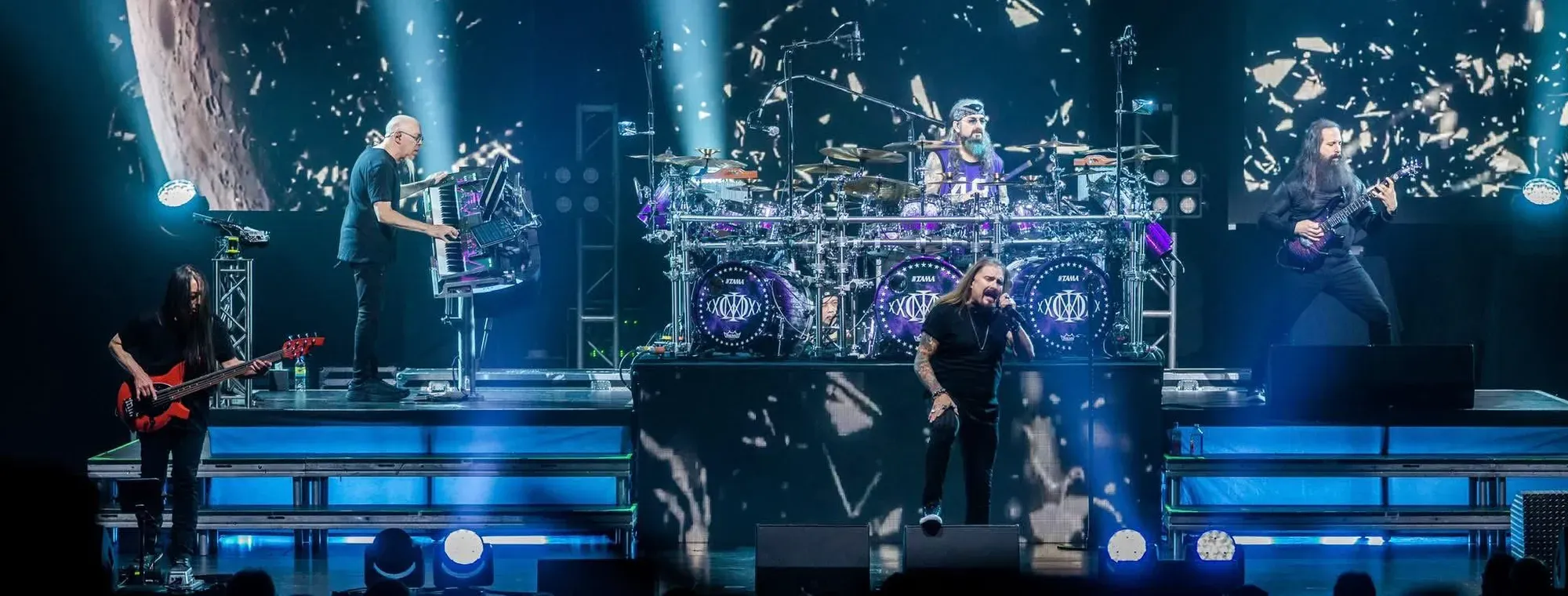
Overcoming the turbulence after Mike Portnoy’s departure from the band, Dream Theater continue their journey with their second album after that noteworthy event, no more and no less than an eponymous album. Esteban Portero was not only in charge of reviewing the album, but he also spoke on the phone with James LaBrie, the quintet’s vocalist, about the band’s present and future. This is what he told us.
“‘The Enemy Inside’ was released on the fifth day of the eighth month of the year. It’s not a coincidence, am I wrong?
“(laughs) I think you’re digging a lot deeper than I am. It was just a coincidence, but I love that you noticed that, these kinds of things are very interesting.”
They are! But let’s talk about the new album itself, it’s the first with Richard Chycki on mixing.
“Well, actually Richard mixed our next DVD, Live at Luna Park before and he also recorded my vocals for A Dramatic Turn of Events, so he had worked with us before. But it’s the first time he’s worked as our sound engineer to record the whole album and then mix it as you say, so it’s also the first time he’s experienced the whole process.”
What was the reason for this choice?
“For years I’ve been talking to the band about his work and finally hearing the work he had done with Rush and Aerosmith we went with him, as he was truly what we were looking for. We’ve been friends for about 25 years, we played together in a band called Winter Rose in the eighties. He’s very talented, he does a phenomenal job and we knew that all those years of working with Rush would be very valuable if we had him involved in Dream Theater recording, mixing and all that. That’s the reason, his enormous talent.”
Precisely, Live at Luna Park will be released shortly in cinemas, in which countries will it be available, will we be able to see it here in Spain?
“We have been talking about distribution with Eagle Rock, we hope it will start to be screened from September 19, but we are not sure in which countries it will be possible. You will soon be able to find out in which cinemas it will be available through our website (NDR: at the moment there are no Spanish cinemas announced, you can see the list here).”
The cover of Dream Theater is quite mysterious and unusual compared to those of the rest of Dream Theater’s albums. Why did you choose this kind of artwork?
“You said it yourself, because it evokes mystery. It’s eye catching, it’s simple and it’s a very strong statement of intent since it’s saying that what really matters is what’s inside. You have to wait to hear it, to be inside it to understand what’s going on. We’ve had a lot of covers with a lot of visual elements, so we thought that, being an eponymous album, it was essentially about the music: who we are and what we represent musically. Let’s make a simple cover, a cover where its very simplicity makes a strong statement.”
The first time I listened to Dream Theater I realized that some fragments recommended me to the concrete sound of previous albums. At the end, I saw that more or less every album in your discography had been revisited. Realizing this and knowing that it is an eponymous album, does this mean that the album tries to summarize your career?
“I think that’s a good analogy, it’s true. To me this is a classic Dream Theater album: it says who we are, where we come from and where we stand today, the importance of our music today. Here and there, there are little glimpses that refer to the core of our influences, it’s about showing what we’ve done in the past, but also about translating that personality to today and keeping our music relevant. For example the first track, ‘False Awakening’, is an incredibly cinematic song that we want to open each and every one of our performances, since it’s a great intro and we want it to be something iconic in our music. Then you get to the middle of the album and you have ‘Enigma Machine’, a bombastic instrumental that takes you on a thrilling journey, while at the end you have an epic song like ‘Illumination Theory’, which shows the mix that makes us what we are: it has metal moments, it has symphonic moments, it has rock moments, glorious, atmospheric, melodic... all this together is what makes Dream Theater a classic Dream Theater album. And this is just to give a few examples, I think the rest of the songs are well integrated, all together it forms a nice trip.”
Since you mentioned ‘False Awakening’, are you going to play the song live or will you just play the recording before going on stage?
“We will play the recording, we won’t play it ourselves. It will simply serve as an intro. For the last tour we used ‘The Dream is Collapsing’ by Hans Zimmer, taken from the Inception soundtrack, and this time we are very happy to be able to use a song of ours that appears on the album. The exciting thing about this tour will be returning to the “An Evening With” format (NDR: concerts lasting about 3 hours, usually divided into two sets and without an opening band), so it will be great to start such a personal evening with even our own intro. It’s wonderful to be able to offer more repertoire to our fans again, and it’s also a lot more fun for us to have it that way.”
The album has a somewhat dramatic and dark sound, but it’s striking how after ‘False Awakening’ and ‘The Enemy Inside’ comes a song as upbeat as ‘The Looking Glass.’ Is this track an icebreaker or something like that?
“We always try to create those kind of changes, when you’re arranging the songs on an album it’s very important to keep in mind how they follow each other. A good arrangement is crucial for the listener’s experience, it’s very important to make it dynamic, like a wave, a constant flow that comes and goes. With this in mind you have to build an album that is like a natural journey, with ups and downs. There needs to be a contrast of sensations, as this is what keeps the listener listening to the album.”
A little further on we find an emotional song, with a catchy chorus. If with ‘False Awakening’ you wanted to make a new intro, did you intend ‘The Bigger Picture’ to be an anthem for the live shows?
“It’s interesting how you’re getting our intentions right with every song, really! That’s one of my favorite tracks on the album, I really enjoy singing it and I like that it’s so melodic. It’s classic Dream Theater for sure, if you think about how it’s constructed: the progressiveness, the intensity changes, the prettier, atmospheric parts... I think it plays out really well. As you were saying, I’m convinced that this song is going to be fantastic live, because it sums up very well who we are musically, it represents our diversity and brings it in ballad form. It will certainly be one of the highlights of the night.”
Speaking of live, which songs from this new album do you think will work best in concerts?
“It’s really very difficult to choose, but... I think people are going to lose their minds with ‘Enigma Machine’, it’s a great song full of energy. Also ‘Illumination Theory’, I think it’s one of the songs that will reach the audience the most because of its epicness. In the same way I also think that ‘Along for the Ride’ is anthemic, I can visualize everyone singing the chorus with me, it’s very emotional. Thanks to these things there are many magical moments, it’s truly memorable to see how we unite with the audience.”
Precisely ‘Illumination Theory’ is one of the most awaited songs on Dream Theater, since there were not any songs longer than 15 minutes on your previous album, A Dramatic Turn of Events, something we had become accustomed to during this last decade. After five releases including at least one suite on each one (six if we count all of Scenes From A Memory as a single song), what prompted you not to album any for A Dramatic Turn of Events?
“Well, I think on A Dramatic Turn of Events we wrote songs about who we were at that particular time, the songs included on that album genuinely represent where we wanted to be at that point in our career. That was the music we wanted to write, that was the music we felt we needed. It was us, but at the same time we didn’t want to be forced to do an instrumental or a suite. We didn’t want to write something like that, it was just about showing that we were still ourselves, that we hadn’t lost our identity. We knew there was going to be a lot of skepticism towards that album, so all we did was be natural, and that was a bridge to who we are right now. I think with A Dramatic Turn of Events we proved that we hadn’t lost our identity, and we did a huge tour to take that work to all corners of the world. It was a transitional album. Now we have to keep growing, and we thought it was a good time to make an epic song again.”
Maybe it’s too early to think about it, but before the release of Dream Theater it was said that you might do a concept album again. In the end it wasn’t about this release, but could the next one be?
“Yes it is something early, but I won’t deny you that we have been raising it and discussing it. It may be a little premature to make guesses about it, but I would say there’s a very good chance it could be. At some point in the near future I see us assuming that the right time for a new concept album has arrived.”
Your first and only concept album is the acclaimed Metropolis Pt.2: Scenes From A Memory. Next year’s tour coincides with the fifteenth anniversary of its release, and considering that thanks to the return of the “An Evening With” shows you’re going to be able to play the equivalent time of two repertoires... is there a chance that one of them will be composed entirely by this album?
“It’s highly likely, indeed. It’s funny you should mention it because we were just talking about it a few days ago, it would be great to celebrate the anniversary of that album properly. But surely if we do it will be in a single concert of the tour, as I doubt it will be part of the standard repertoire for all the dates. Scenes From A Memory is almost eighty minutes long and that would mean leaving out a lot of material from other albums; we want the concerts to be varied.”
The tour starts in Europe, are you going to bring back the rotating setlist or are you just going to change songs from one continent to the other?
“We’ll reserve the big changes them for when we change continents, that’s how we did it on the previous tour and we realized that it gives us a lot more confidence, it makes us give better concerts because we don’t have to be so aware of what changes we play every night. Thanks to this the whole show is much more compact, not only for us but also for the light and video technicians. Everyone benefits from a more solid setlist. We still like to give opportunities to different songs, so we keep saving the changes for different legs, it’s what works best for us.”
Are there still “banned” songs like ‘Space Dye Vest’?
“I don’t think “banned” is the word, it’s just not something we want to do. That particular Kevin Moore song was one of the last songs he wrote with us and it was more of a prelude to where he was going musically, it didn’t have as much to do with us. It’s not like there’s any banned songs, there’s none that we’re thinking “Oh my god, we can’t play that for X reasons,” after all if it’s on an album of ours it’s a Dream Theater song, but it’s about thinking about whether it’s the right time for it, whether we feel it needs to be played again or whether the fans truly crave to hear it live.”
Last question, what was your degree of compositional input on this new album?
“None. I stepped away from the songwriting process this time, as I was focused on my new solo album, so I gave them their space. John Petrucci wrote the lyrics for six songs and John Myung did one, namely ‘Surrender to Reason’. For the next one I’ll probably collaborate again, of course.”
Great! Thanks for your time, James. See you on your date in Barcelona.
“Thanks to you! See you there.”
Original text
Dream Theater: «Este álbum dice quiénes somos y de dónde venimos»
Esteban Portero
02/10/2013
Superadas las turbulencias tras la marcha de Mike Portnoy de la banda, Dream Theater continúan su camino con su segundo álbum tras el marcado evento, ni más ni menos que un álbum homónimo. Esteban Portero no sólo se encargó de reseñar el disco, sino que también estuvo hablando por teléfono con James LaBrie, el vocalista del quinteto, sobre el presente y futuro de la banda. Esto fue lo que nos contó.
“The Enemy Inside” se publicó el quinto día del octavo mes del año. No es una coincidencia, ¿me equivoco?
“(risas) Creo que estás profundizando mucho más que yo. Simplemente fue una coincidencia, pero me encanta que te hayas fijado en eso, este tipo de cosas son muy interesantes.”
¡Lo son! Pero hablemos del nuevo álbum en sí, es el primero con Richard Chycki a la mezcla.
“Bueno, realmente Richard mezcló antes nuestro próximo DVD, “Live at Luna Park” y también grabó mis voces para “A Dramatic Turn of Events”, así que ya había trabajado con nosotros anteriormente. Pero sí que es la primera vez que ha trabajado como nuestro ingeniero de sonido para grabar todo el álbum y más tarde mezclarlo como bien dices, así que también es la primera vez que ha vivido el proceso completo.”
¿Cuál fue el motivo de esta elección?
“Durante años he estado hablándole a la banda de su obra y finalmente escuchando el trabajo que había hecho con Rush y Aerosmith nos decantamos por él, ya que era verdaderamente lo que andábamos buscando. Somos amigos desde hace aproximadamente 25 años, tocábamos juntos en una banda llamada Winter Rose en los ochenta. Tiene mucho talento, hace un trabajo fenomenal y sabíamos que todos esos años de trabajo con Rush serían muy valiosos si lo tuviéramos involucrado en DT12 grabando, mezclando y todo eso. Ese es el motivo, su enorme talento.”
Precisamente, “Live at Luna Park” se estrenará en breve en cines. ¿En qué países estará disponible? ¿Podremos verlo aquí en España?
“Hemos estado hablando sobre la distribución con Eagle Rock, esperamos que se empiece a proyectar a partir del 19 de septiembre, pero no estamos seguros de los países en los que será posible. En breve podréis informaros sobre en qué cines estará disponible a través de nuestra página web (NDR: por el momento no hay ningún cine español anunciado, se puede ver la lista aquí).”
La portada de DT12 es bastante misteriosa y poco usual comparada con las del resto de álbumes de Dream Theater. ¿Por qué elegisteis este tipo de artwork?
“Tú mismo lo has dicho, porque evoca misterio. Llama la atención, es simple y es una declaración de intenciones muy sólida dado que está diciendo que lo que importa realmente es lo que hay dentro. Tienes que esperar a escucharlo, estar en su interior para comprender qué es lo que sucede. Hemos tenido muchas portadas con muchos elementos visuales, así que pensamos que, siendo un disco homónimo, se trataba esencialmente de la música: quiénes somos y qué representamos musicalmente. Hagamos una portada simple, una portada donde su propia simplicidad constituya una afirmación firme.”
La primera vez que escuché DT12 me di cuenta de que algunos fragmentos me recomendaban al sonido concreto de discos anteriores. Al finalizar, vi que más o menos se había revisitado el cada uno de los álbumes de vuestra discografía. Dándonos cuenta de esto y sabiendo que es un álbum homónimo, ¿quiere esto decir que el álbum intenta resumir vuestra carrera?
“Creo que esa es una buena analogía, es cierto. Para mí este es un álbum clásico de Dream Theater: dice quiénes somos, de dónde venimos y cuál nuestra posición actual, la importancia de nuestra música hoy día. Aquí y allá hay pequeños destellos que hacen referencia al núcleo de nuestras influencias, se trata de mostrar lo que hemos hecho en el pasado, pero también de trasladar esa personalidad a hoy día y mantener relevante nuestra música. Por ejemplo el primer tema, “False Awakening”, es una canción increíblemente cinemática que queremos que abra todas y cada una de nuestras actuaciones, dado que es una gran intro y queremos que sea algo icónico en nuestra música. Después llegas a la mitad del álbum y tienes “Enigma Machine”, una bombástica instrumental que te lleva en un emocionante viaje, mientras que al final tienes una canción épica como es “Illumination Theory”, que muestra la mezcla que hace lo que somos: tiene momentos metal, tiene momentos sinfónicos, tiene momentos rockeros, gloriosos, atmosféricos, melódicos… todo este conjunto es lo que hace que DT12 sea un álbum clásico de Dream Theater. Y esto es tan sólo por poner algunos ejemplos, creo que el resto de canciones están bien integradas, todo en conjunto forma un bonito viaje.”
Ya que has mencionado “False Awakening”, ¿vais a tocar la canción en directo o simplemente pondréis la grabación antes de subir al escenario?
“Pondremos la grabación, no la tocaremos nosotros mismos. Simplemente servirá como intro. Para la gira pasada utilizamos “Dream is Collapsing” de Hans Zimmer, sacada de la banda sonora de “Inception”, y esta vez estamos muy contentos de poder utilizar una canción nuestra que aparece en el álbum. Lo emocionante de esta gira será volver al formato “An Evening With” (NDR: conciertos con una duración aproximada de 3 horas, normalmente divididos en dos repertorios y sin contar con una banda telonera), así que será genial empezar una noche tan personal con hasta nuestra propia intro. Es maravilloso poder volver a ofrecer más repertorio a nuestros fans, y también es mucho más divertido para nosotros que sea así.”
El álbum tiene un sonido algo dramático y oscuro, pero llama la atención cómo después de “False Awakening” y “The Enemy Inside” llega una canción tan alegre como “The Looking Glass”. ¿Es este tema una canción para romper el hielo o algo parecido?
“Siempre intentamos crear ese tipo de cambios, cuando estás ordenando las canciones de un álbum es muy importante tener en cuenta cómo se suceden entre ellas. Una buena organización es crucial para la experiencia del oyente, es muy importante hacer que sea dinámico, como una ola, un flujo constante que viene y va. Teniendo en cuenta esto tienes que construir un álbum que sea como una travesía natural, con subidas y bajadas. Hace falta que haya contraste de sensaciones, ya que esto es lo que hace que el oyente siga escuchando el disco.”
Un poco más adelante encontramos una canción emotiva, con un estribillo pegadizo. Si con “False Awakening” queríais hacer una nueva intro, ¿predestinasteis “The Bigger Picture” a ser un himno para los directos?
“¡Es interesante cómo estás acertando nuestras intenciones con cada canción, realmente! Ese es uno de mis temas favoritos del disco, disfruto mucho cantándola y me gusta que sea tan melódica. Es Dream Theater clásico sin duda, si piensas en cómo está construida: la progresividad, los cambios de intensidad, las partes más bonitas y atmosféricas… Creo que se desarrolla muy bien. Como decías, estoy convencido de que esta canción va a ser fantástica en directo, porque resume muy bien quiénes somos musicalmente, representa nuestra diversidad y la trae en forma de balada. Desde luego será uno de los puntos álgidos de la noche.”
Hablando del directo, ¿qué canciones de este nuevo álbum crees que funcionarán mejor en los conciertos?
“Realmente es muy difícil elegir, pero… creo que la gente va a perder la cabeza con “Enigma Machine”, es una gran canción llena de energía. También “Illumination Theory”, creo que es una de las que más llegarán al público por su epicidad. Del mismo modo también pienso que “Along for the Ride” tiene madera de himno, puedo visualizar a todo el mundo cantando el estribillo conmigo, es muy emotiva. Gracias a estas cosas hay muchos momentos mágicos, es verdaderamente memorable ver cómo nos unimos con el público.”
Precisamente “Illumination Theory” es una de las canciones más esperadas de DT12, ya que en vuestro anterior álbum, “A Dramatic Turn of Events”, no había ninguna suite de más de 15 minutos, algo a lo que nos habíais acostumbrado durante esta última década. Después de cinco lanzamientos incluyendo una suite como mínimo en cada uno (seis si contamos todo Scenes From a Memory como una única canción), ¿qué os llevó a no grabar ninguna para ADTOE?
“Bueno, creo que en ADTOE escribimos canciones sobre lo que éramos en aquel momento en particular, los temas incluidos en ese disco representan genuinamente dónde queríamos estar en aquel punto de nuestra carrera. Esa era la música que queríamos escribir, esa era la música que sentíamos que necesitábamos. Éramos nosotros, pero al mismo tiempo no queríamos vernos forzados a hacer una instrumental o una suite. No queríamos componer algo así, simplemente se trataba de demostrar que seguíamos siendo nosotros mismos, que no habíamos perdido nuestra identidad. Sabíamos que iba a haber mucho escepticismo hacia ese álbum, así que lo único que hicimos fue ser naturales, y eso constituyó un puente hacia lo que somos ahora mismo. Creo que con ADTOE demostramos que no habíamos perdido nuestra identidad, e hicimos un enorme tour para llevar ese trabajo a todos los rincones del mundo. Fue un álbum de transición. Ahora tenemos que seguir creciendo, y pensamos que era un buen momento para volver a realizar una canción épica.”
Quizá sea demasiado pronto para pensar en ello, pero antes de la salida de DT12 se comentó que podríais volver a hacer un álbum conceptual. Finalmente no se trataba de este lanzamiento pero, ¿podría serlo el siguiente?
“Sí que es algo pronto, pero no te voy a negar que lo hemos estado planteando y discutiendo. Puede que sea algo prematuro hacer conjeturas sobre ello, pero diría que hay una gran posibilidad de que así sea. En algún momento de un futuro cercano nos veo asumiendo que el momento adecuado para un nuevo álbum conceptual ha llegado.”
Vuestro primer y único álbum conceptual es el aclamado “Metropolis Pt.2: Scenes from a Memory”. La gira del año que viene coincide con el quince aniversario de su lanzamiento, y teniendo en cuenta que gracias al regreso de los shows “An Evening With” vais a poder tocar el tiempo equivalente a dos repertorios… ¿hay posibilidades de que uno de ellos lo componga este disco al completo?
“Es altamente probable, en efecto. Es curioso que lo menciones porque precisamente lo hablamos entre nosotros hace unos días, sería genial celebrar el aniversario de ese álbum como es debido. Pero seguramente si lo hacemos será en un único concierto de la gira, ya que dudo que vaya a ser parte del repertorio estándar para todas las fechas. SFAM dura casi ochenta minutos y eso conllevaría dejar fuera una gran cantidad de material de otros discos; queremos que los conciertos sean variados.”
La gira empieza en Europa, ¿vais a recuperar los setlist rotativos o sólo vais a cambiar las canciones de un continente al otro?
“Los grandes cambios los reservamos para cuando cambiamos de continente, así es como lo hicimos en la gira anterior y nos dimos cuenta de que nos da mucha más confianza, hace que demos mejores conciertos porque no tenemos que estar tan pendientes de qué cambios tocan cada noche. Gracias a esto todo el show es mucho más compacto, no sólo para nosotros sino también para los técnicos de luces y vídeo. Todo el mundo sale beneficiado de un setlist más sólido. Nos sigue gustando ir dando oportunidades a distintas canciones, por ello seguimos guardando los cambios para legs diferentes, es lo que mejor funciona para nosotros.”
¿Sigue habiendo canciones “prohibidas” como “Space Dye Vest”?
“No creo que “prohibida” sea la palabra, simplemente no es algo que queramos hacer. Esa canción de Kevin Moore en particular fue una de las últimas canciones que escribió con nosotros y era más bien la antesala de hacia donde él se dirigía musicalmente, no tenía tanto que ver con nosotros. No es que haya ninguna canción prohibida, no hay ninguna con la que pensemos “Oh Dios mío, no podemos tocar eso por motivos X”, al fin y al cabo si está en un álbum nuestro es una canción de Dream Theater, pero se trata de pensar si es el momento adecuado para ello, si sentimos que hace falta volver a tocarla o si verdaderamente los fans ansían escucharla en directo.”
Última pregunta, ¿cuál ha sido tu grado de aportación compositiva a este nuevo álbum?
“Ninguno. Esta vez me aparté del proceso compositivo, ya que estaba centrado en mi nuevo álbum en solitario, así que les di su espacio. John Petrucci escribió la letra para seis canciones y John Myung hizo una, concretamente “Surrender to Reason”. Para el próximo seguramente vuelva a colaborar, desde luego.”
¡Estupendo! Gracias por tu tiempo, James. Nos vemos en vuestra fecha en Barcelona.
“¡Gracias a ti! Allí nos vemos.”